Peach cobbler is one of the few desserts that works at every occasion — summer barbecues, Sunday dinners, cold winter evenings when you just need something warm and sweet. I have made this southern peach cobbler recipe homemade version for years and I have never once seen it leave a table with anything remaining in the dish. That is not an accident.
This juicy peach cobbler from scratch uses the classic technique of macerating fresh peaches in sugar and spices before they go in the oven, which pulls out their natural juices and creates the deeply flavourful, caramel-tinged syrup that pools beneath the biscuit topping during baking. The topping is tender, golden, and slightly crisp on the edges. The filling underneath is glossy, fruity, and genuinely irresistible.
What You’ll Need (Ingredients)
Two components, both simple. The quality of the peaches determines everything.
For the peach filling:
- 1kg (about 6 to 7 medium) fresh peaches — peeled, stoned, and sliced into 1.5cm wedges
- 100g (1/2 cup) caster sugar
- 2 tablespoons light brown sugar
- 1 tablespoon fresh lemon juice
- 1 teaspoon vanilla extract
- 1 teaspoon ground cinnamon
- 1/4 teaspoon ground nutmeg
- 1/4 teaspoon salt
- 1 tablespoon cornstarch
For the biscuit cobbler topping:
- 180g (1.5 cups) plain flour
- 100g (1/2 cup) caster sugar — plus 1 tablespoon for sprinkling on top
- 1.5 teaspoons baking powder
- 1/4 teaspoon salt
- 1/4 teaspoon ground cinnamon
- 80g (5.5 tablespoons) unsalted butter, cold and cut into small cubes
- 120ml (1/2 cup) whole milk or buttermilk, cold
How to Make It — Full Step-by-Step Process
Step One: Peel and Macerate the Peaches
Preheat your oven to 190°C (375°F) fan-forced or 200°C (400°F) conventional. Allow the oven to preheat fully for at least 15 minutes before the dish goes in. Meanwhile, prepare the peaches — bring a large pot of water to a boil, cut a shallow X into the bottom of each peach, and blanch them in the boiling water for 30 to 45 seconds. Transfer immediately to a bowl of ice water. The skins will slip off effortlessly in your hands — this blanching method removes peach skins in seconds without any peeling friction.
Slice the peeled peaches into wedges approximately 1.5cm thick and transfer to a large bowl. Add 100g of caster sugar, 2 tablespoons of light brown sugar, 1 tablespoon of fresh lemon juice, 1 teaspoon of vanilla extract, 1 teaspoon of ground cinnamon, 1/4 teaspoon of ground nutmeg, 1/4 teaspoon of salt, and 1 tablespoon of cornstarch. Toss everything together gently until every peach wedge looks coated in the sugar and spice mixture.
Allow the peaches to macerate — sit undisturbed in the sugar mixture — for 10 to 15 minutes. During this time, the sugar draws moisture out of the peach flesh and creates a natural, fragrant peach syrup in the bottom of the bowl. This syrup is what produces the deeply glossy, bubbling juice layer beneath the biscuit topping during baking. Skipping the macerating time produces a drier, less flavourful filling that does not develop the caramelised syrup character that makes the best homemade peach cobbler dessert so distinctive.
Step Two: Make the Biscuit Cobbler Topping
Combine 180g of plain flour, 100g of caster sugar, 1.5 teaspoons of baking powder, 1/4 teaspoon of salt, and 1/4 teaspoon of ground cinnamon in a large bowl. Whisk briefly to distribute the raising agents evenly. Add 80g of cold cubed butter to the flour mixture.
Use your fingertips to rub the cold butter into the flour — press each cube flat between your fingers, then rub the butter and flour together until the mixture looks like rough, uneven breadcrumbs with visible pea-sized pieces of butter throughout. These visible butter pieces are critical — they create pockets of steam during baking that produce a flaky, layered quality in the finished topping. Over-rubbing the butter until it disappears completely produces a dense, uniform topping that lacks the tender, biscuit-like texture of a classic peach cobbler with biscuit topping.
Pour 120ml of cold whole milk or buttermilk into the bowl and mix with a fork until just combined. The dough will look rough, shaggy, and slightly sticky — this is correct. Over-mixing develops gluten and produces a tough, bread-like topping instead of a tender, crumbly biscuit topping. Mix only until the dry flour disappears and stop immediately. FYI — using buttermilk instead of whole milk adds a subtle tanginess that balances the sweetness of the peach filling beautifully, and many people prefer the buttermilk version.
Step Three: Assemble the Cobbler
Grease a 23x33cm (9×13 inch) baking dish or a large deep ovenproof skillet generously with butter. Pour the macerated peaches and all their accumulated syrup directly into the greased dish. Spread them into an even layer across the base so every portion gets an equal distribution of fruit.
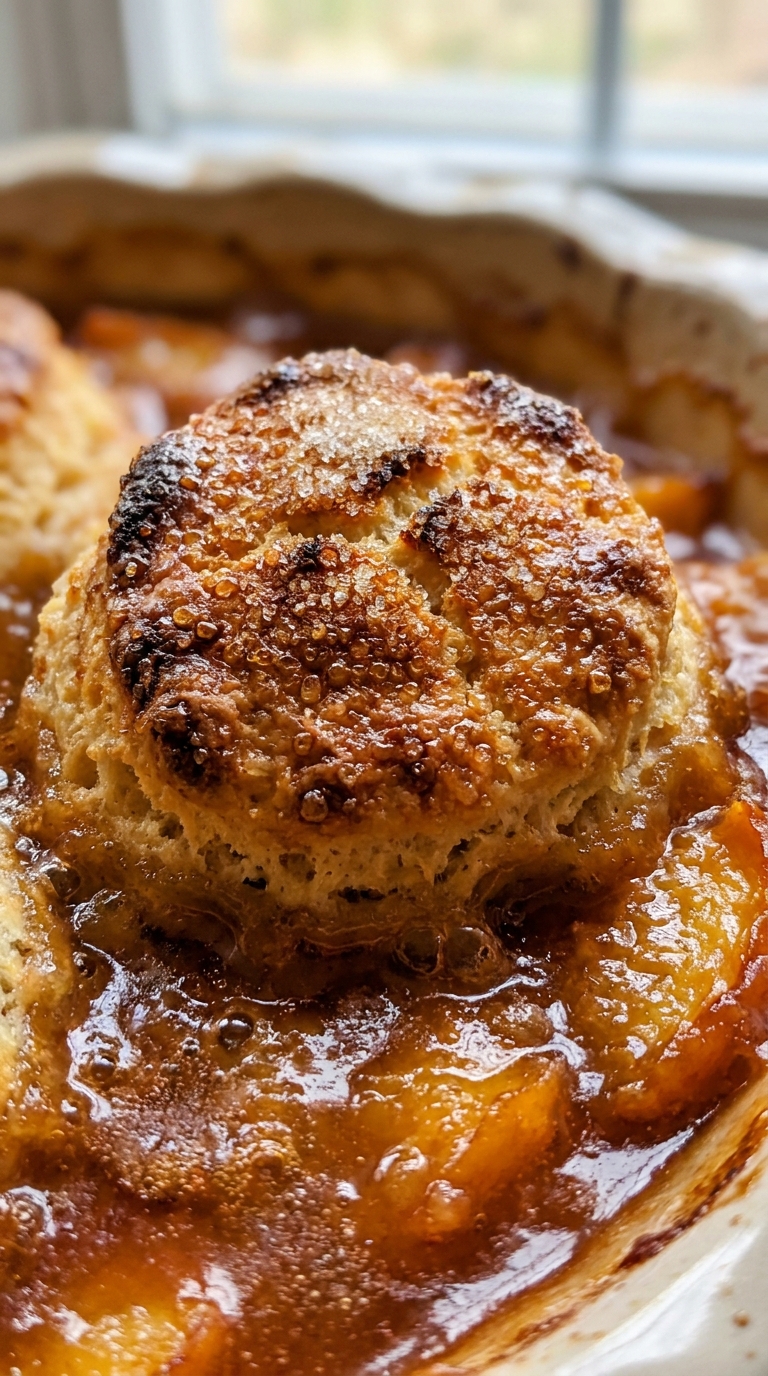
Drop large spoonfuls of the biscuit dough across the top of the peach layer, aiming for roughly equal-sized mounds. Space them slightly apart — about 2cm between each mound — because the dough spreads and puffs during baking and the gaps allow steam to escape from the peach filling below. Do not spread or flatten the dough into a uniform layer — the irregular, rustic texture of dropped biscuit mounds is part of what makes a peach cobbler look so naturally appealing.
Sprinkle the remaining 1 tablespoon of caster sugar evenly over all the biscuit dough mounds. This surface sugar caramelises during baking and creates a light, golden-sweet crust on the top of each biscuit mound that adds textural contrast to the soft, tender crumb underneath. It takes 10 seconds and makes the finished cobbler look noticeably more polished and golden.
Step Four: Bake Until Golden and Bubbling
Place the assembled cobbler dish on the centre rack of the fully preheated oven. Bake for 38 to 45 minutes. At around 25 minutes, the biscuit topping will begin to colour and the peach syrup will start bubbling at the edges of the dish. Both of these are good signs — they indicate the filling has reached temperature and the topping is cooking through properly.
Check the cobbler at 38 minutes by pressing the centre of the largest biscuit mound gently with a fingertip. A properly baked biscuit cobbler topping feels firm and set rather than soft and doughy. Insert a skewer into the thickest biscuit mound — it should come out with a few moist, biscuit-like crumbs rather than wet, raw dough. Additionally, look at the filling — the peach syrup should look thick, deep amber, and bubbling actively around all the biscuit edges.
If the topping colours deeply before the filling looks fully bubbling, cover the dish loosely with foil for the remaining baking time. This prevents the topping from burning while the filling finishes cooking underneath. Remove the foil for the last 5 minutes to restore the golden colour on the biscuit surface. Remove from the oven when both the topping looks golden and the filling looks thick, glossy, and actively bubbling throughout.
Why Macerating the Peaches Matters So Much
Have you ever made a peach cobbler that produced a watery, disappointing filling rather than the thick, glossy, syrupy layer you expected? The difference almost always comes down to whether the peaches were macerated before baking.
Raw peaches placed directly into a baking dish release their moisture gradually during the long oven time. This produces a diluted, thin syrup that lacks the concentrated flavour of properly macerated fruit. Macerated peaches have already released most of their surface moisture before baking begins, which means the oven heat concentrates the remaining syrup quickly into the thick, caramelised, intensely flavoured liquid that defines an old fashioned peach cobbler recipe result.
The cornstarch added during macerating thickens the syrup during baking — without it, even well-macerated peaches produce a runny filling that soaks through the biscuit topping rather than pooling glossily beneath it.
Fresh Peaches vs. Canned Peaches vs. Cake Mix
This quick peach cobbler recipe simple version works best with fresh peaches during peak season. However, alternatives work well when fresh peaches are unavailable.
Fresh peaches: Best flavour and texture when ripe and in season — usually June through August. Macerate with all the spices as described. Produce the most complex, layered filling.
Canned peaches: Drain thoroughly and reduce the caster sugar to 60g because canned peaches are already sweetened. Skip the macerating step and go straight to assembly. Still produce an excellent result.
Cake mix version: The peach cobbler with cake mix easy shortcut uses a box of yellow cake mix poured dry over the peaches with melted butter drizzled on top. It produces a completely different texture — more cake-like than biscuit. It works well but produces a noticeably sweeter, less nuanced result than the scratch version.
IMO, the scratch version is worth the extra 15 minutes for the flavour difference alone. However, the cake mix version is a genuinely useful option when time is extremely limited.
Serving Suggestions
This classic baked peach cobbler recipe tastes best served warm rather than hot or cold. Allow it to rest for 10 minutes after removing from the oven — the filling continues thickening slightly during this rest period and the biscuit topping firms to a better serving texture.
Best serving companions:
- Vanilla ice cream — the contrast between cold ice cream and warm cobbler is genuinely extraordinary
- Lightly sweetened whipped cream for a lighter option
- A drizzle of warm caramel sauce over both the cobbler and the ice cream
- Clotted cream for a more indulgent, British-inspired variation
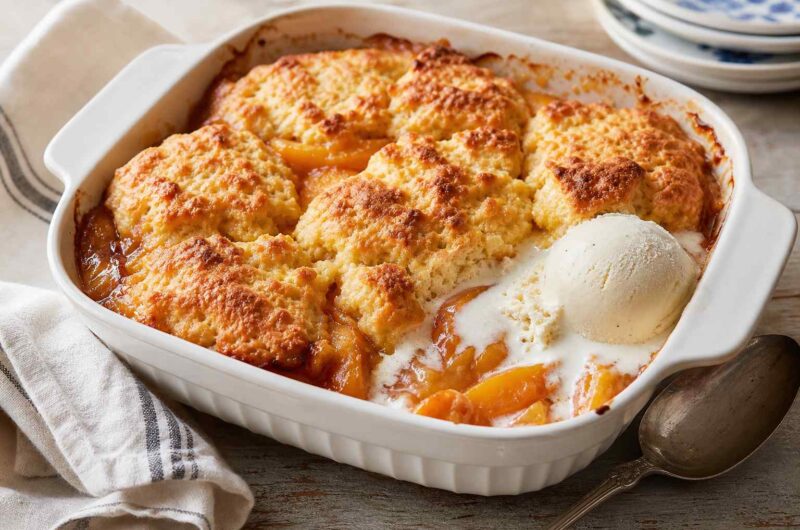
Quick Peach Cobbler Recipe Ready in Under an Hour
8
servings15
minutes40
minutesThis southern peach cobbler recipe uses macerated fresh peaches in spiced sugar syrup topped with a tender, flaky dropped biscuit dough and baked until golden and bubbling. Ready in 55 minutes from scratch, it delivers a deeply flavourful, juicy peach filling with a perfectly textured biscuit topping every time.
Ingredients
Peach filling:
1kg fresh peaches, peeled and sliced
100g caster sugar
2 tablespoons light brown sugar
1 tablespoon fresh lemon juice
1 teaspoon vanilla extract
1 teaspoon ground cinnamon
1/4 teaspoon ground nutmeg
1/4 teaspoon salt
1 tablespoon cornstarch
Biscuit topping:
180g plain flour
100g caster sugar plus 1 tablespoon for topping
1.5 teaspoons baking powder
1/4 teaspoon salt
1/4 teaspoon ground cinnamon
80g unsalted butter, cold and cubed
120ml whole milk or buttermilk, cold
- Preheat oven to 190°C fan or 200°C conventional for at least 15 minutes
- Blanch peaches in boiling water for 30 to 45 seconds then transfer to ice water
- Peel the skins off each peach and slice into 1.5cm wedges
- Place peach slices in a large bowl with caster sugar, brown sugar, lemon juice, vanilla, cinnamon, nutmeg, salt, and cornstarch
- Toss until every wedge is evenly coated and leave to macerate for 10 to 15 minutes
- Combine plain flour, caster sugar, baking powder, salt, and cinnamon in a separate large bowl
- Whisk briefly to distribute raising agents evenly
- Add cold cubed butter and rub into the flour with fingertips until rough breadcrumb texture with pea-sized butter pieces remains
- Pour cold milk or buttermilk into the bowl and mix with a fork until just combined
- Stop mixing as soon as no dry flour remains visible — the dough will look rough and shaggy
- Grease a 23x33cm baking dish generously with butter
- Pour macerated peaches and all their syrup into the greased dish
- Spread peaches into an even layer across the base
- Drop large spoonfuls of biscuit dough across the peach layer spacing them 2cm apart
- Sprinkle the remaining 1 tablespoon of caster sugar evenly over the biscuit dough mounds
- Bake on the centre rack for 38 to 45 minutes
- Check at 38 minutes — topping should feel firm and filling should be thick and actively bubbling
- Cover loosely with foil if the topping colours before the filling finishes
- Remove foil for the last 5 minutes to restore the golden surface colour
- Remove from oven when biscuit topping is golden and filling is glossy and thick throughout
- Rest for 10 minutes before serving
- Serve warm with vanilla ice cream or whipped cream alongside
Common Mistakes to Avoid
Not macerating the peaches: Raw un-macerated peaches produce a watery, under-flavoured filling that soaks the biscuit topping and makes it soggy. Always macerate for the full 10 to 15 minutes.
Over-mixing the biscuit dough: More than 10 folds after adding the milk develops gluten and produces a tough, bread-like topping. Mix only until the flour disappears and stop with visible rough texture remaining.
Using warm butter in the topping: Warm or room temperature butter incorporates too fully into the flour and produces a dense, uniform topping without the flaky, layered quality that cold butter creates. Always use butter straight from the fridge. :/
Serving immediately from the oven: The filling is extremely hot and very fluid right from the oven. A 10-minute rest allows it to thicken to the correct consistency for serving. Skipping the rest produces a flood of hot peach juice rather than a proper thick, glossy filling.
FAQs
Q1: Can I use frozen peaches for this recipe?
Yes — thaw frozen peaches completely and drain off any excess liquid before macerating. Frozen peaches release more water than fresh, so drain them thoroughly using a colander before adding the sugar and spices. The finished filling may be slightly less flavourful than fresh peach versions but still produces an excellent cobbler with good texture and sweetness throughout.
Q2: How do I know when the peaches are ripe enough to use?
Ripe peaches smell fragrant near the stem and give slightly when pressed gently at the widest point. They should feel soft but not mushy, and the skin should look deeply coloured — deep yellow to orange with a red blush. Underripe peaches taste starchy and tart rather than sweet and fruity, and they produce a noticeably less satisfying filling regardless of how much sugar you add.
Q3: Can I make this cobbler ahead of time?
You can macerate the peaches and make the biscuit topping separately up to 2 hours ahead. Store both covered separately at room temperature and assemble just before baking. The fully baked cobbler keeps well covered at room temperature for up to 24 hours or in the fridge for up to 3 days. Reheat in a 175°C oven for 15 minutes to restore the biscuit texture before serving.
Q4: Why did my biscuit topping sink into the filling?
Sinking usually happens because the biscuit dough was too thin — either from too much milk or from over-mixed gluten-free dough that could not support itself. Ensure the dough looks rough and thick before dropping it onto the filling. Additionally, dropping large, generous spoonfuls rather than thin small ones helps them maintain their height as they bake and puff upward.
Q5: Can I add other fruits to this recipe?
Yes — blueberries, raspberries, blackberries, and nectarines all work brilliantly alongside or instead of peaches. Combine 600g of peaches with 200g of blueberries for a classic summer combination that produces a beautifully purple-tinted syrup. Reduce the cinnamon slightly when using berries to let the fruit flavour come forward more prominently. Maintain the same total fruit weight of approximately 1kg regardless of the combination used.
Wrapping It Up
This peach cobbler recipe easy enough for any weeknight delivers a genuinely outstanding fresh peach cobbler dessert recipe result from simple, accessible ingredients. Macerate the peaches with their spices for a full 10 to 15 minutes, make the biscuit topping with cold butter and minimal mixing, assemble with the fruit syrup, and bake until both the topping is golden and the filling is thick and actively bubbling. Those four habits produce a perfect result every single time.
Whether you serve this warm with vanilla ice cream on a summer evening or as a comfort dessert on a cold night, it consistently delivers. Now go find the ripest peaches you can and make the best cobbler you have ever tasted.