Some desserts are reliable. Some desserts are impressive. This Mango Curd Tart recipe is both simultaneously — a buttery shortcrust pastry shell filled with silky, intensely tropical mango curd that sets to a smooth, sliceable perfection. I made this for a dinner party in July and three people asked me which patisserie I had ordered it from. Made entirely from scratch in my own kitchen. Genuinely one of the most satisfying moments of my baking life.
The combination of a properly baked, crisp pastry shell with the smooth, vibrant, sunshine-yellow mango curd filling is a pairing that is both visually stunning and extraordinarily delicious. This tropical mango tart recipe homemade is more achievable than it looks — and the results speak entirely for themselves.
Servings: 8 to 10 slices Prep Time: 30 minutes Chill Time: 1 hour (for pastry) Bake Time: 25 to 30 minutes (for shell) Curd Setting Time: 2 to 3 hours minimum (overnight preferred) Total Time: Approximately 4 to 5 hours including chilling and setting
What You Need — The Complete Ingredients List
This elegant mango curd pastry tart uses focused, high-quality ingredients across three components. Here is everything for a 23cm round tart:
For shortcrust pastry shell:
- 250g all-purpose flour, sifted
- 2 tablespoons powdered sugar (for a lightly sweet shell that complements rather than competes with the curd)
- 1/4 teaspoon salt
- 125g cold unsalted butter, cut into small cubes (cold is essential — warm butter makes greasy, tough pastry)
- 1 large egg yolk
- 3 to 4 tablespoons ice cold water (add one tablespoon at a time)
- 1 teaspoon pure vanilla extract
Mango curd filling:
- 400g fresh mango puree (from approximately 2 to 3 large ripe Alphonso or Ataulfo mangoes — or good quality canned puree)
- 3 large eggs
- 2 large egg yolks (extra yolks add richness and help the curd set more firmly)
- 150g granulated white sugar
- 2 tablespoons fresh lime juice (brightens the mango flavor and prevents the curd from tasting flat)
- Zest of 1 lime
- 80g cold unsalted butter, cut into small cubes (cold butter added at the end creates the silkiest texture)
- 1/4 teaspoon salt
For decoration:
- 1 ripe mango, thinly sliced or diced into clean cubes
- 2 tablespoons mango or apricot jam, warmed and strained (for glazing the fruit)
- Fresh mint leaves
- Edible flowers (optional but beautiful)
- Toasted coconut flakes (optional — adds texture and tropical depth)
- Powdered sugar for dusting (optional)
FYI, the mango variety matters significantly here. Alphonso and Ataulfo mangoes produce a deeper, sweeter, more intensely flavored puree than common Tommy Atkins mangoes. If you can source either variety — fresh or canned — the quality difference in the finished curd is immediately and obviously noticeable.
The Making Process — Every Step in Full Detail
Step 1: Make the Shortcrust Pastry
Cold ingredients and a light hand are the two principles that make a great shortcrust pastry. Start by sifting the flour, powdered sugar, and salt together into a large bowl or onto a clean work surface. Add the cold cubed butter to the flour mixture. Using your fingertips only — not your palms — rub the butter into the flour with quick, light movements, lifting the mixture to aerate it as you work.
Continue rubbing until the mixture resembles coarse, uneven breadcrumbs with some pieces the size of small peas remaining. Do not work toward a uniform, fine texture — the uneven butter pieces create layers in the pastry and produce a flakier, more tender result than fully blended dough. The whole rubbing process should take two to three minutes of focused, quick work. If the butter starts to feel warm and greasy, pop the bowl in the refrigerator for five minutes before continuing.
Make a small well in the center of the flour and butter mixture. Add the egg yolk, vanilla extract, and three tablespoons of ice cold water. Use a dinner knife to cut through the mixture — not stir it — until it starts to come together into shaggy clumps. Add the fourth tablespoon of water only if needed to bring the dough together. The dough should just hold its shape when you press a handful together — not wet, not crumbly.
Turn the dough onto a lightly floured surface and press it together gently into a flat disc about 3cm thick. Do not knead — kneading develops gluten and produces tough, shrinking pastry. Wrap the disc tightly in plastic wrap and refrigerate for at least one hour. This chilling relaxes the gluten that formed during mixing and firms the butter back up, both of which prevent the pastry from shrinking dramatically during baking.
Step 2: Make the Mango Puree
If using fresh mangoes, peel and roughly chop two to three large ripe mangoes — discarding the stone — and blend in a food processor or high-speed blender until completely smooth. Strain the puree through a fine mesh sieve into a bowl, pressing the solids through with the back of a spoon, to remove any fibrous strings. You need exactly 400g of smooth, fiber-free puree for the curd.
The straining step is important for a creamy mango curd tart dessert with a properly smooth, silky texture. Mango fibers do not break down during cooking — any that remain in the puree will be visible and detract from the elegant appearance of the finished curd. Press firmly through the sieve and measure the strained puree — if you are slightly short, blend and strain another mango half to make up the difference.
Step 3: Make the Mango Curd
Combine the strained mango puree, eggs, egg yolks, granulated sugar, fresh lime juice, lime zest, and salt in a medium saucepan. Whisk everything together until completely uniform before placing the pan over any heat. Starting with a well-whisked mixture ensures the curd cooks evenly without any streaks of egg white or yolk remaining unmixed throughout the final curd.
Place the pan over medium-low heat — not medium, not low, but genuinely medium-low. Cook the curd, stirring constantly with a wooden spoon or silicone spatula, making sure to reach the edges and corners of the pan where the curd thickens fastest. Constant stirring prevents the eggs from scrambling on the bottom of the pan before the rest of the curd reaches temperature. Have you ever made a curd and ended up with scrambled egg bits floating through it? Insufficient stirring and too-high heat are always the cause.
Continue cooking and stirring for approximately twelve to fifteen minutes. The curd will begin to look slightly glossy and will coat the back of a spoon more heavily as it approaches the correct temperature. Test by running your finger across the back of the spoon — if the line holds cleanly without the curd flowing back together, the curd has thickened sufficiently. Target temperature is 77 to 82 degrees Celsius if you have a thermometer.
Remove the pan from the heat immediately when the curd reaches the correct consistency. Working quickly, add the cold cubed butter to the hot curd about four to five pieces at a time. Stir each addition until it melts completely into the curd before adding the next group of butter pieces. This method — called mounting with cold butter — creates an extraordinarily smooth, glossy, rich texture that makes this fruity mango custard tart recipe filling genuinely exceptional.
Strain the finished curd through a fine mesh sieve one more time into a clean bowl or jug. This final straining removes any small cooked egg particles that may have formed despite careful stirring — it is the detail that makes the difference between a good curd and a perfect one. Press a sheet of plastic wrap directly onto the surface of the strained curd to prevent a skin forming, then refrigerate while you bake the pastry shell.
Step 4: Roll and Line the Tart Pan
Remove the chilled pastry disc from the refrigerator and let it sit at room temperature for five minutes — just enough time to become pliable without warming up enough to make the butter soft. Lightly flour your work surface and rolling pin. Place the pastry disc in the center and roll it out from the center outward in all directions, rotating the dough a quarter turn after every few passes to keep it circular and prevent sticking.
Roll to a thickness of about 3 to 4mm and a diameter approximately 5cm larger than your tart pan — enough to line the sides as well as the base. Roll the pastry loosely around the rolling pin to transfer it to the pan without tearing. Unroll it over the pan and gently ease it into the base and sides, pressing it carefully into the fluted edges without stretching it.
Stretching the pastry to fit means it will shrink back during baking — let it fall naturally and press gently rather than pulling it. Trim the excess pastry from the top edge by rolling the rolling pin firmly across the top of the pan — this creates a perfectly clean, level edge in one quick motion. Prick the base all over with a fork — approximately twenty to thirty small holes — to prevent air bubbles forming during blind baking. Refrigerate the lined pan for 20 minutes.
Step 5: Blind Bake the Pastry Shell
Preheat your oven to 190 degrees Celsius. Remove the chilled lined tart pan from the refrigerator and place a sheet of parchment paper over the pastry, letting it overhang the sides generously. Fill the parchment-lined shell with baking beans, uncooked rice, or pie weights — enough to fully cover the base and press against the sides. These weights keep the pastry pressed against the pan during the first phase of baking and prevent it from puffing up or sliding down the sides.
Blind bake at 190 degrees Celsius for 15 minutes until the pastry edges look set and pale golden. Carefully remove the parchment and weights using the parchment overhang to lift them out cleanly. Return the shell to the oven for another ten to twelve minutes until the base looks dry, fully cooked, and lightly golden all over — including the center which takes longer than the edges to cook through.
Let the fully baked shell cool completely in the pan on a wire rack before adding any curd filling. Adding the curd to a warm shell heats the chilled curd, disrupts its set, and creates condensation on the inside of the pastry that softens the crust before serving. Patience here pays off in a crust that stays genuinely crisp against the cool, smooth curd filling.
Step 6: Fill the Shell and Set the Curd
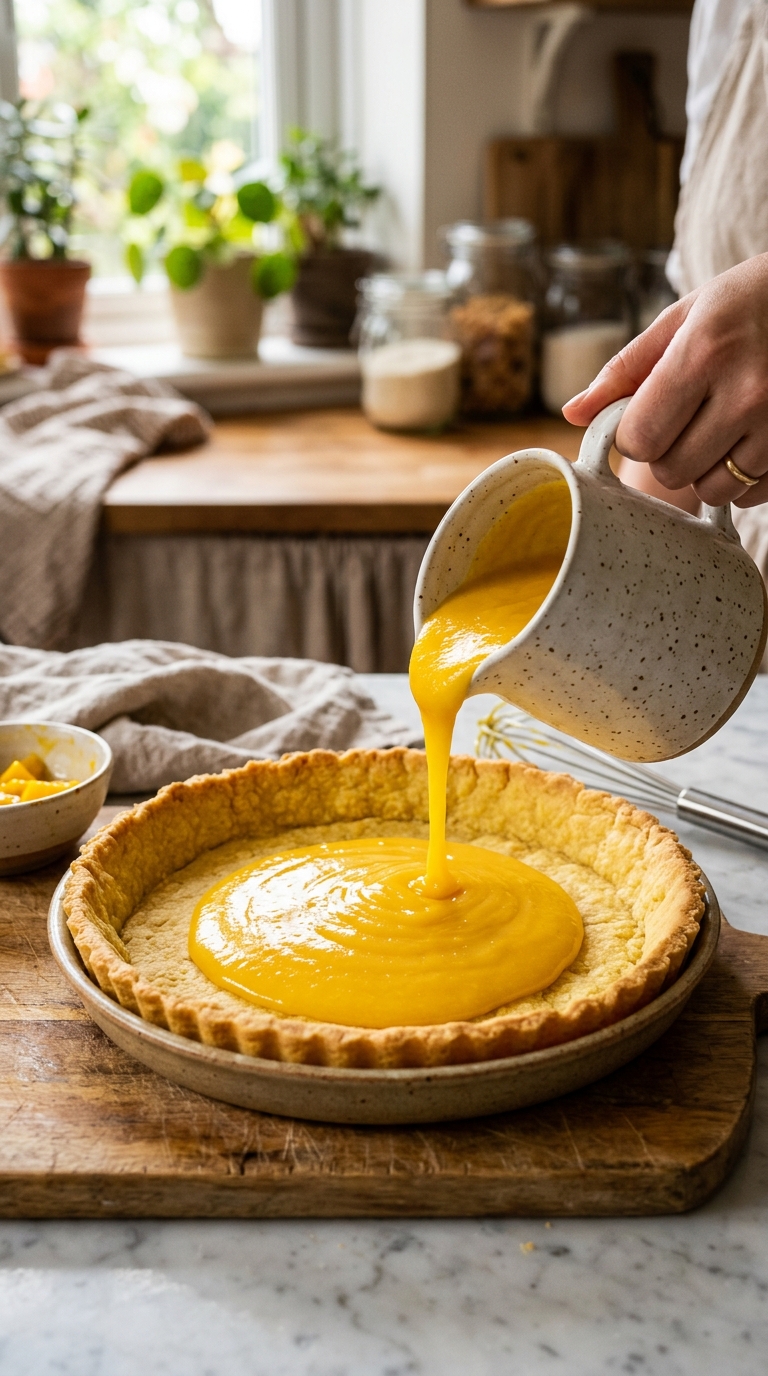
Once the shell is completely cool and the mango curd is well-chilled and thickened from the refrigerator, pour the curd into the baked shell. It should pour smoothly and settle into a level, even surface. If the curd seems too thick to pour easily after refrigerating, whisk it briefly to loosen it slightly — this is normal for a well-set curd.
Smooth the surface with an offset spatula if needed, then refrigerate the filled tart for a minimum of two to three hours until the curd sets firmly enough to slice cleanly. Overnight refrigeration produces the best, most stable result for serving. The curd should look completely smooth and matte when set — the glossy, wet appearance it has when freshly poured transforms into a beautiful, smooth matte finish as it sets and chills :/
Step 7: Decorate and Serve
Remove the tart from the refrigerator 15 minutes before serving to take the chill off slightly — the mango flavor is significantly more vibrant and aromatic at slightly below room temperature than straight from the refrigerator. Remove the tart ring by placing the pan on a tin can or wide jar and letting the fluted ring drop away — this dramatic unmolding is IMO one of the most satisfying moments in pastry making.
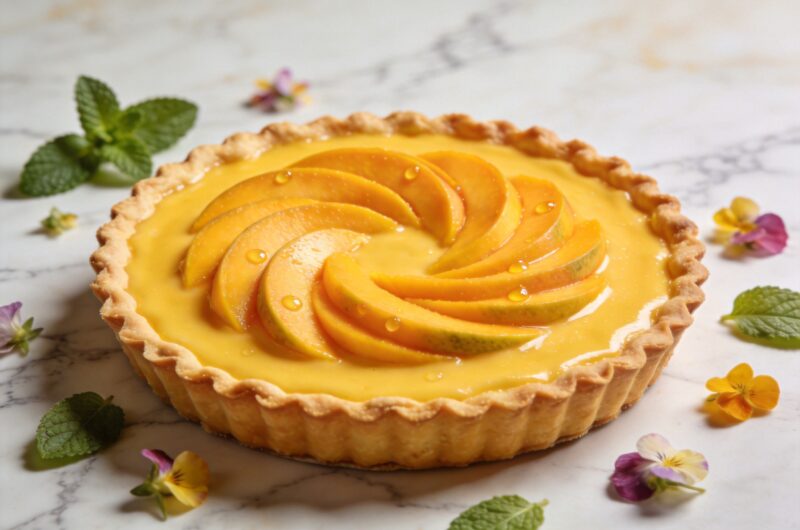
Arrange the fresh mango slices or cubes across the top of the set curd in your preferred pattern — overlapping concentric circles for an elegant classic look, or casual scattered cubes for a more relaxed modern presentation. Both look beautiful and both taste identical. Brush the arranged mango pieces lightly with the warmed, strained apricot or mango jam glaze using a pastry brush — this adds a professional shine and prevents the cut mango from oxidizing and browning.
Add fresh mint leaves, edible flowers, and toasted coconut flakes as desired. Slice with a sharp knife wiped clean between cuts for the cleanest, most professional-looking slices. Serve this summer mango dessert tart easy at slightly cool room temperature for the best balance of crisp pastry and smooth curd in every bite.
The No-Bake Version — For When the Oven Is Not an Option
A no bake mango curd tart recipe works beautifully using a biscuit crust instead of shortcrust pastry. Combine 250g of finely crushed digestive biscuits with 120g of melted butter and two tablespoons of sugar. Press firmly into a 23cm tart pan and refrigerate for one hour until completely set.
Make the mango curd exactly as described above. Let it cool to room temperature before pouring it into the chilled biscuit shell. Refrigerate for at least four hours or overnight. The biscuit crust provides a completely different textural contrast from the shortcrust — crunchier, more crumbly, and slightly more casual — but the flavor pairing with the mango curd works just as effectively 🙂
Tips for the Best Mango Curd Tart
Want to make this easy mango tart with curd filling perfect on the first attempt?
- Use the ripest mangoes available — underripe mango produces a pale, acidic curd without the depth of flavor that ripe fruit delivers
- Cold butter in the curd is non-negotiable — room-temperature butter does not create the same silky emulsion during mounting
- Never rush the pastry chilling — at least one hour in the refrigerator, preferably overnight
- Strain twice — once after making the puree and once after cooking the curd for the smoothest possible texture
- Press plastic wrap directly onto the curd surface while it chills to prevent any skin forming that would create lumps when poured
Mango Curd Tart That Tastes Like a Patisserie Creation
10
servings30
minutes1
hour30
minutesThis Mango Curd Tart fills a buttery blind-baked shortcrust pastry shell with silky lime-brightened mango curd made from fresh mango puree, eggs, butter, and sugar. Set overnight and topped with fresh mango and a glaze, it serves 8 to 10 people with stunning tropical elegance.
Ingredients
Shortcrust Pastry:
250g all-purpose flour, sifted
2 tablespoons powdered sugar
1/4 teaspoon salt
125g cold unsalted butter, cubed
1 large egg yolk
3 to 4 tablespoons ice cold water
1 teaspoon vanilla extract
Mango Curd Filling:
400g fresh mango puree (from 2 to 3 large ripe mangoes)
3 large eggs
2 large egg yolks
150g granulated white sugar
2 tablespoons fresh lime juice
Zest of 1 lime
80g cold unsalted butter, cubed
1/4 teaspoon salt
Decoration:
1 ripe mango, sliced or diced
2 tablespoons mango or apricot jam, warmed and strained
Fresh mint leaves
Edible flowers (optional)
Toasted coconut flakes (optional)
- Sift flour, powdered sugar, and salt together, rub in cold cubed butter with fingertips until the mixture resembles coarse breadcrumbs with pea-sized butter pieces remaining
- Add egg yolk, vanilla, and ice cold water one tablespoon at a time, cutting through with a knife until shaggy clumps form that hold together when pressed
- Press into a disc, wrap in plastic wrap, and refrigerate for at least one hour
- Blend fresh mango flesh until completely smooth, then strain through a fine mesh sieve to remove all fibers and measure exactly 400g of clean puree
- Whisk mango puree, eggs, egg yolks, sugar, lime juice, lime zest, and salt together in a saucepan until uniform before applying any heat
- Cook over medium-low heat, stirring constantly for twelve to fifteen minutes until the curd thickens to coat the back of a spoon and holds a clean line when tested
- Remove from heat and mount with cold butter in four to five additions, stirring each fully before adding the next, then strain through a fine mesh sieve into a clean bowl
- Press plastic wrap directly onto the curd surface and refrigerate while preparing the pastry shell
- Roll chilled pastry to 3 to 4mm thickness, line a 23cm tart pan without stretching, trim the edge, prick the base thoroughly, and refrigerate the lined pan for 20 minutes
- Blind bake at 190 degrees Celsius with parchment and weights for 15 minutes, remove weights and parchment, then bake uncovered for ten to twelve more minutes until golden and fully dry
- Cool the baked shell completely on a wire rack before adding any filling
- Pour the chilled mango curd into the cooled shell, smooth the surface, and refrigerate for a minimum of two to three hours or overnight until fully set
- Arrange fresh mango pieces over the set curd, brush with warm strained jam glaze, add mint leaves and optional decorations, then slice and serve at slightly cool room temperature
Frequently Asked Questions
Q1: Can I use canned mango puree instead of fresh? Yes — Kesar or Alphonso variety canned mango puree from Indian grocery stores works exceptionally well and produces a more consistently flavored curd than out-of-season fresh mangoes. Look for canned puree with no added sugar or preservatives for the cleanest, most natural mango flavor. Sweetened canned puree requires reducing the sugar in the curd recipe by about a quarter to prevent the finished tart from tasting overly sweet.
Q2: How do I prevent my pastry from shrinking during baking? Three things prevent pastry shrinkage reliably — resting the dough in the refrigerator for at least one hour before rolling, not stretching the dough to fit the pan during lining, and chilling the lined pan for 20 minutes before blind baking. Shrinkage happens when gluten that formed during mixing contracts during the heat of baking. Proper resting relaxes this gluten, and cold butter going into the oven means it stays firm enough to hold the pastry shape before the structure sets.
Q3: Why did my mango curd not set firmly enough to slice? Insufficiently set curd usually means it was undercooked — the temperature never reached 77 to 82 degrees Celsius — or it was not chilled long enough after filling the shell. A properly cooked curd should coat the back of a spoon and hold a clean line when you run your finger through it before straining and chilling. If the curd seems thin after cooking, return it to low heat and cook for two to three more minutes while stirring constantly.
Make This Tart and Convince Everyone You Are a Patissier
This fresh mango curd dessert tart delivers patisserie-level results from a home kitchen with straightforward technique and genuinely beautiful ingredients. Crisp, buttery pastry, smooth and vibrant mango curd, fresh fruit, and a glossy glaze — it tastes as impressive as it looks and it looks genuinely extraordinary.
Make it for the next occasion that deserves something special. Or make it for a Tuesday afternoon because mangoes are in season and life is short. Either justification works perfectly and the tart does not judge.