Korean BBQ is not just a meal — it is an entire experience. The sizzle of marinated meat on a hot grill, the side dishes arranged around the table, the wrapping of meat in lettuce leaves. I made Korean BBQ at home for the first time three years ago and genuinely wondered why I had ever paid restaurant prices for it.
This Korean BBQ recipe at home guide covers three core proteins — bulgogi beef, galbi short ribs, and spicy pork — each with their own easy Korean BBQ marinade recipe. Master these three and you have everything needed to recreate a full authentic Korean BBQ dinner ideas easy spread that satisfies everyone at the table every single time.
What You’ll Need (Ingredients)
Three proteins, three marinades. Every ingredient is available at most supermarkets or Asian grocery stores.
For Korean grilled beef bulgogi BBQ:
- 500g (1.1 lbs) beef sirloin or ribeye, very thinly sliced
- 3 tablespoons soy sauce
- 2 tablespoons light brown sugar
- 1 tablespoon sesame oil
- 4 garlic cloves, finely minced
- 1 teaspoon fresh ginger, grated
- 2 spring onions, thinly sliced
- 1 tablespoon Asian pear or kiwi, finely grated — the natural enzymes tenderise the beef
- 1/2 teaspoon black pepper
For the grilled Korean BBQ beef short ribs (galbi):
- 800g (1.75 lbs) beef short ribs, cross-cut — flanken style
- 4 tablespoons soy sauce
- 2 tablespoons brown sugar
- 2 tablespoons sesame oil
- 1 tablespoon rice vinegar
- 5 garlic cloves, minced
- 1 teaspoon ginger, grated
- 2 tablespoons Asian pear, grated
- 1 tablespoon sesame seeds
Spicy Korean BBQ pork recipe (daeji bulgogi):
- 500g (1.1 lbs) pork belly or pork shoulder, thinly sliced
- 2 tablespoons gochujang paste
- 1 tablespoon soy sauce
- 1 tablespoon sesame oil
- 1 tablespoon brown sugar
- 4 garlic cloves, minced
- 1 teaspoon ginger, grated
- 2 spring onions, sliced
Homemade Korean BBQ sauce (dipping):
- 3 tablespoons gochujang
- 1 tablespoon sesame oil
- 1 tablespoon rice vinegar
- 1 tablespoon honey
- 2 teaspoons soy sauce
- 1 garlic clove, minced
How to Make It — Full Step-by-Step Process
Step One: Slice the Meat Correctly
Proper meat preparation is what separates restaurant style Korean BBQ at home results from disappointing, chewy ones. Place your beef sirloin or pork in the freezer for 20 to 30 minutes until it firms up but does not freeze solid. Firm meat slices dramatically more cleanly than room temperature meat — the blade glides through without compressing the fibres.
Slice the beef and pork across the grain into pieces approximately 2 to 3mm thick. Cutting across the grain shortens the muscle fibres and produces a noticeably more tender piece of cooked meat. For the short ribs, ask your butcher to cut them flanken style — thin horizontal cuts across the bones — which is the traditional galbi preparation and produces pieces that cook evenly on a hot grill in under 4 minutes per side.
Step Two: Make the Bulgogi Marinade
Combine 3 tablespoons of soy sauce, 2 tablespoons of brown sugar, 1 tablespoon of sesame oil, 4 minced garlic cloves, 1 teaspoon of grated ginger, sliced spring onions, 1 tablespoon of grated Asian pear, and 1/2 teaspoon of black pepper in a bowl. Whisk together for 30 seconds until the sugar dissolves fully.
The grated Asian pear or kiwi is the most important ingredient in this marinade and the one most people skip because it seems optional. It is not optional. The natural enzymes — bromelain in kiwi and protease in pear — break down the muscle proteins in the beef before cooking, producing a tenderness that no amount of careful cooking can replicate after the fact. Even 2 hours of marinating with fruit enzyme produces noticeably softer beef than the same marinade without it.
Step Three: Make the Galbi and Spicy Pork Marinades
For the galbi marinade, combine 4 tablespoons of soy sauce, 2 tablespoons of brown sugar, 2 tablespoons of sesame oil, 1 tablespoon of rice vinegar, 5 minced garlic cloves, 1 teaspoon of ginger, 2 tablespoons of grated pear, and 1 tablespoon of sesame seeds. Mix thoroughly until the sugar dissolves and the marinade looks uniform.
For the spicy pork, combine 2 tablespoons of gochujang, 1 tablespoon of soy sauce, 1 tablespoon of sesame oil, 1 tablespoon of brown sugar, 4 minced garlic cloves, 1 teaspoon of ginger, and sliced spring onions. The gochujang does most of the work here — it provides heat, depth, sweetness, and the characteristic Korean fermented chilli character that makes this spicy Korean BBQ pork recipe so distinctive. Stir everything together until the gochujang is fully incorporated with no visible lumps.
Step Four: Marinate the Proteins
Place each protein in a separate zip-lock bag or bowl. Pour the corresponding marinade over each one and massage the marinade firmly into every surface of every piece. For thinly sliced bulgogi and pork, push the marinade between individual slices so every piece makes direct contact with the marinade rather than just the outer layers.
Seal each bag or cover each bowl with cling film and refrigerate. Two hours is the absolute minimum for any of these three proteins. For bulgogi and pork, 4 hours produces noticeably more developed flavour. For galbi short ribs, marinate overnight if possible — the thicker bone-in pieces take longer to absorb the marinade fully and reward the extra time significantly. FYI — the pear or kiwi enzyme in the beef marinades becomes too aggressive after 8 hours and can make the texture mushy, so do not marinate beyond that point.
Step Five: Make the Korean BBQ Dipping Sauce
While the proteins marinate, make the homemade Korean BBQ sauce recipe. Combine 3 tablespoons of gochujang, 1 tablespoon of sesame oil, 1 tablespoon of rice vinegar, 1 tablespoon of honey, 2 teaspoons of soy sauce, and 1 minced garlic clove in a small bowl. Stir vigorously for 30 seconds until smooth and glossy throughout.
Taste the sauce — it should hit sweet, spicy, sour, and savoury notes simultaneously. Adjust the balance if needed: more honey softens the heat, more rice vinegar sharpens the brightness, extra gochujang increases the fire. Store covered in the fridge until serving. This sauce keeps for 2 weeks refrigerated and works brilliantly as a general-purpose Korean condiment for rice bowls, noodles, and grilled vegetables.
Step Six: Grill the Proteins
Heat a cast iron grill pan, a flat griddle, or an outdoor grill to the highest temperature your equipment allows. This is non-negotiable — Korean BBQ requires genuinely high heat to caramelise the sugars in the marinades and develop the charred, slightly smoky flavour character that defines authentic Korean grilled beef bulgogi BBQ. Medium heat produces pale, steamed results that miss the entire point.
Cook the bulgogi for 1 to 2 minutes per side — it is very thin and cooks fast. Now cook the galbi for 3 to 4 minutes per side, watching for the marinade caramelising and slightly charring at the edges. Cook the spicy pork for 2 to 3 minutes per side. Do not overcrowd the grill — cook in batches with space between pieces. Crowding drops the temperature and causes the marinated meat to steam rather than sear, which produces none of the caramelisation that makes Korean BBQ chicken marinade recipe and beef versions so flavourful. IMO, the char on the edges is the whole point. 🙂
Setting Up the Full Korean BBQ Experience
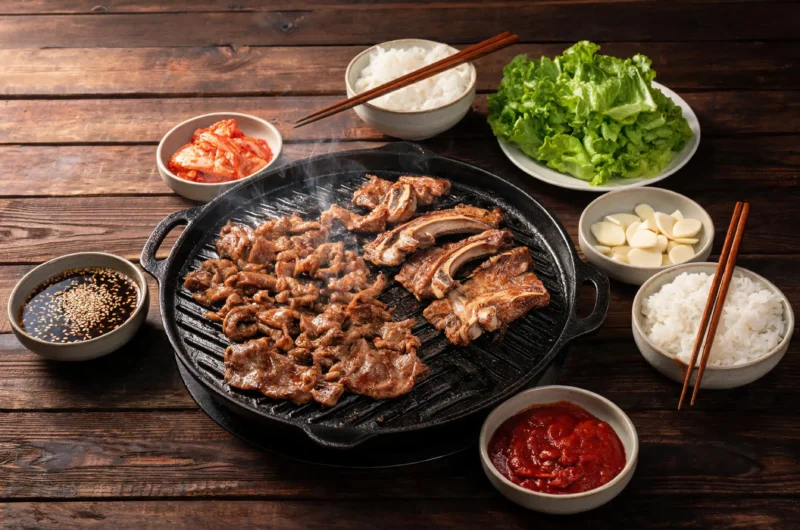
A proper Korean BBQ dinner ideas easy spread goes far beyond the meat. The side dishes — banchan — are what turn grilled meat into a complete cultural experience. You do not need to make all of them. Even two or three alongside the meat transforms the meal significantly.
Essential banchan to serve:
- Kimchi — store-bought is perfectly acceptable and genuinely good
- Steamed white rice in individual bowls
- Lettuce leaves — romaine or butter lettuce — for wrapping
- Perilla leaves or shiso if available
- Sliced garlic and green chilli for grilling alongside the meat
- Sesame oil mixed with salt as a dipping sauce for galbi
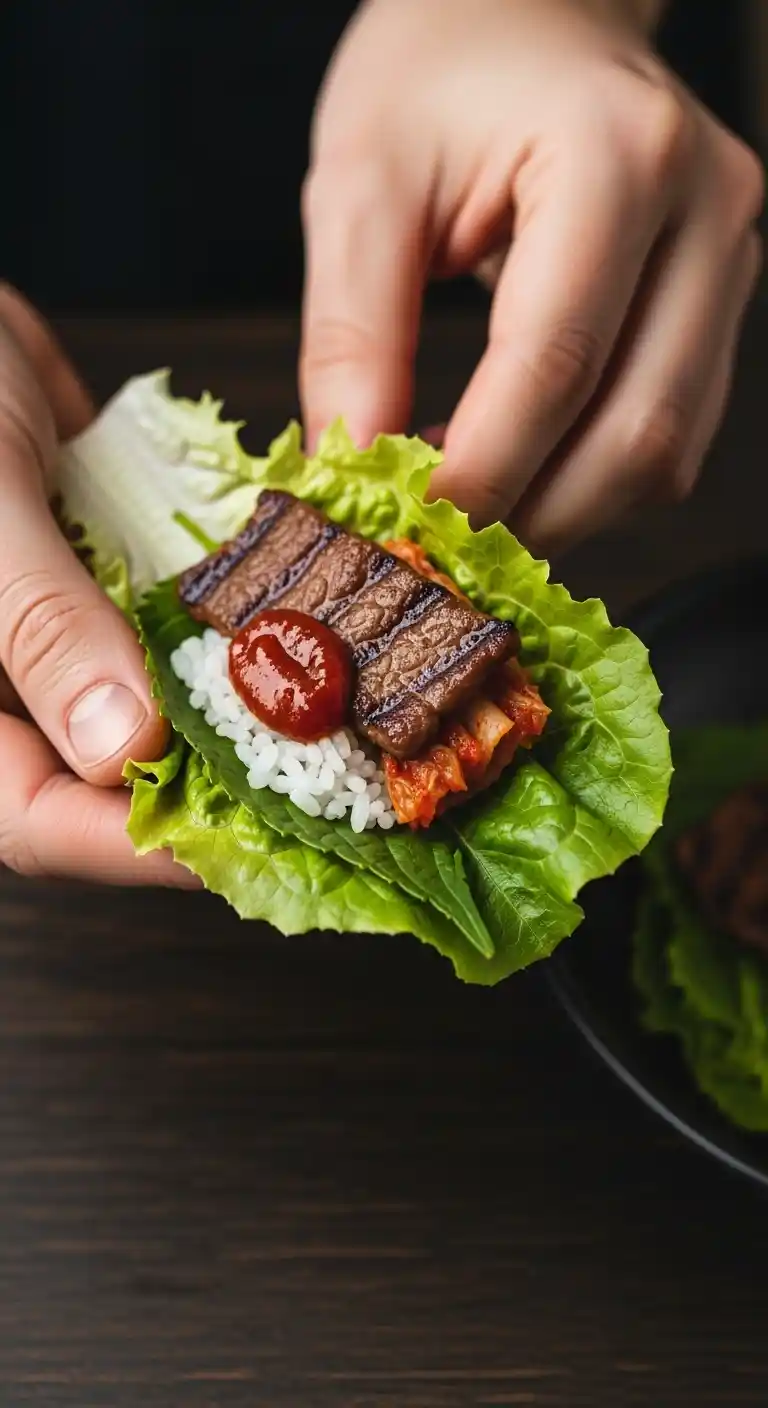
The wrapping ritual is the most satisfying part of eating Korean BBQ. Take a lettuce leaf, add a small amount of rice, place a piece of grilled meat on top, add kimchi and a tiny smear of the gochujang dipping sauce, then fold the whole thing into a bundle and eat in one bite. That combination of textures and flavours in a single mouthful is genuinely one of the best eating experiences available.
Korean BBQ Recipe That Beats Any Restaurant Version
4
servings20
minutes15
minutes2
hoursThis Korean BBQ recipe covers bulgogi beef, galbi short ribs, and spicy pork — each marinated in a bold soy, sesame, and garlic base with fruit enzymes for tenderness. Grilled at high heat until caramelised and served with rice, kimchi, and lettuce wraps, it delivers a complete restaurant-style Korean BBQ experience at home.
Ingredients
Bulgogi beef:
500g thinly sliced beef sirloin or ribeye
3 tablespoons soy sauce, 2 tablespoons brown sugar, 1 tablespoon sesame oil
4 garlic cloves, 1 teaspoon ginger, 2 spring onions
1 tablespoon grated Asian pear or kiwi, 1/2 teaspoon black pepper
Galbi short ribs:
800g flanken-cut beef short ribs
4 tablespoons soy sauce, 2 tablespoons brown sugar, 2 tablespoons sesame oil
1 tablespoon rice vinegar, 5 garlic cloves, 1 teaspoon ginger
2 tablespoons grated Asian pear, 1 tablespoon sesame seeds
Spicy pork:
500g thinly sliced pork belly or shoulder
2 tablespoons gochujang, 1 tablespoon soy sauce, 1 tablespoon sesame oil
1 tablespoon brown sugar, 4 garlic cloves, 1 teaspoon ginger, 2 spring onions
Korean BBQ dipping sauce:
3 tablespoons gochujang, 1 tablespoon sesame oil, 1 tablespoon rice vinegar
1 tablespoon honey, 2 teaspoons soy sauce, 1 garlic clove
- Place beef and pork in the freezer for 20 to 30 minutes until firm but not frozen
- Slice all proteins across the grain at 2 to 3mm thickness
- Ask butcher to cut short ribs flanken style if not already prepared
- Combine all bulgogi marinade ingredients in a bowl and whisk until sugar dissolves
- Combine all galbi marinade ingredients separately and mix until uniform
- Combine all spicy pork marinade ingredients and stir until gochujang fully incorporates
- Place each protein in a separate bag or bowl with its corresponding marinade
- Massage marinade firmly into every surface and between all slices
- Refrigerate bulgogi and pork for at least 2 hours and galbi overnight
- Combine all dipping sauce ingredients in a small bowl and stir until smooth
- Store dipping sauce covered in the fridge until needed
- Heat grill pan or outdoor grill to the highest possible temperature for at least 5 minutes
- Remove proteins from marinade allowing excess to drip briefly
- Grill bulgogi for 1 to 2 minutes per side until caramelised and slightly charred
- Grill galbi for 3 to 4 minutes per side until edges char and marinade caramelises
- Grill spicy pork for 2 to 3 minutes per side until cooked through with charred edges
- Cook all proteins in batches with space between pieces — never overcrowd
- Serve immediately with steamed rice, kimchi, lettuce leaves, and dipping sauce
Common Mistakes to Avoid
Not slicing thin enough: Thick bulgogi and pork pieces cook unevenly and require longer cooking time that dries out the exterior before the centre cooks through. Always slice at 2 to 3mm thickness.
Skipping the fruit enzyme: The grated Asian pear or kiwi produces tenderness that nothing else replicates. Every minute it spends in contact with the beef breaks down muscle protein and improves the final texture.
Grilling on insufficient heat: Caramelisation of the sugars in these marinades requires direct, high heat. Anything less produces pale, non-charred meat that misses the flavour character Korean BBQ is known for. :/
Marinating too long with fruit enzymes: Beyond 8 hours with pear or kiwi, the enzymes over-tenderise the beef and produce a mushy texture. Set a timer for the galbi and always remove bulgogi well before the 8-hour mark.
FAQs
Q1: Can I make Korean BBQ without a grill?
Yes — a very hot cast iron skillet or a flat griddle on the stove produces excellent results. Preheat the pan over high heat for 3 full minutes before adding any meat. The key requirement is a surface hot enough to caramelise the sugary marinade immediately on contact. A non-stick pan at moderate heat will not achieve this — use stainless steel or cast iron at maximum heat.
Q2: Where do I find gochujang paste?
Most large supermarkets now stock gochujang in the Asian foods aisle. Korean grocery stores carry multiple brands and heat levels. The most widely available brand internationally is CJ Haechandle. Look for gochujang in a distinctive red tub. It keeps in the fridge for months after opening and works as an all-purpose condiment well beyond Korean BBQ.
Q3: What is the difference between bulgogi and galbi?
Bulgogi uses thinly sliced beef — typically sirloin or ribeye — marinated in a soy-based sweet marinade. Galbi uses bone-in short ribs cut flanken style, also in a sweet marinade but with more body. Bulgogi cooks in under 2 minutes per side. Galbi takes 3 to 4 minutes per side. Both use similar marinade profiles but produce completely different textures and eating experiences.
Wrapping It Up
This Korean BBQ recipe at home guide gives you everything needed to recreate an authentic Korean BBQ experience — three proteins, three marinades, a homemade dipping sauce, and the complete banchan setup. Slice thin, use fruit enzymes, marinate for adequate time, grill at maximum heat, and serve with lettuce wraps and rice. Those habits produce a perfect result every time.
Whether you make just the bulgogi or the full three-protein spread, Korean BBQ consistently delivers one of the most social, satisfying dinner experiences available. Now fire up the grill and get marinating.