Most people reach for chocolate or vanilla when a celebration requires cake. Those people have clearly never encountered a properly made Italian Lemon Cream Cake recipe — light, fragrant lemon sponge layers, silky lemon mascarpone cream, and a brightness that makes every other cake in the room feel slightly heavy and apologetic. I made this for my mother’s birthday three years ago and she has requested it every year since without a single exception.
This creamy Italian Lemon Layer Cake draws from the Italian tradition of delicate, fruit-forward cakes that let exceptional ingredients speak for themselves rather than overwhelming every bite with sugar. The lemon mascarpone cream cake recipe filling is the centerpiece — smooth, tangy, generously lemony, and light enough that you genuinely want a second slice without any guilt whatsoever. Let us make it together.
Servings: 10 to 12 slices Prep Time: 30 minutes Bake Time: 25 to 30 minutes per layer Assembly and Chilling Time: 3 to 4 hours minimum Total Time: Approximately 4.5 to 5 hours including chilling
What You Need — The Complete Ingredients List
This homemade Italian Lemon Cake recipe uses bright, focused ingredients that work harmoniously rather than competing. Here is everything for a two-layer 20cm round cake:
For lemon sponge layers:
- 2.5 cups all-purpose flour, sifted
- 2 teaspoons baking powder
- 1/2 teaspoon baking soda
- 1/2 teaspoon salt
- 200g unsalted butter, room temperature
- 1.5 cups granulated white sugar
- 3 large eggs, room temperature
- 2 large egg yolks, room temperature (adds richness and a golden color)
- Zest of 3 large lemons (use unwaxed lemons — organic if possible)
- 1/2 cup fresh lemon juice (from approximately 3 to 4 lemons)
- 3/4 cup full-fat sour cream, room temperature
- 1/3 cup whole milk, room temperature
- 2 teaspoons pure vanilla extract
- 1/4 cup vegetable oil
Lemon simple syrup soak:
- 1/2 cup fresh lemon juice
- 1/2 cup granulated sugar
- 2 tablespoons water
For the lemon mascarpone cream:
- 400g full-fat mascarpone cheese, room temperature
- 300ml heavy whipping cream, very cold
- 1.5 cups powdered sugar, sifted
- Zest of 2 large lemons
- 3 tablespoons fresh lemon juice
- 1 teaspoon pure vanilla extract
- 1/4 teaspoon salt
For decoration:
- Thin lemon slices or half-slices (fresh or candied)
- Fresh thyme or mint sprigs (optional)
- Powdered sugar for dusting
- Lemon zest curls for garnish
- Edible flowers in yellow or white (optional but beautiful)
FYI, the combination of lemon zest AND fresh lemon juice in both the cake batter and the mascarpone cream is what creates the multi-dimensional lemon flavor that makes this Italian Bakery style Lemon Cake taste genuinely extraordinary rather than one-dimensionally citrus. Zest contributes the essential oil fragrance while juice contributes the bright, acidic punch — you genuinely need both working together.
The Making Process — Every Step in Full Detail
Step 1: Make the Lemon Simple Syrup First
The lemon simple syrup needs time to cool before you use it on the cake layers, so make it before anything else. Combine half a cup of fresh lemon juice, half a cup of granulated sugar, and two tablespoons of water in a small saucepan over medium heat. Stir as the mixture warms until every grain of sugar dissolves completely — this takes about two to three minutes of gentle stirring over medium heat.
Once the sugar dissolves, let the syrup come to a gentle simmer for one minute to fully incorporate the lemon juice into the sugar base. The syrup should look clear and slightly thick — not as thick as honey, but noticeably more viscous than plain juice. Remove from the heat and pour into a small bowl or jug. Let it cool completely to room temperature before using — hot syrup applied to sponge cake melts and displaces any cream on contact rather than soaking into the cake properly.
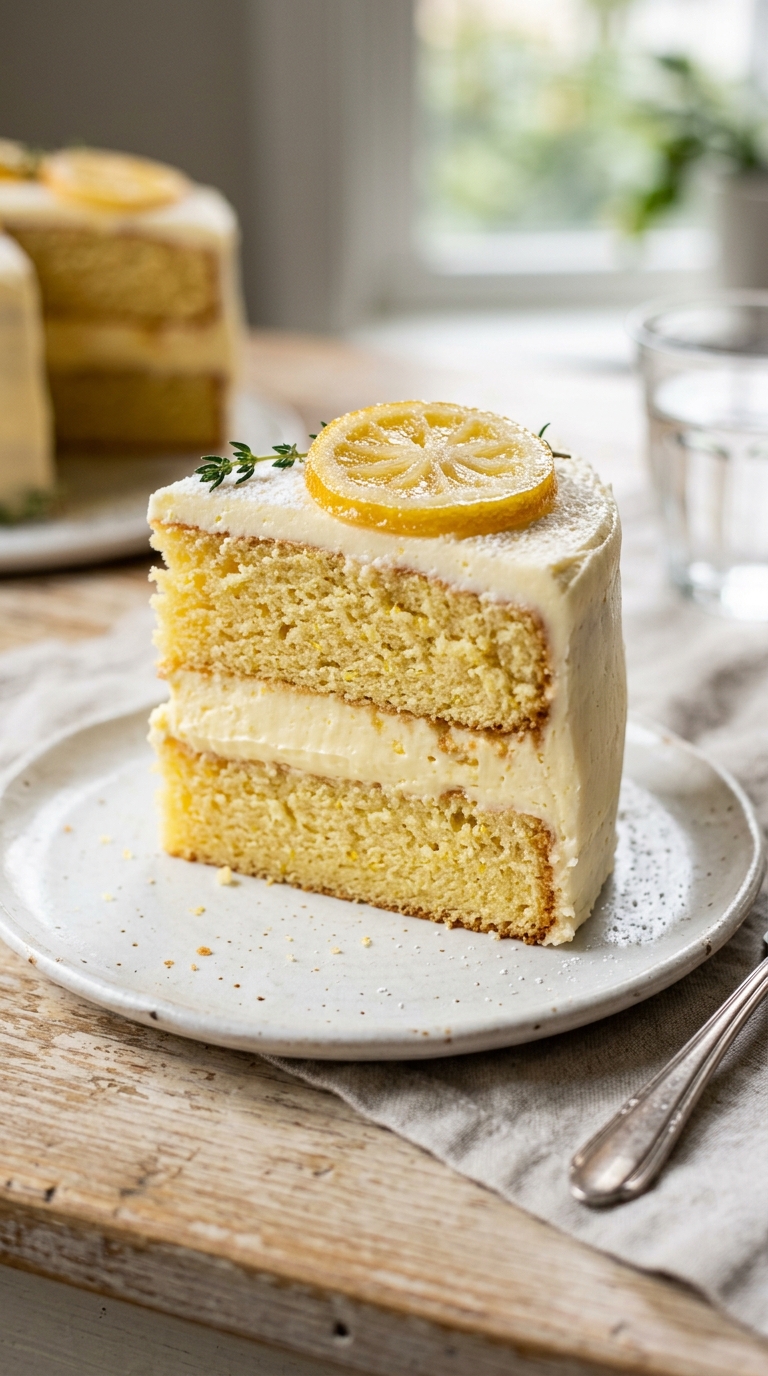
This lemon syrup soak is the detail that separates a moist lemon cream cake recipe easy from a dry, dense cake that disappoints. It adds moisture, amplifies the lemon flavor throughout every layer, and creates a beautiful cohesion between the sponge and the mascarpone cream. Do not skip it, even if the sponge layers look moist enough when they come out of the oven.
Step 2: Prepare the Pans and Preheat the Oven
Preheat your oven to 175 degrees Celsius. Grease two 20cm round cake pans thoroughly with butter or cooking spray, line the bottoms with parchment paper circles cut to fit exactly, grease the parchment, and dust the sides lightly with flour. This three-step preparation creates a completely reliable release — essential when you need intact, undamaged layers for a cake that needs to look elegant and polished for a special occasion.
Zest all three lemons needed for the batter before juicing them — it is significantly easier to zest a whole lemon than a juiced one. Use a microplane or fine grater and zest only the bright yellow outer layer, stopping before you reach the white pith underneath which adds bitterness rather than flavor. Measure the zest loosely packed into the measuring spoon — do not compress it. Set the measured zest aside with all the other prepared ingredients before you begin mixing the batter.
Step 3: Mix the Lemon Sponge Batter
Sift flour, baking powder, baking soda, and salt together into a medium bowl and set aside. In a separate jug, combine room-temperature sour cream, whole milk, fresh lemon juice, and vanilla extract and stir until uniform. Adding the lemon juice to the sour cream and milk first allows it to distribute evenly through the wet ingredients rather than being added directly to the fat where it could cause curdling before the batter fully emulsifies.
Beat room-temperature butter and vegetable oil together in a stand mixer on medium speed for two full minutes until smooth and unified. Add the granulated sugar and the lemon zest to the butter mixture and beat on medium-high speed for four full minutes until the mixture looks very pale, almost white, and genuinely fluffy. The lemon zest releases its essential oils into the butter and sugar during this extended creaming — the friction and mechanical action extract far more flavor from the zest than simple stirring would. Have you ever wondered why baked goods that call for zest always cream it with the fat first? This is exactly why.
Add the three whole eggs and two egg yolks one at a time on medium speed, beating for 30 seconds after each addition before adding the next. The extra yolks add a beautiful golden tint to the batter, extra richness in the finished crumb, and help create the tender texture that makes this fluffy Lemon Cream Cake dessert so light and appealing when you cut into it. After all five additions are incorporated, scrape down the bowl thoroughly with a rubber spatula.
Add the sifted dry ingredients and the sour cream lemon mixture in three alternating additions — beginning and ending with the dry ingredients — mixing on the absolute lowest speed just until each addition disappears without any visible white streaks remaining. The sour cream acts similarly to how it does in pound cake recipes — its fat and acidity tenderize the gluten and add a richness and moisture that keeps the sponge tender and moist for days. Stop mixing the instant the batter looks smooth and unified — overmixing at this stage develops gluten and produces a tough, rubbery crumb rather than the light, delicate texture this cake requires.
Step 4: Bake and Cool the Sponge Layers
Divide the batter evenly between the two prepared pans using a kitchen scale for accuracy. Spread each portion level with a rubber spatula reaching all the way to the edges. Tap each pan firmly three times on the counter to release any trapped air bubbles — large air bubbles create hollow spots in the crumb that break apart during slicing and compromise the elegance of each served piece.
Bake at 175 degrees Celsius for 25 to 30 minutes. Do not open the oven door before the 22-minute mark — the leavening needs uninterrupted heat during the first two-thirds of baking to create a proper, stable rise. Test for doneness starting at 25 minutes by inserting a toothpick into the center of each layer. It should emerge with just a few moist crumbs and no wet batter. The surface should feel springy and look set when pressed gently with your fingertip.
Cool both layers in their pans on wire racks for fifteen minutes. Then run a thin knife or offset spatula around the edges, invert onto the racks, peel the parchment away, and allow to cool completely. Completely means genuinely no warmth at all when you hold your palm over the surface — warm layers absorb the lemon syrup too aggressively and the mascarpone cream melts on contact :/
Step 5: Make the Lemon Mascarpone Cream
This lemon mascarpone cream is what makes this cake the genuine lemon mascarpone cream cake recipe that people remember and request repeatedly. It must be made with proper technique to achieve the right consistency — light and mousse-like, not dense or heavy. Start by placing the 400g of room-temperature mascarpone in a large bowl. Whisk it briefly by hand until completely smooth with no lumps — room temperature mascarpone smooths easily in under a minute.
Pour the very cold heavy whipping cream into a chilled stand mixer bowl. Beat on medium-high speed until the cream forms medium-to-firm peaks — firm enough to hold a defined shape but still slightly satiny rather than stiff and dry. Cold cream whips to a more stable result than cream at room temperature, which is why it must come directly from the refrigerator immediately before whipping. Chilling the bowl and beaters in the freezer for ten minutes beforehand produces an even more stable whipped cream — worth doing when the kitchen is warm.
Add the sifted powdered sugar, lemon zest, fresh lemon juice, vanilla, and salt to the whipped cream. Fold gently with a rubber spatula using four to five deliberate strokes — just enough to incorporate without significantly deflating the aerated cream. Now add the smooth mascarpone and fold gently until the mixture looks completely unified, smooth, and mousse-like. Do not switch back to the electric mixer after adding the mascarpone — mechanical over-beating causes mascarpone to release its fat and the cream to deflate into a runny, grainy disaster.
Refrigerate the finished lemon mascarpone cream for 20 to 30 minutes until it firms up slightly and holds a defined shape when spread. This brief chilling makes it significantly easier to spread between layers cleanly without it moving or sliding under the weight of the second layer. The cream also tastes more intensely lemon after a brief rest as the zest and juice have time to infuse through the mascarpone and cream base.
Step 6: Apply the Lemon Syrup Soak
Level both completely cooled cake layers with a long serrated knife if they domed during baking. Place a small dab of lemon mascarpone cream on your cake board or serving plate to prevent sliding. Place the first layer flat-side down on the board. Using a pastry brush, apply approximately half the cooled lemon simple syrup evenly across the entire top surface of the first layer — work in deliberate, overlapping brush strokes from the center outward, covering every area including the very edges.
The soaked surface should look visibly damp and slightly translucent but not saturated to the point where the cake feels fragile or mushy. The correct soak level makes the sponge look slightly glossy and darker in color — similar to how a sponge cake looks when it has absorbed a perfectly measured amount of liquid. Let the soaked layer sit for two to three minutes so the syrup absorbs from the surface into the interior before adding any cream — this prevents the syrup from mixing into the cream and diluting it.
Step 7: Fill, Stack, and Apply the Final Cream Layer
Spread a generous filling layer of chilled lemon mascarpone cream over the soaked first layer — approximately 200g or a generous half-centimeter thickness. Spread it evenly all the way to the edges using an offset spatula. Place the second layer flat-side up on top of the filled first layer and press gently and evenly across the entire surface. Apply the remaining lemon syrup soak to the top of the second layer and let it absorb for two to three minutes.
Refrigerate the assembled, soaked, unfrosted two-layer stack for 20 minutes before applying any outer frosting. This chilling firms the mascarpone filling and stabilizes the entire structure — making the cake significantly easier to frost cleanly without the layers shifting or the filling squeezing out from the sides during the application of the outer cream layer. This IMO is the step that most separates a polished result from a messy one.
Apply a thin crumb coat of lemon mascarpone cream over the entire exterior — top and all sides — then refrigerate for another 20 minutes until firm. Apply the final generous outer layer of cream using an offset spatula for the top and sides. Use a bench scraper held vertically against the sides for a smooth finish, or use the back of a spoon to create a soft, textured swirl pattern that looks intentionally rustic and elegant simultaneously. This easy lemon cream cake homemade style finish suits the Italian aesthetic perfectly — beautiful without being rigid.
Step 8: Decorate and Serve
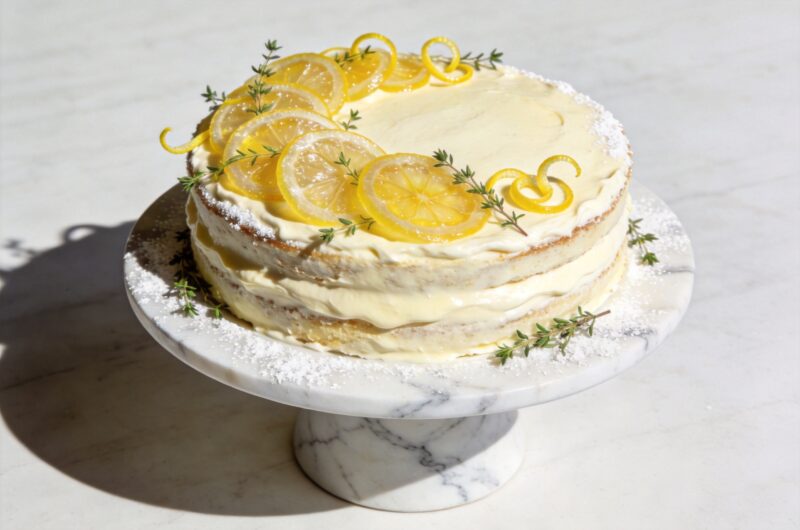
This is where the lemon whipped cream cake ideas styling comes to life. Arrange thin fresh or candied lemon slices across the top of the cake in an organic, slightly overlapping pattern — not forced symmetry, but considered placement that looks natural and abundant. Candied lemon slices are gorgeous and can be made in advance by simmering thin slices in equal parts water and sugar for 15 to 20 minutes until translucent, then drying on a wire rack.
Add lemon zest curls by using a vegetable peeler to create long, thin strips of lemon peel, then wrapping each strip tightly around a toothpick for thirty seconds to create a spiral shape. Press the curls gently into the cream surface. Add fresh thyme or mint sprigs and edible flowers if using — white or yellow blooms against the pale cream look genuinely beautiful and immediately signal the floral, citrus character of the cake before anyone takes a first bite.
Dust the very edges of the top lightly with powdered sugar — just enough to add a soft, snowy finish without obscuring the decoration underneath. Refrigerate the fully decorated cake for a minimum of three hours before serving. Overnight refrigeration allows the lemon flavor to fully permeate through every component and produces a cake that tastes significantly more cohesive and developed than one served immediately after assembly. Bring to room temperature for twenty minutes before slicing for the best mascarpone cream texture and most vibrant lemon flavor in every bite.
Why This Cake Works So Beautifully
The success of this Simple Lemon Cream Birthday Cake comes from a few key flavor and texture interactions that all work in harmony:
- Lemon zest in the butter: The fat extracts the essential oils from the zest during creaming, distributing the fragrance throughout the entire sponge rather than keeping it surface-level
- Sour cream in the batter: Adds fat, moisture, and gentle acidity that keeps the crumb tender for days
- The lemon syrup soak: Amplifies the citrus flavor in the sponge and creates the moist, cohesive texture that makes each slice hold together beautifully
- Mascarpone in the cream: Adds body, richness, and a slight savory depth that prevents the frosting from tasting one-dimensionally sweet
- Lemon in the cream: Zest for fragrance, juice for brightness — both working together create a cream that tastes genuinely lemon-forward
Variations Worth Trying
Limoncello Version
Add two tablespoons of limoncello to the lemon simple syrup soak and another two tablespoons to the mascarpone cream. The Italian lemon liqueur adds an aromatic, slightly floral depth to both components that makes this Italian Lemon Cream Cake recipe feel genuinely like something from a Positano patisserie. The alcohol evaporates partially during contact with the warm sponge, leaving only the fragrant, citrus depth behind. Strictly for adult gatherings — but worth it every single time.
Lemon and Raspberry Version
Spread a thin layer of good quality seedless raspberry jam over the mascarpone cream filling layer before placing the second sponge on top. The raspberry adds a fruity, slightly tart contrast to the lemon cream that is simultaneously unexpected and completely natural. Add fresh raspberries to the top decoration alongside the lemon slices. The pink and yellow color combination is genuinely one of the most beautiful in all of cake presentation.
Single Layer Sheet Cake Version
Bake the full batter in a 23x33cm rectangular pan at 175 degrees Celsius for 28 to 33 minutes. Apply the lemon syrup soak to the cooled sheet, spread the entire mascarpone cream over the top in a generous, swooped layer, and decorate with lemon slices and powdered sugar directly in the pan. This sheet version serves the same number of people with significantly less decorating effort — perfect for large family gatherings where presentation matters but time is limited.
Common Mistakes to Avoid
For a perfect creamy Italian Lemon Layer Cake result every time:
- Using bottled lemon juice: It tastes flat and chemical next to fresh — always use freshly squeezed juice and real lemon zest for both components
- Skipping the syrup soak: The sponge needs the moisture amplification — skipping it produces a noticeably drier, less flavorful cake
- Using cold mascarpone: Creates lumps that no amount of mixing eliminates — always use genuinely room-temperature mascarpone
- Beating mascarpone with electric mixer: Causes fat release and grainy, runny cream — always fold mascarpone into whipped cream by hand
- Skipping the chilling time: The mascarpone cream needs refrigeration to firm into a pipeable, spreadable consistency before and during use
- Serving straight from the refrigerator: Cold mascarpone cream feels heavy and the lemon flavor is muted — always bring to room temperature for twenty minutes before serving
Italian Lemon Cream Cake With Mascarpone Frosting
12
servings30
minutes30
minutesThis Italian Lemon Cream Cake soaks bright lemon sponge layers in a lemon simple syrup, fills and frosts them with silky lemon mascarpone whipped cream, and decorates with fresh lemon slices and powdered sugar. Serving 10 to 12 people, it delivers authentic Italian elegance with genuinely vibrant citrus flavor.
Ingredients
Combine half a cup of fresh lemon juice, half a cup of sugar, and two tablespoons of water in a small saucepan over medium heat, stir until dissolved, simmer one minute, then cool completely before using
Preheat oven to 175 degrees Celsius and prepare two 20cm round cake pans with butter, parchment circles, and a light flour dusting on the greased sides
Zest all three lemons before juicing and measure the loose zest, then sift flour, baking powder, baking soda, and salt together in one bowl and combine sour cream, whole milk, lemon juice, and vanilla in a separate jug
Beat room-temperature butter and oil on medium for two minutes, add sugar and lemon zest and beat on medium-high for four full minutes until pale and very fluffy, scraping the bowl twice
Add three whole eggs and two egg yolks one at a time beating 30 seconds after each, then add dry ingredients and sour cream mixture in three alternating additions on the lowest speed just until each disappears
Divide evenly between prepared pans, level, tap three times each, and bake at 175 degrees Celsius for 25 to 30 minutes until a toothpick comes out with just a few moist crumbs
Cool in pans fifteen minutes, invert onto racks, peel parchment, and cool completely before any assembly
Briefly whisk room-temperature mascarpone until smooth, then whip very cold heavy cream to medium-firm peaks in a separate chilled bowl
Fold powdered sugar, lemon zest, lemon juice, vanilla, and salt into the whipped cream gently, then fold in the smooth mascarpone by hand until unified and mousse-like
Refrigerate the mascarpone cream for 20 to 30 minutes until slightly firmed
Level both cooled layers, place the first on the cake board, brush half the cooled lemon syrup evenly across the entire surface and let absorb two to three minutes
Spread a generous mascarpone cream filling layer over the soaked first layer, place the second layer flat-side up on top, brush remaining syrup and let absorb, then refrigerate the stacked cake for twenty minutes
Apply a thin crumb coat over the exterior, refrigerate twenty minutes until firm, then apply the final outer cream layer and smooth with a bench scraper or create a textured swirl finish
Arrange lemon slices, zest curls, fresh herb sprigs, and optional edible flowers across the top, dust edges lightly with powdered sugar, refrigerate minimum three hours or overnight, then bring to room temperature twenty minutes before slicing
- Combine half a cup of fresh lemon juice, half a cup of sugar, and two tablespoons of water in a small saucepan over medium heat, stir until dissolved, simmer one minute, then cool completely before using
- Preheat oven to 175 degrees Celsius and prepare two 20cm round cake pans with butter, parchment circles, and a light flour dusting on the greased sides
- Zest all three lemons before juicing and measure the loose zest, then sift flour, baking powder, baking soda, and salt together in one bowl and combine sour cream, whole milk, lemon juice, and vanilla in a separate jug
- Beat room-temperature butter and oil on medium for two minutes, add sugar and lemon zest and beat on medium-high for four full minutes until pale and very fluffy, scraping the bowl twice
- Add three whole eggs and two egg yolks one at a time beating 30 seconds after each, then add dry ingredients and sour cream mixture in three alternating additions on the lowest speed just until each disappears
- Divide evenly between prepared pans, level, tap three times each, and bake at 175 degrees Celsius for 25 to 30 minutes until a toothpick comes out with just a few moist crumbs
- Cool in pans fifteen minutes, invert onto racks, peel parchment, and cool completely before any assembly
- Briefly whisk room-temperature mascarpone until smooth, then whip very cold heavy cream to medium-firm peaks in a separate chilled bowl
- Fold powdered sugar, lemon zest, lemon juice, vanilla, and salt into the whipped cream gently, then fold in the smooth mascarpone by hand until unified and mousse-like
- Refrigerate the mascarpone cream for 20 to 30 minutes until slightly firmed
- Level both cooled layers, place the first on the cake board, brush half the cooled lemon syrup evenly across the entire surface and let absorb two to three minutes
- Spread a generous mascarpone cream filling layer over the soaked first layer, place the second layer flat-side up on top, brush remaining syrup and let absorb, then refrigerate the stacked cake for twenty minutes
- Apply a thin crumb coat over the exterior, refrigerate twenty minutes until firm, then apply the final outer cream layer and smooth with a bench scraper or create a textured swirl finish
- Arrange lemon slices, zest curls, fresh herb sprigs, and optional edible flowers across the top, dust edges lightly with powdered sugar, refrigerate minimum three hours or overnight, then bring to room temperature twenty minutes before slicing
Frequently Asked Questions
Q1: Can I use regular cream cheese instead of mascarpone? Full-fat cream cheese works as a substitute but produces a noticeably tangier, denser, and less elegant result than mascarpone. Mascarpone has a higher fat content and a milder, richer flavor that is distinctly more Italian and more suited to this style of cake. If substituting, use two-thirds cream cheese to one-third heavy cream beaten together to approximate mascarpone’s consistency and fat content. The result is good but genuinely different from the authentic version.
Q2: Can I make the lemon sponge layers ahead of time? Yes — bake the layers completely, cool them to room temperature, wrap each tightly in two layers of plastic wrap, and store at room temperature for up to 24 hours or freeze for up to two months. Thaw frozen layers at room temperature still wrapped for two to three hours before assembling. The lemon syrup soak and mascarpone cream should be made fresh on the day of assembly for the best consistency and flavor.
Q3: Why does my lemon flavor taste weak in the finished cake? Weak lemon flavor almost always means insufficient zest in the batter, old or dried-out lemons rather than fresh and fragrant ones, or not using the full amount of lemon in the mascarpone cream. The lemon syrup soak is also essential for amplifying the citrus throughout the sponge — skipping it or applying too little reduces the perceived lemon intensity significantly. Use the freshest lemons available and measure the zest generously.
Q4: How long does Italian Lemon Cream Cake keep? The assembled decorated cake keeps refrigerated for up to four days. The mascarpone cream remains stable and the lemon flavor actually deepens and improves on day two compared to day one. Store covered under a cake dome or large inverted bowl — avoid plastic wrap directly against the decoration. Bring to room temperature for twenty minutes before each serving for the best cream texture and most vibrant lemon character in every slice.
Q5: Can I make this cake without a stand mixer? A handheld electric mixer works perfectly well for every component of this recipe — the same creaming method, the same alternating wet and dry ingredient additions, and the same whipped cream technique all work identically with a handheld mixer. The only caution is the same as with a stand mixer — always switch off the electric mixer completely when folding the mascarpone into the whipped cream and finish that step entirely by hand with a rubber spatula.
Make This Cake and Let the Lemons Do All the Work
This Italian Lemon Cream Cake recipe is one of those beautiful bakes where quality ingredients and correct technique produce results that far exceed the apparent complexity of the method. Bright lemon sponge, silky mascarpone cream, a fragrant citrus syrup soak — all working together in perfect balance.
Make it for the next birthday that deserves something genuinely memorable. Make it for a dinner party that needs a showstopping finish. Or make it because lemons are in season and life is genuinely too short for ordinary cake. All three are equally valid reasons 🙂