You buy a beautiful bunch of fresh cilantro, use two sprigs for your recipe, and shove the rest in the fridge. Three days later? Slimy, yellowing mush. Sound familiar? I’ve done this more times than I care to admit, and it felt like throwing money straight into the bin every single time. The good news is that storing fresh herbs properly is genuinely simple — you just need to know the right method for each herb.
Why Fresh Herbs Die So Fast in the First Place
Most people treat fresh herbs like they treat leftover vegetables — toss them in the fridge and hope for the best. But herbs are essentially still living plants, and they need specific conditions to stay fresh.
The three main killers of fresh herbs are:
- Excess moisture causing rot and sliminess
- Too little moisture causing wilting and drying out
- Cold temperatures damaging delicate leaves (yes, the fridge actually hurts some herbs)
Understanding which enemy your specific herb faces helps you pick the right storage method instantly.
The Big Divide: Soft Herbs vs. Hardy Herbs
This is the most important thing to understand about storing fresh herbs. Not all herbs store the same way — and treating them all identically is exactly why most of them die prematurely.
Soft Herbs
These have delicate, tender leaves and thin stems. They include:
- Cilantro
- Parsley
- Basil
- Mint
- Dill
- Tarragon
- Chervil
Hardy Herbs
These have woody stems and tougher, more resilient leaves. They include:
- Rosemary
- Thyme
- Oregano
- Sage
- Marjoram
- Bay leaves
Once you know which category your herb falls into, the right storage method becomes obvious. Let’s break both down properly.
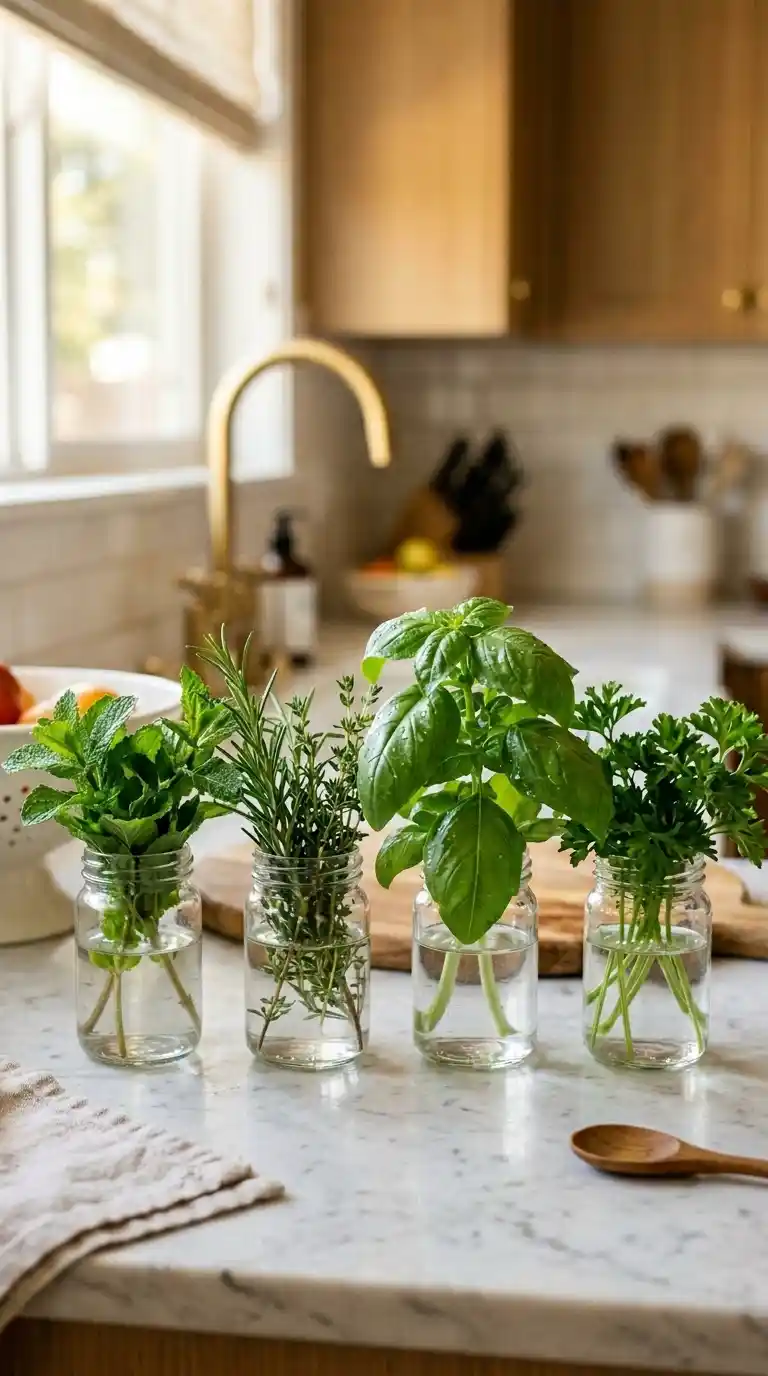
How to Store Soft Herbs (The Jar Method)
Soft herbs absolutely love the jar method, and IMO it’s the single best discovery I’ve made in my kitchen. Treat them like fresh flowers — they need water, not cold dry air.
Step-by-step:
- Trim about half an inch off the bottom of the stems at an angle
- Fill a glass or jar with an inch or two of cold water
- Place the herbs stem-down into the water
- Cover the leaves loosely with a plastic bag or reusable produce bag
- Store in the fridge (except basil — more on that below)
Change the water every two days and your cilantro, parsley, and dill can easily last two to three weeks. I went from tossing wilted cilantro after four days to having perfectly fresh bunches lasting nearly three weeks with this method alone.
The Basil Exception
Basil is the drama queen of the herb world. It hates the cold — refrigerator temperatures turn it black almost overnight. Store basil at room temperature in a jar of water on your counter, away from direct sunlight. Treat it exactly like a bouquet of flowers sitting on your kitchen counter. It’ll stay fresh and perky for up to a week without ever touching the fridge. 🙂
How to Store Hardy Herbs (The Damp Paper Towel Method)
Hardy herbs don’t need water — they just need a controlled level of moisture to stay fresh without rotting. The damp paper towel method works perfectly for rosemary, thyme, oregano, and sage.
Step-by-step:
- Lay the herbs in a single layer on a slightly damp paper towel
- Roll the paper towel loosely around the herbs
- Place the rolled bundle inside a zip-lock bag or airtight container
- Store in the coldest part of your fridge (usually the back)
Done correctly, hardy herbs stored this way stay fresh for two to four weeks — sometimes even longer for rosemary and thyme. FYI, make sure the paper towel is damp, not wet. Too much moisture and you’ll still get rot.
The Freezer Method: Long-Term Herb Storage That Actually Works
Want to store fresh herbs for months rather than weeks? The freezer is your answer. Most people assume freezing herbs ruins them, but that’s only true if you freeze them incorrectly.
Freeze in Olive Oil (Best Method)
This works brilliantly for almost every herb:
- Chop herbs finely
- Fill an ice cube tray with the chopped herbs
- Pour olive oil over the top to cover completely
- Freeze until solid, then transfer the cubes to a freezer bag
Each cube gives you a perfectly portioned amount of herb-infused oil ready to drop straight into soups, stews, sauces, and stir-fries. I keep a whole tray of frozen basil-in-oil cubes ready to go all winter — it’s a genuine game changer.
Freeze Dry on a Tray (For Delicate Herbs)
For herbs you want to use in uncooked dishes:
- Spread clean, dry herb leaves in a single layer on a baking tray
- Freeze for one to two hours until solid
- Transfer to a labeled freezer bag and squeeze out excess air
This method preserves the individual leaves so they don’t clump together. They won’t have the same fresh texture after freezing, but the flavor stays remarkably strong — perfect for cooking.
Drying Fresh Herbs at Home: The Simplest Long-Term Solution
Sometimes the best way to make fresh herbs last longer is to dry them yourself at home. Store-bought dried herbs lose potency sitting on a shelf for months — home-dried herbs taste noticeably stronger and fresher because you control the whole process.
Air Drying (Best for Hardy Herbs)
- Bundle four to six stems together with kitchen twine
- Hang them upside down in a warm, dry spot with good airflow
- Leave for one to two weeks until completely dry and crumbly
- Strip the leaves and store in an airtight jar away from light
Rosemary, thyme, oregano, and sage all air-dry beautifully. The bundles also look genuinely lovely hanging in a kitchen — decorative and functional at the same time.
Oven Drying (Faster Method)
- Spread herb leaves in a single layer on a baking sheet lined with parchment
- Dry at the lowest oven setting (ideally 90–100°C / 200°F) for one to two hours
- Check every 30 minutes — you want dry and crumbly, not brown and toasted
- Cool completely before storing in airtight containers
Label everything with the date — dried herbs lose their potency after about six months, so you want to know when it’s time to replace them.
Common Herb Storage Mistakes to Stop Making Right Now
Even with the best intentions, people keep making a few consistent errors that shorten herb life dramatically. Here’s what to avoid:
- Washing herbs before storage — moisture accelerates rot; wash them right before use instead
- Storing herbs near ethylene-producing fruits like apples and bananas — these gases speed up spoilage
- Using airtight containers without any airflow — herbs need to breathe slightly
- Forgetting to check and change water in the jar method — stale water breeds bacteria fast
- Overpacking herbs together — crowding causes bruising and speeds up decay
Fix these habits and you’ll notice a significant improvement in how long your herbs stay fresh, even before changing your storage method.
Wrapping It Up
Storing fresh herbs properly comes down to one thing: knowing what each herb actually needs. Soft herbs love the jar method with water; hardy herbs thrive wrapped in a damp paper towel; basil demands your countertop. For longer storage, freeze in olive oil or dry them at home for flavors that beat anything from a supermarket spice aisle.
Stop letting beautiful, expensive fresh herbs turn to mush in the back of your fridge. Pick one method today, try it with whatever herbs you currently have, and watch them last dramatically longer. Your cooking — and your wallet — will thank you.