I served this to my sister without telling her what was in it. She ate the whole bowl, asked for seconds, and then looked mildly betrayed when I told her the main ingredient was cabbage. That reaction is basically what happens every single time I make this dish and honestly it never gets old.
Cabbage Alfredo sounds like something you make when the fridge is empty and hope is running low — and the first time I made it, that was exactly the situation. Quarter head of cabbage, some pasta, cream, garlic, parmesan. An hour later I was genuinely confused about why I had never done this before. The cabbage caramelizes in butter into something sweet and silky and almost meaty, and the Alfredo sauce coats it all in that rich, glossy way that makes people forget they are eating a budget vegetable.
This cabbage Alfredo recipe easy version is now a permanent fixture in my rotation. It takes about 35 minutes, costs almost nothing, and tastes like something far more deliberate than it actually is.
Servings: 4
Prep Time: 10 minutes
Cook Time: 25 minutes
Total Time: 35 minutes
What Goes In It
For this creamy cabbage pasta recipe, here is everything you need for four servings:
The main ingredients:
- 400g fettuccine or pappardelle (wide noodles work best here — they hold the sauce and nestle against the cabbage beautifully)
- 1/2 head green cabbage, approximately 600g, core removed and thinly sliced into strips
- 4 tablespoons unsalted butter, divided
- 6 cloves garlic, finely minced
- 1 cup heavy cream
- 1/2 cup whole milk
- 1.5 cups freshly grated parmesan cheese
- 1/2 teaspoon black pepper
- 1/2 teaspoon white pepper
- 1 teaspoon salt, adjusted to taste
- 1/4 teaspoon freshly grated nutmeg
- 1/2 cup pasta cooking water, reserved
Optional but recommended:
- 1/2 teaspoon crushed red pepper flakes
- Fresh parsley for serving
- Extra parmesan, obviously
FYI — the nutmeg sounds optional but it genuinely is not. A tiny amount of nutmeg in cream sauce adds a warm, slightly sweet background note that makes the whole dish taste more complex and less flat. It is the kind of ingredient where you notice it when it is missing more than when it is present.
How to Actually Make It
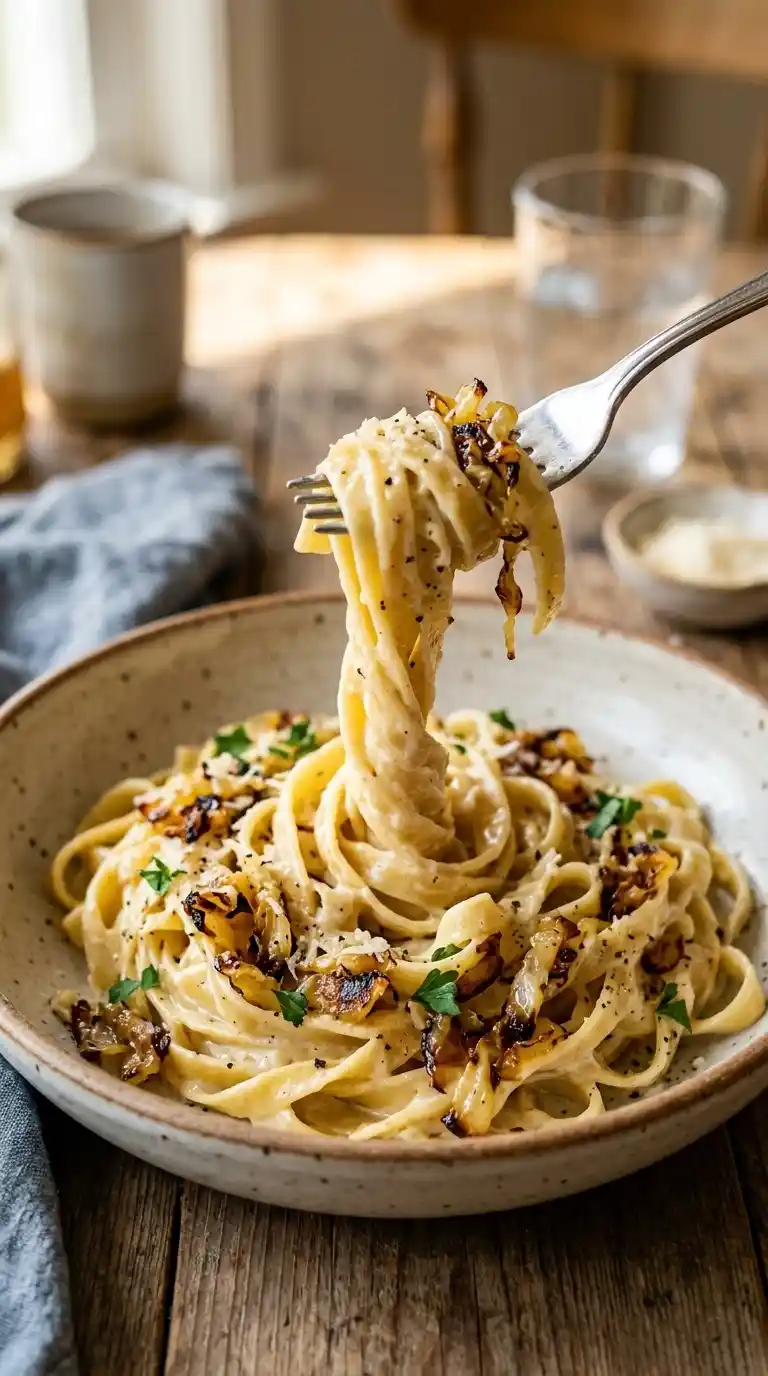
Step One: Slice the Cabbage Properly
Peel away the outer leaves of the cabbage and cut it in half through the core. Remove the core completely — it stays tough and woody even after long cooking and nobody wants to encounter it in a pasta dish. Slice the cabbage into thin strips, roughly half a centimeter wide. You want them thin enough to soften quickly but not so thin they disappear entirely into the sauce.
The total weight of sliced cabbage should be around 600g. It looks like an enormous amount when you first add it to the pan, which is slightly alarming, but it cooks down dramatically — we are talking about a 60 to 70 percent reduction in volume. If you have never watched cabbage caramelize properly, you are in for a genuine surprise at how different it tastes from raw cabbage :/
Step Two: Caramelize the Cabbage — This Is the Whole Game
Heat two tablespoons of butter in a large, wide skillet over medium-high heat. Add all the sliced cabbage at once and toss it in the hot butter. Spread it out as evenly as you can across the pan. Do not stir it for the first two to three minutes — you want the bottom layer making direct contact with the hot pan so it can start developing golden color.
After two to three minutes, toss the cabbage and let it sit again. Repeat this pattern for about twelve to fifteen minutes total, tossing every two to three minutes, until the cabbage is soft, deeply golden in patches, and smells almost sweet. This is where the magic happens. Raw cabbage tastes sharp and slightly sulfurous. Properly caramelized cabbage tastes almost like caramelized onion — mellow, sweet, deeply savory. Those are two completely different ingredients as far as your palate is concerned.
Add a good pinch of salt and both peppers to the cabbage during the last few minutes of cooking. Season as it cooks rather than all at the end — the salt pulls out any remaining moisture and helps the caramelization continue more effectively. Once the cabbage looks properly golden and smells incredible, push it to the edges of the pan and reduce the heat to medium.
Step Three: Build the Alfredo Sauce Right in the Same Pan
Add the remaining two tablespoons of butter to the center of the pan. Once it melts, add the minced garlic and stir constantly for about 90 seconds. You want it fragrant and pale golden but not brown — garlic that browns in butter turns slightly bitter and that bitterness carries through the whole finished sauce in a way that is really hard to fix.
Pour the heavy cream and whole milk into the pan over the garlic, stirring to combine everything including the caramelized cabbage around the edges. Add the grated nutmeg and red pepper flakes if using. Bring the cream to a gentle simmer and let it cook for three to four minutes, stirring occasionally. You want it to reduce very slightly and look like it has thickened just a little before the cheese goes in.
Remove the pan from the heat — this is important — and add the parmesan in two batches, stirring each addition until fully melted before adding the next. Adding cheese to actively boiling cream causes the proteins to seize and the sauce turns grainy and separated rather than smooth. Off the heat with a hot but not boiling base is the correct moment. If the sauce feels too thick, add pasta water a splash at a time — that starchy water loosens it without watering down the flavor.
Step Four: Cook the Pasta and Bring It All Together
While the cabbage is caramelizing, bring a large pot of generously salted water to a boil. Cook the fettuccine according to package instructions but pull it out one to two minutes early. Scoop out at least half a cup of pasta water before you drain it — that cloudy, starchy liquid is what makes the sauce cling properly to the noodles rather than pooling at the bottom of the bowl.
Add the drained pasta directly to the pan with the cabbage Alfredo sauce. Toss everything together vigorously over low heat for about two minutes. Add pasta water in small splashes as needed until the sauce is silky and coating every strand and every piece of cabbage. The sauce should look glossy and slightly thick — not watery, not gluey, just that perfect coating consistency that means it will cling to the fork when you lift it.
Taste at the end and adjust salt. The parmesan adds significant saltiness so you might need less additional salt than you expect. Add more black pepper if you want — this is a dish that genuinely benefits from a generous amount of pepper, IMO more than most pasta recipes.
The Roasted Cabbage Version
If you want to take this somewhere more interesting, try the roasted cabbage Alfredo approach. Cut the cabbage into flat slabs about 1.5cm thick, brush both sides with olive oil and season well, and roast at 220 degrees Celsius for 25 to 30 minutes until the edges are deeply charred and crispy. The char adds a smoky bitterness that plays beautifully against the rich cream sauce. Break the roasted slabs into pieces and toss with the pasta and sauce exactly as described above.
The roasted version takes longer but produces a more complex, almost restaurant-quality result. The charred edges bring a slightly bitter, caramelized depth that the sautéed version does not quite achieve.
Adding Chicken to Make It More Substantial
For cabbage Alfredo with chicken, slice two chicken breasts into thin strips and season with salt, pepper, and garlic powder. Sauté them in a separate pan with olive oil over high heat for about three to four minutes per side until golden. Add the cooked chicken to the finished pasta at the end and toss through gently.
The chicken makes this a much more filling and protein-forward meal without changing the essential character of the dish. It goes from a budget weeknight side to a complete dinner. You can also use leftover rotisserie chicken shredded and stirred through at the last minute — even faster and works just as well.
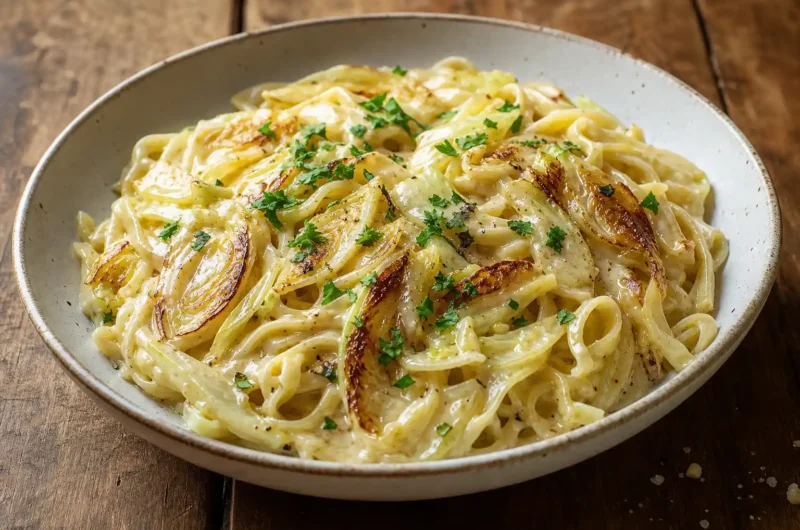
Cabbage Alfredo The Pasta Dish Nobody Expects to Love
4
servings10
minutes25
minutesThis Cabbage Alfredo caramelizes thinly sliced green cabbage in butter until golden and sweet, builds a garlic cream and parmesan Alfredo sauce in the same pan, and tosses it all with wide fettuccine noodles and starchy pasta water. Ready in 35 minutes, serving four people on a genuinely tiny budget.
Ingredients
400g fettuccine or pappardelle
1/2 head green cabbage (approximately 600g), thinly sliced
4 tablespoons unsalted butter, divided
6 cloves garlic, finely minced
1 cup heavy cream
1/2 cup whole milk
1.5 cups freshly grated parmesan
1/2 teaspoon black pepper
1/2 teaspoon white pepper
1 teaspoon salt
1/4 teaspoon freshly grated nutmeg
1/2 cup reserved pasta water
Optional: red pepper flakes, fresh parsley
- Core and thinly slice half a head of green cabbage into half-centimeter strips
- Melt two tablespoons of butter in a wide skillet over medium-high heat, add all the cabbage, and cook using a toss-and-rest method every two to three minutes for twelve to fifteen minutes until deeply golden and caramelized
- Season with salt and both peppers during the last few minutes of cabbage cooking
- Push cabbage to the edges, add remaining two tablespoons of butter to the center, melt, add garlic and stir constantly for 90 seconds until fragrant
- Pour in heavy cream and whole milk, add nutmeg and red pepper flakes, bring to a gentle simmer and reduce for three to four minutes
- Remove pan from heat and add parmesan in two batches stirring each until fully melted
- Cook fettuccine in heavily salted water until two minutes before al dente, reserve half a cup of pasta water, then drain
- Add drained pasta to the cabbage Alfredo pan and toss over low heat adding pasta water as needed until the sauce is silky and coating every strand
- Taste and adjust salt, add extra black pepper, serve immediately with extra parmesan and fresh parsley
Why This Works as a Budget Meal
A half head of cabbage costs almost nothing in most places. Parmesan and cream are the more expensive components, but this dish uses modest quantities of each and the flavors punch well above the cost. As cabbage pasta budget meal situations go, this one is genuinely hard to beat — the ingredients total less than most takeout options and the result is substantially better.
The dish also scales up very well. Double everything for a crowd and use a large pasta pot to toss it all together. It reheats reasonably well the next day with a splash of milk stirred in during warming.
Frequently Asked Questions
Q1: Can I use regular cabbage or does it have to be a specific type?
Regular green cabbage is the standard choice and what this recipe is written for. Savoy cabbage also works well and has a slightly more delicate flavor and softer texture that some people prefer in this application. Napa cabbage caramelizes faster due to its higher moisture content — good if you are in a hurry, but watch it closely because it can go from golden to mushy quickly. Red cabbage changes the color of the sauce to a slightly strange purple — it tastes fine but looks unusual so most people avoid it here.
Q2: Can I make this dairy-free?
The Alfredo sauce depends heavily on the fat content of the cream and parmesan for its texture. Full-fat canned coconut milk works as a cream substitute and the flavor is different but not bad — it adds a faint sweetness that actually works with the caramelized cabbage. Nutritional yeast plus cashew cream makes a reasonable vegan parmesan substitute. The result will not taste like traditional Alfredo but it produces a genuinely good, creamy cabbage pasta that is fully plant-based.
Q3: What pasta shape works best for this recipe?
Wide, flat noodles like fettuccine, pappardelle, or tagliatelle work best because the strips of caramelized cabbage nestle against the wide noodles and each forkful gets both components together. Thinner pasta like spaghetti tends to separate from the cabbage rather than carrying it. Short pasta like rigatoni or penne also works in a more casual, chunky version of the dish — less elegant but the same great flavor. The cabbage fettuccine recipe format is genuinely the most satisfying presentation.
Make It Once and You Will Make It Monthly
Cabbage Alfredo vegetarian dining at its most surprising. A cheap vegetable transformed completely through proper cooking into something genuinely craveable. Thirty-five minutes. One pan for the sauce, one pot for the pasta. Minimal cleanup. Maximum return on your grocery spend.
The key is giving the cabbage the time it needs to caramelize properly. Do not rush that step. Everything else follows naturally from it and the result is a bowl of pasta that makes people ask for the recipe without realizing they just ate their vegetables.