I added gochujang to my eggs on a whim one Tuesday morning when I ran out of hot sauce and genuinely could not go back after that. The depth of flavour from that one paste — fermented, spicy, slightly sweet, faintly smoky — turned a forgettable breakfast into something I actively look forward to every single morning.
This gochujang eggs recipe gives you two versions — crispy fried eggs with a bold gochujang glaze, and creamy gochujang scrambled eggs for when you want something richer. Both take under 10 minutes, use one pan, and taste significantly more exciting than anything you would expect from such a short ingredient list.
What You’ll Need (Ingredients)
Simple, accessible ingredients — gochujang paste is the only thing you may need to find at an Asian grocery store or online.
For gochujang sauce:
- 1.5 tablespoons gochujang paste
- 1 teaspoon soy sauce
- 1 teaspoon sesame oil
- 1 teaspoon honey or maple syrup
- 1 teaspoon rice vinegar
- 1 small garlic clove, finely grated
- 1 tablespoon water — to loosen the sauce
For the eggs:
- 4 large eggs
- 1 tablespoon butter or neutral oil — vegetable or sunflower oil works well
- Salt and black pepper to taste
Serving:
- Steamed white rice or toasted bread
- 2 spring onions, thinly sliced
- 1 teaspoon toasted sesame seeds
- Extra gochujang drizzle — optional
How to Make It — Full Step-by-Step Process
Version One: Gochujang Fried Eggs
Step One: Mix the Gochujang Sauce
Before heating the pan, make the sauce completely so it is ready to add the moment the eggs hit the plate. Add 1.5 tablespoons of gochujang paste to a small bowl. The paste is thick and deep red — it looks more intense than it tastes once diluted with the other ingredients, so do not let the colour intimidate you.
Add 1 teaspoon of soy sauce, 1 teaspoon of sesame oil, 1 teaspoon of honey, 1 teaspoon of rice vinegar, and 1 finely grated garlic clove. Add 1 tablespoon of water to loosen everything into a pourable consistency. Whisk the mixture together with a fork for about 20 seconds until it looks uniform and glossy. Taste a small amount on the tip of your finger — it should taste bold, slightly sweet, tangy, and genuinely spicy. Adjust heat or sweetness slightly to match your preference before using.
This sauce is genuinely versatile beyond just eggs. FYI, this same mixture works beautifully as a noodle sauce, a rice bowl topping, or a dipping sauce for dumplings — make extra and keep a jar in the fridge for up to 10 days.
Step Two: Fry the Eggs Properly
Place a non-stick frying pan over medium heat and add 1 tablespoon of butter or neutral oil. Allow the butter to melt completely and begin to foam slightly before adding the eggs — the foam tells you the pan has reached the right temperature for frying without burning.
Crack all 4 eggs carefully into the pan one at a time, holding each egg close to the surface to prevent the yolk from breaking on impact. Space the eggs out so they do not touch and merge into each other during cooking. Season each egg immediately with a small pinch of salt and black pepper directly after cracking.
Cook the eggs on medium heat for 2 to 3 minutes without touching them or tilting the pan. The whites need time to set fully from the bottom up — moving or tilting the pan too early tears the whites before they have firmed up properly and ruins the presentation. Watch the edges of the white nearest the yolk — the moment those edges turn from transparent to fully white and opaque, the egg is nearly ready.
For runny yolk fried eggs — the best version for this recipe — remove from the pan at the 2.5-minute mark when the whites look fully set but the yolks still look glossy, round, and unset on top. For fully cooked yolks, add a lid to the pan for the final 60 seconds and allow the trapped steam to cook the yolk surface through without flipping.
Step Three: Add the Gochujang Sauce
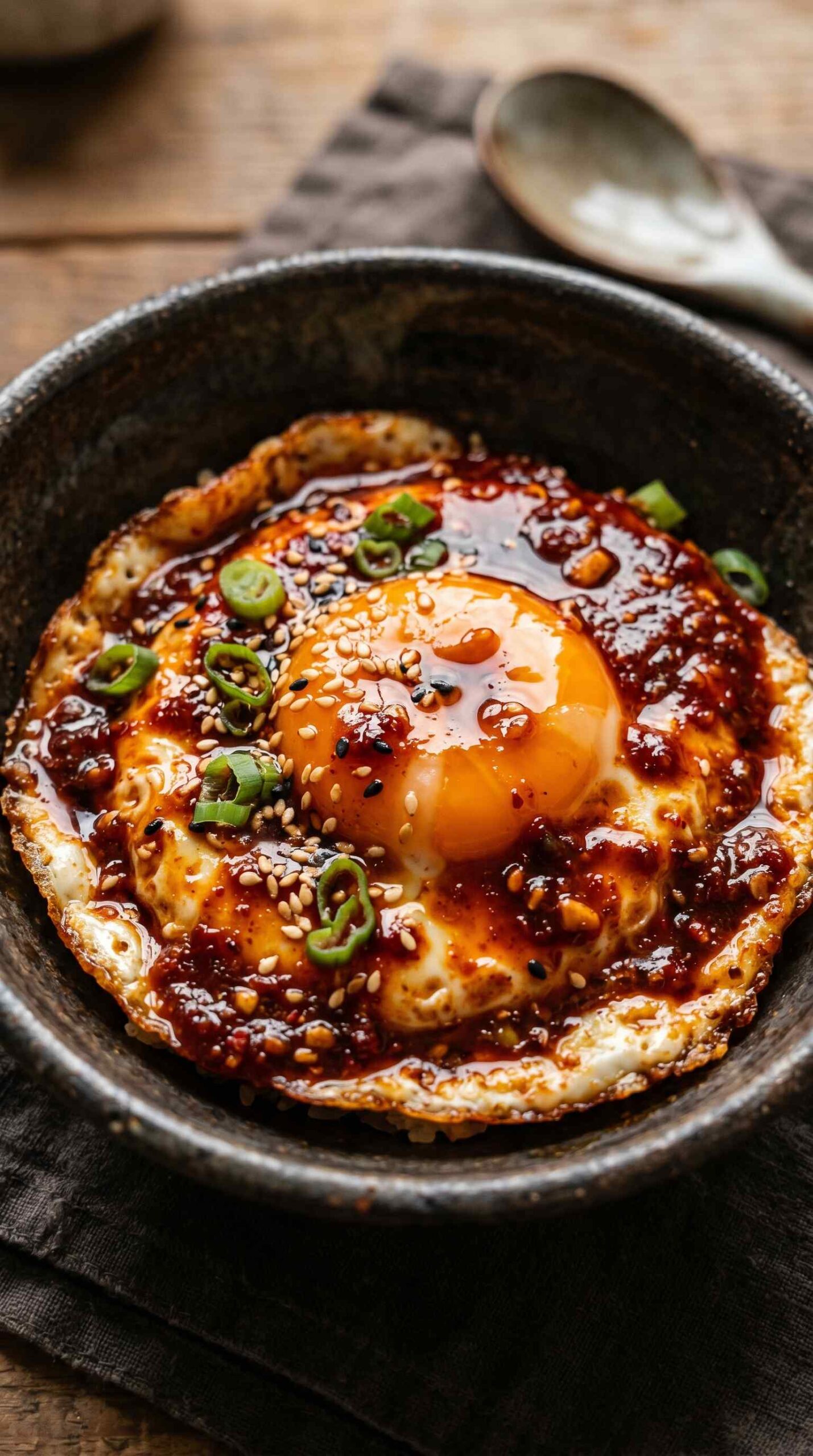
Slide the fried eggs onto your serving plate or bowl of steamed rice. Spoon the gochujang sauce generously and directly over the eggs — do not be shy with the quantity here. The sauce is the whole point of this dish and a thin, cautious drizzle undersells the flavour completely.
Use the back of the spoon to spread the sauce slightly so it covers both yolks and most of the white surface. Add a second, thinner drizzle of pure sesame oil over the top — this adds fragrance and a glossy, restaurant-style finish that the sauce alone does not provide. Scatter the sliced spring onions and toasted sesame seeds over everything immediately before serving.
Version Two: Gochujang Scrambled Eggs
Step One: Whisk the Eggs With Sauce
Crack 4 eggs into a bowl and add 1 tablespoon of the pre-mixed gochujang sauce directly into the eggs before whisking. Adding the sauce to the eggs before cooking rather than after produces a more evenly distributed, deeply flavoured result than stirring it into already-cooked eggs at the end.
Whisk the eggs and gochujang sauce together vigorously for about 30 seconds until the mixture looks completely uniform — a consistent deep orange-red colour throughout with no streaks of plain egg or unmixed sauce visible. The gochujang turns the eggs a striking terracotta colour before they even hit the pan. Add a small pinch of salt here but go lighter than usual because the soy sauce in the gochujang mixture already contributes significant saltiness.
Step Two: Cook the Scrambled Eggs Low and Slow
Place a non-stick pan over low to medium-low heat. Add 1 tablespoon of butter and allow it to melt slowly and coat the base of the pan completely. Pour the gochujang egg mixture into the pan once the butter has melted fully.
Leave the eggs untouched for 30 seconds while the bottom layer begins to set. Then use a silicone spatula to push the eggs gently from the outside edges toward the centre of the pan in slow, sweeping motions. Do not stir or scramble aggressively — large, slow folds produce creamy, custardy scrambled eggs with big soft curds rather than the small, dry, rubbery pieces that result from fast stirring over high heat.
Continue folding slowly every 20 to 30 seconds, pushing cooked egg from the edges inward and allowing raw egg to flow out toward the hot edges of the pan. Remove the pan from heat while the eggs still look slightly underdone and glossy in the centre — about 60 to 80 percent set. The residual heat in the pan finishes cooking them to the perfect creamy consistency in the 30 seconds after you remove the heat.
Overcooking scrambled eggs is the most common mistake in this entire recipe. Fully set scrambled eggs taste dry and grainy. Slightly underdone scrambled eggs removed just before they look done produce a soft, creamy, glossy curd that feels luxurious and rich rather than chalky. The difference between the two is literally 30 seconds on the heat. IMO, low and slow scrambled eggs with gochujang is one of the best 10-minute breakfasts on the planet — and that is not an exaggeration.
Step Three: Plate and Finish
Slide the gochujang scrambled eggs onto warm toasted bread or a bowl of steamed white rice immediately. Spoon any remaining sauce left in the pan directly over the eggs. Drizzle 1/2 teaspoon of pure sesame oil over the finished portion and scatter sliced spring onions and toasted sesame seeds generously across the top.
The spring onion adds a fresh, sharp contrast to the rich, deeply spiced scrambled eggs. Without the garnish the dish tastes excellent but looks flat and monochromatic. With the spring onion and sesame seeds on top, it looks like something from a Korean breakfast cafe and costs approximately 50p to make. That contrast between appearance and cost is one of the most satisfying things about this entire recipe.
What Makes Gochujang So Special in Egg Dishes
Have you ever tried to describe gochujang to someone who has never tasted it? It is genuinely difficult because the flavour has no direct Western equivalent. Korean chili paste delivers heat, yes — but also deep fermented umami, a subtle sweetness from the glutinous rice in its base, and a rounded, complex character that fresh chili or hot sauce simply cannot replicate.
Regular hot sauce adds heat and acidity but no depth. Sriracha adds heat and garlic but no fermentation character. Gochujang adds all of those elements simultaneously and then some. This complexity is why the viral spicy gochujang eggs trend spread so quickly — people tried it once and immediately understood why it works so well with eggs specifically. The richness of egg yolk and the fermented depth of gochujang complement each other in a way that feels completely natural rather than forced.
Serving Suggestions That Elevate the Dish Further
This savory gochujang egg dish easy version works brilliantly in multiple serving contexts beyond a simple plate of eggs.
Over rice: Steamed short-grain white rice absorbs the gochujang sauce beautifully and turns this into a complete, filling meal in under 15 minutes. Add a side of kimchi if you have it — the combination is genuinely outstanding.
On toast: Thick sourdough or brioche toast provides a crispy contrast to the soft eggs and a neutral base that lets the gochujang flavour stand completely forward. Spread a thin layer of cream cheese on the toast first for an extra layer of richness.
In a bowl with vegetables: Add sautéed spinach, sliced avocado, or blanched bean sprouts around the eggs for a more complete bowl meal. The gochujang sauce acts as the dressing for the vegetables as well and ties everything together.
With noodles: Toss cooked ramen or soba noodles in the gochujang sauce, top with a fried egg, and scatter spring onions and sesame seeds over the entire bowl. This turns a quick Korean breakfast eggs with chili paste concept into a satisfying lunch or dinner.
Adjusting the Heat Level
Gochujang paste varies in spice level between brands. Some brands produce a mild, sweet paste while others deliver significant heat. The packaging usually indicates the heat level — look for mild, medium, or hot labelling before buying.
For a milder version of this korean style spicy egg recipe, reduce the gochujang to 1 tablespoon and increase the honey to 1.5 teaspoons. This softens the heat while preserving the fermented, smoky flavour that makes gochujang worth using in the first place. For maximum heat, add an extra 1/2 teaspoon of gochujang and a pinch of Korean chili flakes — gochugaru — to the sauce mixture.
Common Mistakes to Avoid
Using too much gochujang without balancing it: Straight gochujang paste is intense and can taste overpoweringly fermented without the honey, rice vinegar, and soy sauce to balance it. Always make the full sauce mixture rather than using the paste alone directly on the eggs.
Cooking scrambled eggs on high heat: High heat turns gochujang scrambled eggs dry and slightly burnt at the edges because of the sugar content in the paste. Low to medium-low heat throughout the entire cooking process protects the eggs and the sauce simultaneously.
Skipping the sesame oil finish: Sesame oil added at the end rather than during cooking preserves its fragrance completely. Cooking sesame oil burns off the aromatic compounds that make it special. Always add it as a finishing drizzle over the plated dish. :/
Using pre-minced jarred garlic: Fresh garlic grated on a microplane delivers a sharper, more aromatic result than jarred pre-minced garlic in this sauce. Because the sauce does not cook, the garlic needs to taste as fresh and vibrant as possible to read clearly in the finished dish.
Gochujang Eggs Recipe That Changes Your Whole Morning
2
servings3
minutes7
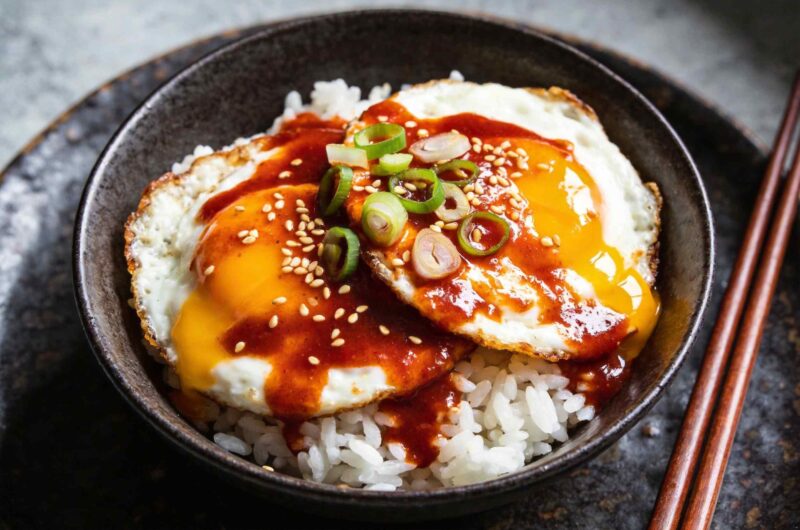
minutesThis gochujang eggs recipe combines a bold Korean chili paste sauce with perfectly cooked fried or scrambled eggs in just 10 minutes. The sauce mixes gochujang with soy sauce, sesame oil, honey, and garlic into a deeply flavoured, spicy-sweet glaze that transforms simple eggs into a genuinely memorable meal.
Ingredients
Gochujang sauce:
1.5 tablespoons gochujang paste
1 teaspoon soy sauce
1 teaspoon sesame oil
1 teaspoon honey or maple syrup
1 teaspoon rice vinegar
1 small garlic clove, finely grated
1 tablespoon water
Eggs:
4 large eggs
1 tablespoon butter or neutral oil
Salt and black pepper to taste
For serving:
Steamed white rice or toasted bread
2 spring onions, thinly sliced
1 teaspoon toasted sesame seeds
Extra sesame oil for finishing
- Add gochujang paste, soy sauce, sesame oil, honey, rice vinegar, grated garlic, and water to a small bowl
- Whisk together for 20 seconds until smooth, glossy, and fully combined
- Taste and adjust sweetness or heat level before using
- Heat butter or oil in a non-stick pan over medium heat until butter foams
- Crack 4 eggs carefully into the pan one at a time without breaking yolks
- Season each egg immediately with a small pinch of salt and black pepper
- Cook undisturbed for 2 to 3 minutes until whites set fully
- Remove from pan while yolks remain glossy and runny for best result
- Slide eggs onto a plate or bowl of steamed rice
- Spoon gochujang sauce generously over both eggs covering yolks and most of the white
- Drizzle 1/2 teaspoon of pure sesame oil over the finished eggs
- Scatter sliced spring onions and toasted sesame seeds over the top
- Serve immediately with rice or toasted bread alongside
- For scrambled version:
- Crack 4 eggs into a bowl and add 1 tablespoon of gochujang sauce
- Whisk vigorously for 30 seconds until fully combined and uniform in colour
- Add a small pinch of salt and whisk again briefly
- Melt butter in a non-stick pan over low to medium-low heat
- Pour gochujang egg mixture into the pan once butter melts fully
- Leave untouched for 30 seconds until bottom layer begins to set
- Fold gently from edges toward centre every 20 to 30 seconds using a silicone spatula
- Remove from heat while eggs still look slightly underdone and glossy in the centre
- Slide immediately onto warm toast or steamed rice
- Spoon any remaining sauce from the pan over the eggs
- Drizzle sesame oil over the top and scatter spring onions and sesame seeds to finish
- Serve immediately while eggs are still soft and creamy
FAQs
Q1: Where do I buy gochujang paste?
Most large supermarkets now stock gochujang in the Asian foods aisle — look for a red tub or tube labelled Korean chili paste. Asian grocery stores carry a wider selection of brands and heat levels. Online retailers also carry it reliably. The most widely available brand internationally is CJ Haechandle, which produces a reliable, well-balanced paste suitable for beginners to gochujang cooking.
Q2: How spicy are gochujang eggs compared to regular hot sauce eggs?
Gochujang eggs taste differently spicy rather than simply hotter. Regular hot sauce delivers immediate sharp heat that fades quickly. Gochujang delivers a slower-building, more sustained warmth with complex fermented flavour underneath. Most people find medium gochujang eggs more manageable than the same heat level from straight chili sauce because the sweetness and umami temper the spice perception significantly.
Q3: Can I make gochujang sauce ahead of time?
Yes — make a larger batch and store it in a sealed jar in the fridge for up to 10 days. The flavour actually improves slightly after 24 hours as the garlic mellows and the ingredients fully integrate. Having a jar of pre-made gochujang sauce in the fridge makes this quick gochujang eggs at home recipe genuinely instant any morning of the week.
Q4: Does gochujang work with egg whites only?
Yes, though the result tastes slightly less rich without the yolk. Cook the egg whites the same way as the full fried egg version and apply the sauce directly over the cooked whites. The sauce provides the richness and flavour that the yolk normally contributes, so the dish remains satisfying even without the full egg.
Wrapping It Up
This gochujang eggs recipe transforms a simple ingredient into a bold, deeply flavoured breakfast or quick meal in under 10 minutes. Make the sauce properly before starting, cook fried eggs on medium heat without touching them, cook scrambled eggs low and slow on reduced heat, and always finish with sesame oil and fresh garnish. Those habits produce a genuinely outstanding result every single time.
Whether you go for the fried version over rice or the creamy scrambled version on toast, this dish will permanently change how you think about eggs. Now go buy a tub of gochujang and find out for yourself.