Lemon meringue pie is one of those desserts that sits in the back of your mind as something you will attempt someday when you feel sufficiently confident. That day is today. A golden pastry shell, a thick tangy lemon curd filling, and a cloud of toasted meringue on top — it looks technically demanding and tastes extraordinary, but the actual process is far more straightforward than the finished result suggests.
This best lemon meringue pie recipe from scratch uses a classic butter pastry shell, a proper cooked lemon curd filling made from fresh lemon juice and egg yolks, and a simple egg white meringue that toasts in the oven into the billowy, golden-tipped topping that defines this pie. No shortcuts, no instant fillings, no packet meringue mix. The result tastes like the best old fashioned lemon meringue pie dessert you have ever encountered and requires nothing more than a saucepan, a mixer, and confidence you already have.
What You’ll Need (Ingredients)
Fresh lemons make the single biggest flavour difference here. Bottled lemon juice produces a flat, slightly artificial filling that no amount of extra sugar or zest will fix.
For pastry crust:
- 200g (1⅔ cups) plain flour
- 125g (9 tablespoons) cold unsalted butter, cubed
- 1 tablespoon caster sugar
- ¼ teaspoon fine salt
- 3 to 4 tablespoons ice cold water
Lemon curd filling:
- 200ml (¾ cup) fresh lemon juice — approximately 5 to 6 large lemons
- 2 tablespoons finely grated lemon zest
- 200g (1 cup) caster sugar
- 40g (5 tablespoons) cornstarch
- 250ml (1 cup) cold water
- 5 large egg yolks
- 50g (3.5 tablespoons) unsalted butter, cubed
- ¼ teaspoon fine salt
For the meringue topping:
- 5 large egg whites, room temperature
- 200g (1 cup) caster sugar
- ¼ teaspoon cream of tartar
- 1 teaspoon vanilla extract
- 1 pinch of fine salt
How to Make It — Full Step-by-Step Process
Step One: Make and Blind Bake the Pastry Shell

Combine 200g of plain flour, 1 tablespoon of caster sugar, and ¼ teaspoon of salt in a large bowl and stir briefly. Add 125g of cold cubed butter and rub it into the flour using your fingertips, working quickly to keep the butter cold. Stop when the mixture resembles rough breadcrumbs with some pea-sized butter pieces still visible — those pieces create the flaky layers in a proper flaky crust lemon meringue pie recipe result.
Add 3 tablespoons of ice cold water and stir with a fork until the dough just clumps together. Add the fourth tablespoon only if the dough will not hold when pressed between your fingers. Turn out onto a lightly floured surface, bring together into a flat disc without kneading, wrap in cling film, and refrigerate for 30 minutes. Chilling firms the butter back up and relaxes the gluten, producing a more tender, less tough pastry after baking.
Roll the chilled dough into a circle approximately 30cm in diameter and 3mm thick on a lightly floured surface. Transfer it to a 23cm pie dish, press gently into the base and sides without stretching, and trim the overhang to 1cm beyond the rim. Fold the overhang under itself and crimp the edge decoratively. Line the shell with crumpled parchment paper, fill completely with baking beans or dried rice, and blind bake at 190°C fan for 15 minutes. Remove the beans and parchment and bake for a further 8 to 10 minutes until the base looks completely dry, set, and lightly golden. Cool completely before filling.
Step Two: Make the Tangy Lemon Curd Filling
Combine 200g of caster sugar, 40g of cornstarch, and ¼ teaspoon of salt in a medium saucepan and whisk together until evenly mixed. Gradually pour in 250ml of cold water while whisking continuously to dissolve the cornstarch completely — adding the water all at once risks creating lumps that persist through the entire cooking process. Place the saucepan over medium heat and stir constantly as the mixture heats, watching for it to thicken and become translucent, which takes approximately 3 to 4 minutes.
Whisk 5 large egg yolks together in a heatproof bowl until smooth. Once the cornstarch mixture has thickened and turned translucent on the stovetop, slowly ladle approximately one third of it into the egg yolks in a thin stream while whisking constantly — this tempering step raises the egg temperature gradually without scrambling them. Pour the tempered egg mixture back into the saucepan with the remaining hot cornstarch base, whisking continuously as you pour.
Return the saucepan to medium heat and cook the filling, stirring constantly, for 2 to 3 more minutes until it thickens significantly, becomes glossy, and large bubbles break the surface. Remove from heat and immediately stir in 200ml of fresh lemon juice, 2 tablespoons of lemon zest, and 50g of cubed butter. Stir until the butter melts completely and the filling looks smooth, glossy, and uniformly combined. The fresh lemon juice added off the heat preserves its bright, tangy flavour — cooking lemon juice for extended periods dulls the sharpness that defines a perfect lemon meringue pie filling recipe. Pour the hot filling directly into the cooled pastry shell and spread evenly to the edges.
Step Three: Make the Meringue Topping
Ensure your mixing bowl and beaters are completely clean, dry, and free of any grease before starting — even a tiny amount of fat prevents egg whites from whipping to the volume needed for a properly fluffy meringue lemon pie recipe easy enough to execute every time. Separate 5 large egg whites into the mixing bowl, making sure not a single drop of egg yolk contaminates the whites. Place the bowl over a saucepan of barely simmering water — making sure the bottom of the bowl does not touch the water — and add 200g of caster sugar, ¼ teaspoon of cream of tartar, and 1 pinch of salt.
Whisk the egg white and sugar mixture over the simmering water for 3 to 4 minutes until the sugar dissolves completely and the mixture feels hot and smooth when you rub a small amount between your fingers. Dissolving the sugar into the egg whites before whipping produces a more stable, glossy meringue that does not weep liquid onto the lemon filling during baking — which is the most common complaint people have with homemade lemon pie with meringue topping. Remove the bowl from the heat and beat immediately on high speed with an electric hand mixer or stand mixer for 4 to 5 minutes until the meringue forms stiff, glossy peaks that hold their shape firmly when you lift the beaters.
Add 1 teaspoon of vanilla extract and beat for a further 30 seconds to incorporate. The finished meringue should look bright white, glossy, and smooth, and should feel completely stable when you tilt the bowl — it should not slide or move at all. Work quickly from this point, as the meringue begins to lose volume if it sits too long before being applied to the pie.
Step Four: Top and Bake
Spoon the meringue over the hot lemon filling immediately — applying meringue to a hot filling rather than a cold one is the key technique that prevents the weeping and separation between the meringue and filling layers that ruins the appearance of so many homemade pies. The heat from the filling cooks the underside of the meringue from below while the oven browns the top, sealing the two layers together and producing a stable, clean result.
Spread the meringue from the centre outward, making sure it makes full contact with and seals against the pastry crust edge all the way around — any gap between the meringue and the pastry edge allows steam to escape during baking and causes the meringue to pull away from the crust as it cools. Use the back of a spoon to create decorative peaks and swirls across the surface. Bake at 180°C fan for 12 to 15 minutes until the meringue peaks are deep golden-brown and the surface looks evenly toasted. Cool at room temperature for 30 minutes then refrigerate for 2 hours before slicing. 🙂
Why Fresh Lemon Juice Makes All the Difference
Have you ever tasted a lemon meringue pie where the filling tasted more like sweetened starch than actual lemon? The culprit is almost always bottled lemon juice.
Fresh lemon juice contains volatile aromatic compounds that give the filling its bright, sharp, genuinely tangy flavour. These compounds begin degrading the moment the lemon is juiced, which means bottled juice — processed and stored for months — has lost most of what makes lemon flavour distinctive. A tangy lemon curd meringue pie recipe built on fresh juice tastes categorically different from one using bottled, and the difference is immediately obvious to anyone who tastes both side by side.
Adding the lemon juice off the heat rather than cooking it into the filling from the start preserves the brightness further. The cornstarch and sugar mixture does all the thickening work on the stove — the lemon goes in at the end purely for flavour, maximising the tangy, aromatic result that defines an easy baked lemon meringue pie recipe worth making repeatedly.
Getting the Meringue Texture Right
The cream of tartar in the meringue is not a decorative ingredient — it stabilises the egg white foam and helps the meringue hold its structure during and after baking without collapsing or weeping.
Use cream of tartar every time regardless of whether you think you need it. FYI, the difference between a meringue made with and without cream of tartar becomes apparent within an hour of baking — the stabilised version holds its peaks cleanly while an unstabilised meringue begins softening and releasing liquid onto the filling surface. That liquid pools between the meringue and curd layers and creates the soggy, separated appearance that makes people assume lemon meringue pie is technically difficult to make successfully at home.
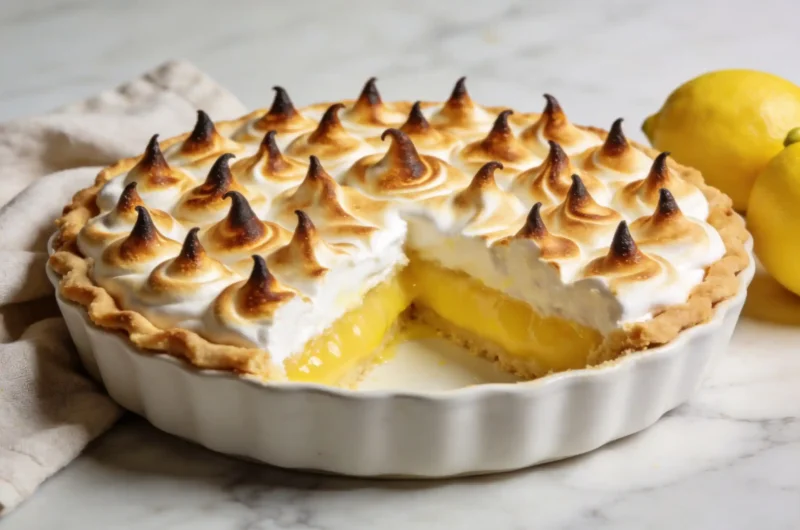
Easy Baked Lemon Meringue Pie With Flaky Crust
8
servings30
minutes25
minutesThis lemon meringue pie blind bakes a flaky butter pastry shell, fills it with a thick fresh lemon curd made from egg yolks and real lemon juice, tops it with a stable Swiss-style meringue applied directly to hot filling, and bakes until golden. Stunning, tangy, and genuinely impressive every time.
Ingredients
Pastry crust:
200g plain flour
125g cold unsalted butter, cubed
1 tablespoon caster sugar
¼ teaspoon fine salt
3 to 4 tablespoons ice cold water
Lemon curd filling:
200ml fresh lemon juice
2 tablespoons finely grated lemon zest
200g caster sugar
40g cornstarch
250ml cold water
5 large egg yolks
50g unsalted butter, cubed
¼ teaspoon fine salt
Meringue topping:
5 large egg whites, room temperature
200g caster sugar
¼ teaspoon cream of tartar
1 teaspoon vanilla extract
1 pinch of fine salt
- Rub cold butter into flour, sugar, and salt until mixture resembles rough breadcrumbs
- Add ice cold water one tablespoon at a time until dough just clumps together
- Shape into a disc, wrap in cling film, and refrigerate for 30 minutes
- Roll chilled pastry to 30cm circle and line a 23cm pie dish
- Trim and crimp edges then line with parchment and fill with baking beans
- Blind bake at 190°C fan for 15 minutes then remove beans and bake 8 to 10 minutes more
- Cool pastry shell completely on a wire rack before adding any filling
- Whisk sugar, cornstarch, and salt together in a medium saucepan
- Gradually add cold water while whisking to dissolve cornstarch completely
- Cook over medium heat stirring constantly for 3 to 4 minutes until thickened and translucent
- Whisk egg yolks in a heatproof bowl until smooth
- Slowly ladle one third of hot cornstarch mixture into egg yolks while whisking constantly
- Pour tempered egg mixture back into saucepan with remaining hot mixture
- Cook for 2 to 3 more minutes stirring constantly until thick and glossy
- Remove from heat and stir in lemon juice, lemon zest, and cubed butter until smooth
- Pour hot lemon filling into cooled pastry shell and spread evenly to edges
- Combine egg whites, sugar, cream of tartar, and salt in a heatproof bowl
- Whisk over simmering water for 3 to 4 minutes until sugar dissolves completely
- Remove from heat and beat on high speed for 4 to 5 minutes until stiff glossy peaks form
- Add vanilla extract and beat for 30 more seconds
- Spoon meringue immediately over hot lemon filling starting from the centre
- Spread meringue firmly to the pastry crust edge all the way around sealing completely
- Create decorative peaks across the surface using the back of a spoon
- Bake at 180°C fan for 12 to 15 minutes until peaks are deep golden brown
- Cool at room temperature for 30 minutes then refrigerate for 2 hours before slicing
Common Mistakes to Avoid
Pouring meringue onto cold filling: Cold filling does not cook the underside of the meringue, which causes separation and weeping between the layers. Always apply meringue to a freshly made, still-hot filling without exception.
Not sealing meringue to the pastry edge: A gap between the meringue and crust edge allows steam to escape and causes the meringue to shrink away from the pastry during cooling. Spread it firmly to the crust edge all the way around before baking.
Using cold egg whites: Cold egg whites take significantly longer to whip and produce a less stable foam with smaller volume. Allow them to reach room temperature for 30 minutes before whipping for the best result. :/
Skipping the sugar-dissolving step: Undissolved sugar granules in the meringue create a beaded, weeping surface after baking. Warming the egg whites and sugar together until completely dissolved before whipping prevents this entirely.
Cutting before fully chilled: Slicing a lemon meringue pie before it has chilled for at least 2 hours produces a filling that flows rather than slices. Always chill fully for clean, defined layers in every slice.
FAQs
Q1: Why does my meringue weep or go watery? Weeping meringue has three main causes — undissolved sugar, cold filling underneath, or under-baking. Dissolve the sugar fully before whipping, apply meringue to hot filling always, and bake until the peaks are genuinely golden rather than just lightly coloured. All three steps together produce a stable meringue that holds cleanly for 24 to 48 hours in the fridge.
Q2: Can I make the lemon filling a day ahead? Yes — make and pour the filling into the baked shell, cover with cling film pressed directly onto the surface to prevent a skin forming, and refrigerate overnight. Make the meringue fresh on the day of serving and apply it to the cold filling before baking. The cold filling means the meringue underside will not cook as effectively from below, so extend the oven time by 3 to 4 minutes to compensate.
Q3: Can I use a shop-bought pastry shell? Yes — a good quality shop-bought shortcrust shell works well and saves significant preparation time. Blind bake it according to the packet instructions to ensure the base is fully cooked before adding the hot filling. The flavour difference between shop-bought and homemade pastry is noticeable but the overall pie remains impressive and genuinely delicious with either option.
Q4: How do I store leftover lemon meringue pie? Store loosely covered in the fridge for up to 3 days. Avoid covering the meringue tightly with cling film — direct contact flattens and sticks to the peaks. Use a tall domed container or a tent of foil that does not touch the meringue surface. The meringue softens slightly after day one but the flavour remains excellent through day three.
Wrapping It Up
This classic lemon meringue pie homemade recipe delivers a genuinely tangy, fluffy, restaurant-quality result from a straightforward process. Blind bake a flaky butter pastry shell, cook a fresh lemon curd filling until thick and glossy, make a stable Swiss meringue, apply it to the hot filling, seal to the crust edges, and bake until golden. Those six steps produce a perfect result every single time.
Whether you serve this at a dinner party with perfectly torched meringue peaks, make it ahead and chill overnight for the cleanest slices, or simply eat a generous piece at the kitchen table because you earned it — it consistently impresses everyone who tries it. Now juice those lemons and make something genuinely worth the effort.