Pasta primavera gets unfairly overlooked. People reach for bolognese or carbonara and completely ignore the dish that genuinely celebrates vegetables at their best. I made this healthy pasta primavera recipe for the first time on a Sunday when my fridge was full of random produce, and it became a weekly staple immediately.
This pasta primavera recipe easy enough for any weeknight uses fresh seasonal vegetables, garlic, olive oil, and a light parmesan sauce that ties everything together without weighing it down. Whether you want the creamy pasta primavera recipe easy version or a simpler olive oil base, this guide covers both approaches completely.
What You’ll Need (Ingredients)
Everything here comes from a standard supermarket with no specialist ingredients required.
For pasta:
- 400g (14 oz) penne or farfalle pasta
- 1 tablespoon salt for the pasta water
Vegetables:
- 1 medium zucchini, sliced into half-moons
- 1 red bell pepper, thinly sliced
- 1 yellow bell pepper, thinly sliced
- 1 cup (150g) broccoli florets
- 1 cup (150g) cherry tomatoes, halved
- 1 medium carrot, julienned
- 1 cup (100g) fresh or frozen peas
- 1/2 medium red onion, thinly sliced
For the sauce:
- 4 tablespoons olive oil
- 5 garlic cloves, finely minced
- 120ml (1/2 cup) dry white wine or vegetable stock
- 60ml (1/4 cup) reserved pasta water
- 60g (2 oz) Parmesan cheese, freshly grated
- 1 teaspoon dried Italian seasoning
- 1/2 teaspoon red chilli flakes
- Salt and black pepper to taste
- Juice of half a lemon
For the creamy version add:
- 120ml (1/2 cup) heavy cream or full-fat coconut cream
How to Make It — Full Step-by-Step Process
Step One: Boil the Pasta
Fill a large pot with water and bring it to a full rolling boil over high heat. Add 1 tablespoon of salt — the water should taste clearly seasoned because this is the only moment you season the pasta itself from the inside. Add 400g of pasta and cook according to packet instructions until al dente.
Before draining, scoop out approximately 1/2 cup of starchy pasta cooking water and set it aside. This cloudy water becomes the binding agent that helps the sauce cling to every piece of pasta later. Drain the pasta and toss immediately with a drizzle of olive oil to prevent sticking while you work on the vegetables.
Step Two: Prepare and Organise the Vegetables
Cut all vegetables to a consistent size before you heat any oil. Consistent sizing means every piece finishes cooking at the same time — which sounds obvious until you bite into a raw carrot sitting next to a perfectly soft zucchini. Take the extra two minutes and do this properly.
Group the vegetables by how long they take to cook. Carrots and broccoli need more time than zucchini, peppers, and cherry tomatoes. Having two groups ready before the pan heats up means you add them in the right order without any frantic last-minute chopping while garlic burns in the background.
Step Three: Sauté the Aromatics
Heat 4 tablespoons of olive oil in a large wide pan or skillet over medium heat. Once the oil shimmers, add the sliced red onion and cook for 3 to 4 minutes, stirring occasionally, until it softens and turns slightly translucent. The onion builds the sweet base layer of this garlic pasta primavera recipe simple enough for a Tuesday night.
Add 5 minced garlic cloves and stir continuously for exactly 60 seconds. Garlic at medium heat goes from perfectly golden to bitter and burnt within 90 seconds, so keep your eyes on the pan and do not walk away. The fragrance at this stage should smell deeply aromatic — that is exactly what you want filling the kitchen before anything else goes in.
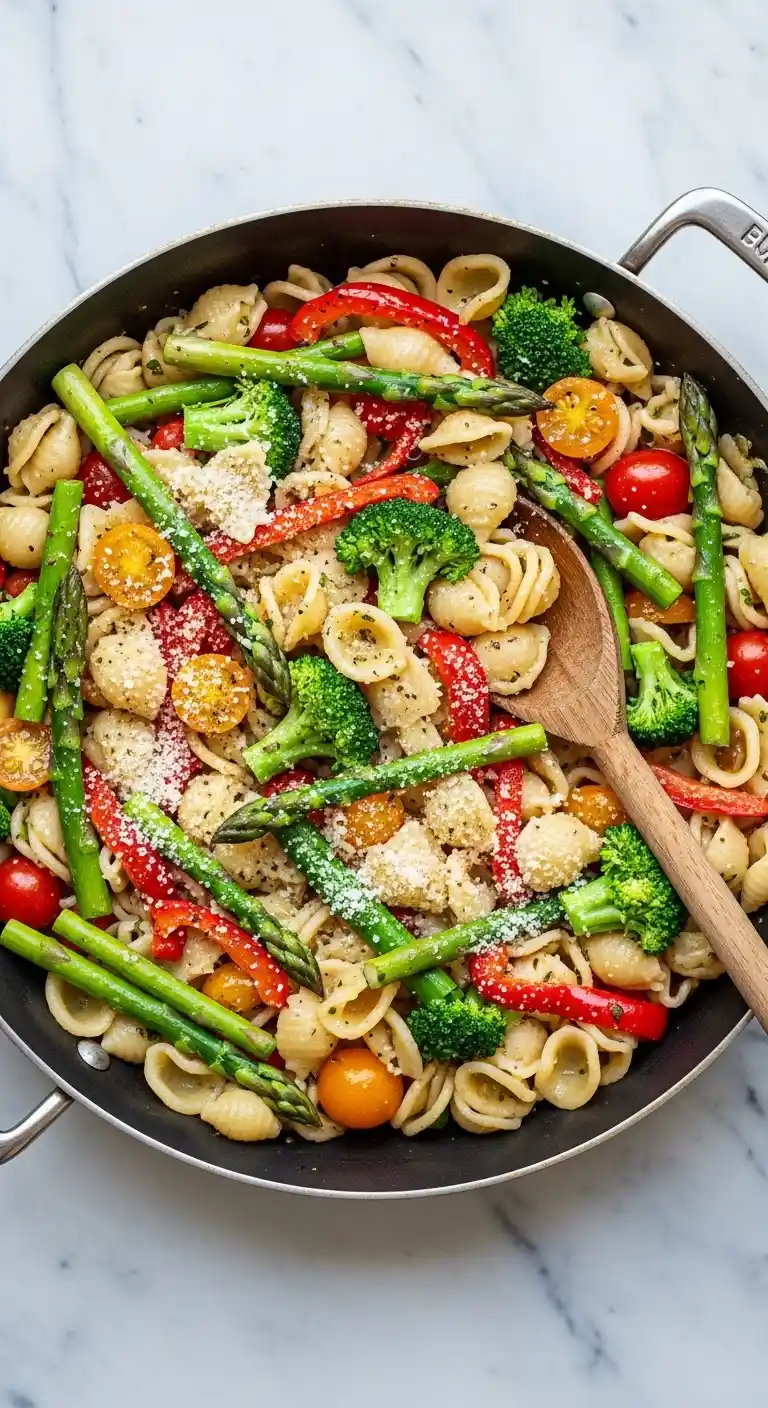
Step Four: Cook the Vegetables in Stages
Add the julienned carrots and broccoli florets first. Stir-fry over medium-high heat for 3 to 4 minutes until they begin to soften slightly but still hold their shape and colour. These are the denser vegetables that need a head start — adding them at the same time as the softer ones produces undercooked broccoli and mush everywhere else.
Add the sliced peppers, zucchini, and red onion next and cook for a further 2 to 3 minutes. Finally, add the cherry tomatoes and peas and stir everything together for 1 to 2 more minutes. The tomatoes soften and release their juice slightly, which adds a gentle acidity to the sauce base. The vegetables should look vibrant, slightly caramelised at the edges, and just tender throughout — this is what Italian pasta primavera vegetables should look like.
Step Five: Build the Sauce
Pour 120ml of dry white wine or vegetable stock directly into the pan with the vegetables. Stir immediately to lift any caramelised bits from the base of the pan — those stuck-on flavour pieces dissolve into the liquid and add genuine depth to the finished sauce. Allow the liquid to reduce by half over medium-high heat, which takes about 2 to 3 minutes.
Add the reserved pasta water a splash at a time and stir through. The starch in the pasta water emulsifies with the olive oil and creates a light, glossy sauce that coats every vegetable and piece of pasta without feeling heavy. For the creamy pasta primavera recipe easy version, pour in 120ml of heavy cream at this stage and stir through gently before adding the pasta.
Step Six: Combine the Pasta and Finish
Add the drained pasta directly into the pan with the vegetables and sauce. Use tongs to toss everything together thoroughly for 1 to 2 minutes over medium heat so every piece of pasta gets fully coated. If the sauce looks too thick, add another splash of pasta water and toss again until the consistency looks glossy and loose.
Add the lemon juice, dried Italian seasoning, and red chilli flakes. Toss once more and taste for seasoning — adjust salt, pepper, and lemon as needed. Remove from heat and scatter the freshly grated Parmesan over the top. The Parmesan melts into the warm pasta and thickens the sauce slightly while adding a sharp, salty depth that makes this spring pasta primavera recipe fresh and genuinely satisfying from the very first forkful. IMO this finishing step makes or breaks the entire dish. 🙂
Why This Recipe Works as a One Pan Version
The one pan pasta primavera recipe approach works by cooking the pasta directly in the vegetable and stock mixture rather than boiling it separately. Add 700ml of vegetable stock to the pan after sautéing the vegetables, bring to a boil, add the dry pasta, and cook stirring regularly until the pasta absorbs the liquid and turns al dente.
This method concentrates all the vegetable flavour directly into the pasta as it cooks. You lose the separate pasta water for the sauce, but the starch released during in-pan cooking thickens the sauce naturally. FYI — this version produces a slightly more intense flavour than the standard method and leaves you with exactly one pan to wash.
Making It Creamy Without Heavy Cream
The vegetarian pasta primavera healthy meal version skips the cream entirely and uses blended cashews or silken tofu instead. Soak 80g of raw cashews in hot water for 20 minutes, drain, and blend with 120ml of fresh water until completely smooth. Add this cashew cream to the sauce exactly as you would add heavy cream.
The result tastes genuinely rich and creamy without any dairy. The cashew cream adds a subtle nuttiness that pairs well with the Parmesan and the garlic base. It also works for the quick pasta primavera dinner recipe format because the cashew cream requires no cooking — it simply warms through in the pan within 60 seconds.
Common Mistakes to Avoid
- Not reserving pasta water: Once the pasta drains, the water is gone. Always scoop it out before draining — it takes 10 seconds and makes a significant difference to sauce consistency.
- Adding all vegetables at once: Dense vegetables like carrots and broccoli need more time than soft ones like zucchini and tomatoes. Add in stages or you will end up with mush and crunch in the same forkful.
- Overcooking the garlic: Sixty seconds on medium heat is all it needs. Burnt garlic turns the entire dish bitter and no amount of extra seasoning fixes it afterward.
- Under-seasoning the pasta water: Bland pasta water produces bland pasta regardless of how well-seasoned the sauce is. The water should taste noticeably salty before the pasta goes in.
- Skipping the lemon juice: The lemon juice at the end brightens every flavour in the dish simultaneously. Skipping it produces a flat, heavy result that misses the lightness that defines a genuine vegetable pasta primavera homemade version.
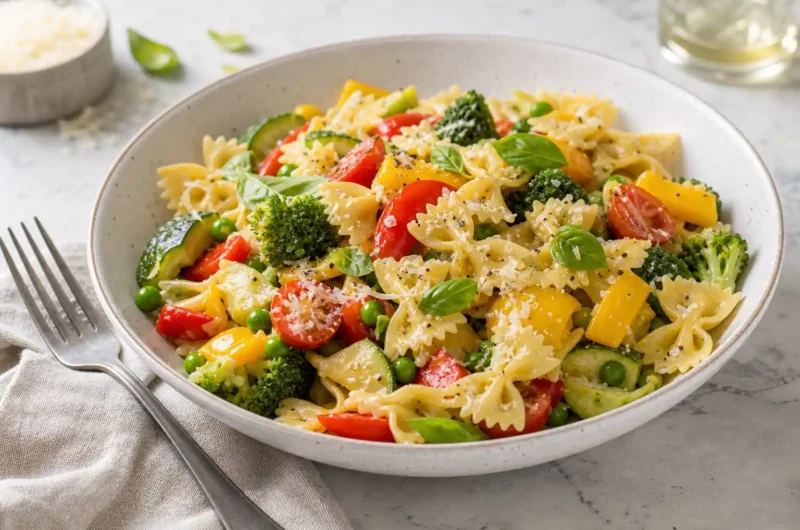
Creamy Pasta Primavera Better Than Any Restaurant
4
servings10
minutes20
minutesThis pasta primavera combines al dente pasta with sautéed seasonal vegetables in a light garlic, white wine, and parmesan sauce finished with lemon juice. Ready in 30 minutes, it works as a classic olive oil version, a creamy variation, or a one pan dinner — fully vegetarian, fresh, and genuinely satisfying every time.
Ingredients
For the pasta:
400g penne or farfalle pasta
1 tablespoon salt for pasta water
For the vegetables:
1 medium zucchini, sliced
1 red bell pepper, thinly sliced
1 yellow bell pepper, thinly sliced
1 cup broccoli florets
1 cup cherry tomatoes, halved
1 medium carrot, julienned
1 cup fresh or frozen peas
1/2 red onion, thinly sliced
For the sauce:
4 tablespoons olive oil
5 garlic cloves, minced
120ml dry white wine or vegetable stock
60ml reserved pasta water
60g Parmesan cheese, freshly grated
1 teaspoon dried Italian seasoning
1/2 teaspoon red chilli flakes
Salt and black pepper to taste
Juice of half a lemon
120ml heavy cream (optional for creamy version)
- Bring a large pot of salted water to a full rolling boil
- Add pasta and cook until al dente according to packet instructions
- Scoop out 1/2 cup of pasta water before draining and set aside
- Drain pasta and toss with a drizzle of olive oil to prevent sticking
- Cut all vegetables to consistent sizes and group by cooking time
- Heat olive oil in a large wide pan over medium heat
- Add sliced red onion and cook for 3 to 4 minutes until softened
- Add minced garlic and stir continuously for 60 seconds until fragrant
- Add carrots and broccoli first and stir-fry for 3 to 4 minutes
- Add peppers and zucchini and cook for 2 to 3 more minutes
- Add cherry tomatoes and peas and stir for 1 to 2 minutes
- Pour in white wine or vegetable stock and stir to lift pan bits
- Allow liquid to reduce by half over medium-high heat for 2 to 3 minutes
- Add reserved pasta water a splash at a time and stir through
- Add heavy cream now and stir through if making the creamy version
- Add drained pasta to the pan and toss with tongs for 1 to 2 minutes
- Add lemon juice, Italian seasoning, and chilli flakes and toss again
- Taste and adjust salt, pepper, and lemon as needed
- Remove from heat and scatter freshly grated Parmesan over the top
- Serve immediately while sauce is loose and vegetables are vibrant
FAQs
Q1: Can I use any pasta shape for pasta primavera? Yes — penne and farfalle work best because their shapes trap the sauce and vegetables effectively. Spaghetti and linguine also work well for a lighter result. Avoid very small pasta shapes like orzo because they get lost among the larger vegetable pieces and produce an unbalanced ratio of pasta to filling per forkful.
Q2: Can I make pasta primavera ahead of time? Yes, with one adjustment. Store the pasta and vegetables separately from any remaining sauce and combine when reheating. Pasta stored already mixed continues absorbing sauce in the fridge and turns dry and clumped by the next day. Reheat the pasta with a splash of water or stock in a pan over medium heat for the best result.
Q3: What vegetables work best in pasta primavera? Spring and summer vegetables perform best — zucchini, asparagus, peas, cherry tomatoes, bell peppers, and broccoli all work beautifully. Root vegetables like beetroot and parsnip do not suit this dish well because their flavour profiles overpower the light garlic and olive oil base. Stick to tender, quick-cooking vegetables for the most balanced result.
Q4: Is pasta primavera genuinely Italian? Interestingly, pasta primavera originated in North America rather than Italy — it appeared in New York restaurants in the 1970s. The name is Italian and translates to spring pasta, and the dish uses Italian ingredients and technique, but it is not a traditional Italian recipe. That said, it tastes excellent regardless of its origins.
Q5: How do I make this recipe gluten-free? Replace the standard pasta with any good quality gluten-free pasta — rice pasta or chickpea pasta both work well here. Cook gluten-free pasta slightly shorter than the packet states because it tends to overcook faster than wheat pasta. Everything else in the recipe stays identical and the finished dish tastes genuinely comparable to the original.
Wrapping It Up
This pasta primavera recipe easy enough for a weeknight delivers a genuinely colourful, flavourful, and satisfying dinner in 30 minutes. Cook vegetables in stages, reserve pasta water, build the sauce from garlic and white wine, and finish with Parmesan and lemon. Those four habits produce a perfect result every single time.
Whether you go with the classic olive oil version, the creamy pasta primavera recipe easy approach, or the one pan method, this dish consistently delivers. Now go make something that actually makes vegetables worth eating — your Tuesday evenings just improved considerably.