Flat, rubbery pancakes are one of life’s genuine disappointments — and yet most people make them regularly without understanding why. The difference between a flat, dense pancake and a thick fluffy pancake recipe easy enough to nail on a Tuesday morning comes down to three things: the right leavening, the right liquid, and the one mixing rule that most recipes mention but almost nobody actually follows.
This best fluffy pancake recipe from scratch uses buttermilk as the liquid base — which reacts with bicarbonate of soda to create the bubbles that lift each pancake into a thick, soft, cloud-like structure — alongside a simple separation technique for the eggs that adds genuine height without requiring any special equipment or advanced skill. The result looks like something from a brunch café and takes under 25 minutes from start to first bite.
What You’ll Need (Ingredients)
Simple, everyday ingredients with one or two specific choices that make a meaningful difference to the finished texture.
For fluffy pancake batter:
- 240g (2 cups) plain flour
- 2 tablespoons caster sugar
- 2 teaspoons baking powder
- ½ teaspoon bicarbonate of soda
- ½ teaspoon fine salt
- 2 large eggs, separated — yolks and whites in separate bowls
- 300ml (1¼ cups) buttermilk, room temperature
- 60ml (¼ cup) whole milk, room temperature
- 3 tablespoons unsalted butter, melted and cooled slightly
- 1 teaspoon vanilla extract
Cooking:
- 1 tablespoon unsalted butter per batch — for greasing the pan
- 1 teaspoon neutral oil mixed with butter — prevents burning
For serving:
- Maple syrup
- Fresh berries — blueberries, strawberries, or raspberries
- Extra butter for the top of each stack
- A dusting of icing sugar — optional
For the Japanese fluffy pancakes recipe variation:
- 3 large eggs, fully separated
- 1 teaspoon cream of tartar — for stabilising the whipped whites
- Cook in egg rings for the tall, soufflé-style result
How to Make It — Full Step-by-Step Process
Step One: Separate the Eggs and Rest the Buttermilk
Separate 2 large eggs carefully, placing the yolks in a large mixing bowl and the whites in a clean, completely grease-free medium bowl. Even a tiny trace of egg yolk in the whites prevents them from whipping properly — if a yolk breaks during separation, start with a fresh egg rather than attempting to remove the yolk from the whites. Set both bowls aside while you measure and combine the dry ingredients.
Remove the buttermilk and whole milk from the fridge 20 minutes before starting and allow them to reach room temperature. Room temperature dairy incorporates more smoothly into the batter and reacts more immediately with the bicarbonate of soda than cold buttermilk straight from the fridge. Cold buttermilk slows the leavening reaction slightly and produces a slightly denser, less risen pancake — a small difference but a noticeable one in a recipe where texture is the entire point.
Step Two: Combine the Dry Ingredients
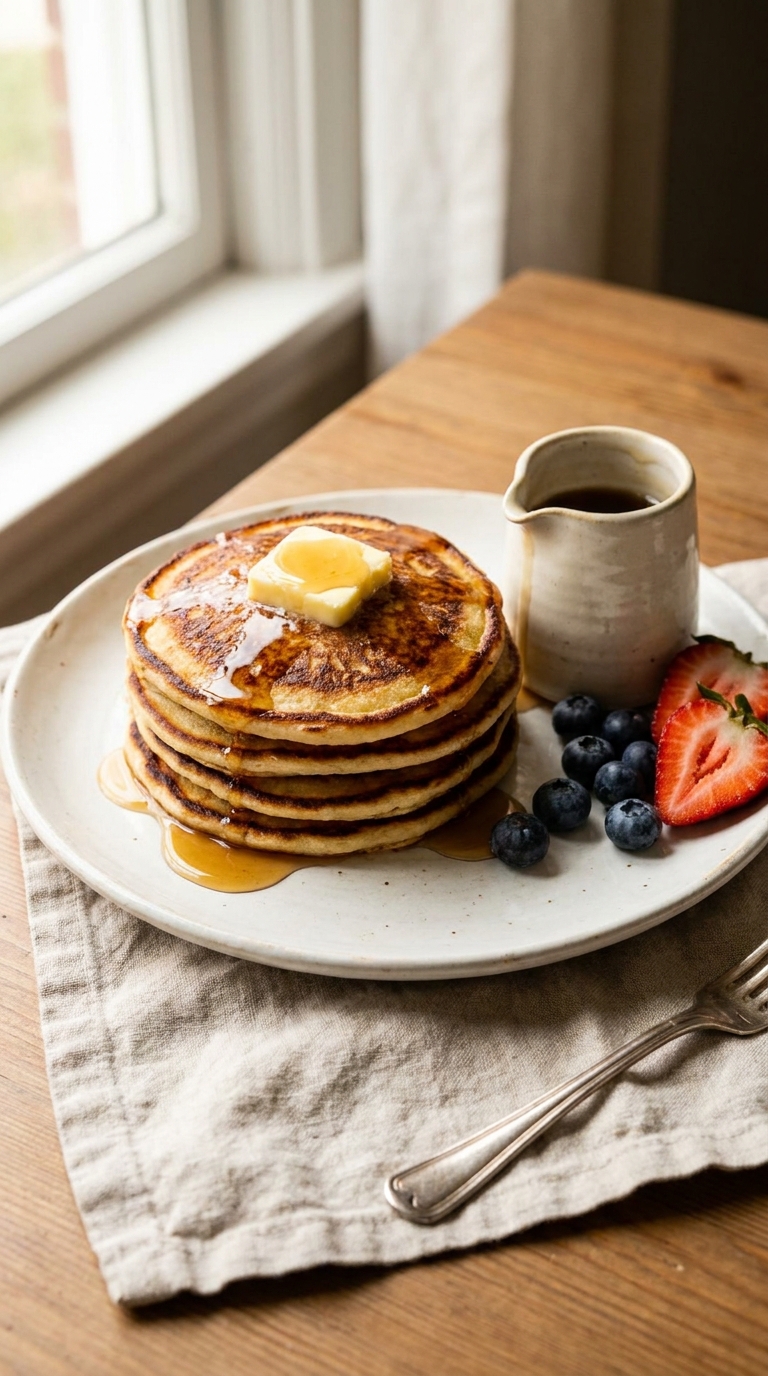
Add 240g of plain flour, 2 tablespoons of caster sugar, 2 teaspoons of baking powder, ½ teaspoon of bicarbonate of soda, and ½ teaspoon of fine salt to a large mixing bowl. Whisk the dry ingredients together thoroughly for 30 to 45 seconds until completely combined with no visible clumps of baking powder or streaks of salt remaining anywhere in the mixture.
The combination of both baking powder and bicarbonate of soda is deliberate and important. Baking powder provides a steady, reliable rise throughout the cooking process. Bicarbonate of soda reacts specifically with the acid in the buttermilk and produces an immediate burst of bubbles that starts the lift before the pancake even hits the pan. Together they produce the thick fluffy pancakes breakfast recipe height that neither leavening agent achieves alone. Using only baking powder produces a flatter result — using only bicarbonate of soda without sufficient acid produces a soapy, slightly metallic flavour. Both together, with buttermilk, produces neither problem and both benefits.
Step Three: Mix the Wet Ingredients Into the Yolks
Add 300ml of room temperature buttermilk, 60ml of whole milk, 3 tablespoons of melted and slightly cooled butter, and 1 teaspoon of vanilla extract to the bowl containing the egg yolks. Whisk everything together until smooth and evenly combined. The butter should be melted but not hot — adding genuinely hot butter to eggs scrambles them on contact and ruins the batter before it has started.
Pour the wet yolk mixture into the bowl of dry ingredients and stir with a spatula or wooden spoon using large, slow folding strokes rather than vigorous whisking. Stop stirring the moment the dry ingredients are roughly incorporated and no large pockets of dry flour remain visible — the batter should look lumpy, slightly rough, and uneven at this stage. This is correct. A smooth, well-stirred pancake batter produces flat, tough pancakes because stirring develops the gluten in the flour. A lumpy batter produces the soft and fluffy pancake homemade texture that makes people actually look forward to Sunday morning.
Step Four: Whip the Egg Whites and Fold In
Beat the reserved egg whites with an electric hand mixer on high speed until they form firm, glossy peaks that hold their shape when you lift the beaters and tilt the bowl without sliding. This takes approximately 2 to 3 minutes from a standing start. The whipped egg whites are the secret ingredient that separates a standard American style fluffy pancake recipe from a genuinely cloud-like result — they introduce a large volume of trapped air into the batter that expands dramatically during cooking and produces the characteristic height and softness.
Now Add the whipped egg whites to the lumpy pancake batter in two additions. Add the first half and fold gently using a large spatula, cutting down through the centre of the batter and folding upward in slow, deliberate strokes — exactly the same technique used when folding whipped cream into a mousse. Add the second half and fold again until just incorporated, stopping while a few visible white streaks remain in the batter. Those white streaks disappear during cooking. Over-folding deflates the air you worked to incorporate and produces a denser, flatter pancake that defeats the entire purpose of separating the eggs in the first place. :/
Step Five: Cook the Pancakes Properly
Heat a large non-stick frying pan or flat griddle over medium-low heat — not medium, not high, medium-low. This is the cooking temperature that most people ignore and the one that makes the most visible difference to the finished result. High heat browns the outside of each pancake before the thick interior has had time to cook through, producing a burnt exterior and raw centre. Medium-low heat gives the pancake enough time to rise fully, cook through completely, and develop a gentle golden colour across the entire surface.
Add ½ tablespoon of unsalted butter and a small splash of neutral oil to the pan and allow the butter to melt and foam before adding any batter. The oil raises the smoke point of the butter and prevents it from burning during the cook time. Once the foam subsides, pour approximately 80ml (⅓ cup) of batter per pancake into the pan — cook two at a time in a large pan, one at a time in a standard pan. Cook for 2 to 3 minutes until bubbles form across the entire top surface of the pancake and the edges look set and dry rather than wet and glossy.
Flip each pancake once using a wide spatula in a single confident motion — hesitant, slow flips tear the pancake surface and produce a ragged result. Cook for a further 1 to 2 minutes on the second side until golden-brown. The second side always colours faster than the first because the pan has heated up — watch carefully and reduce heat slightly if the colour develops too quickly. Transfer to a warm plate and cover loosely with foil while you cook the remaining batches. FYI, adding a fresh small amount of butter and oil to the pan between each batch prevents sticking and maintains the right cooking surface throughout. 🙂
Why Buttermilk Produces the Best Fluffy Result
Have you ever made pancakes with plain milk and found them decent but somehow lacking the tenderness and rise of a café stack? The difference is almost always the buttermilk.
Buttermilk is acidic, and that acidity does two important things simultaneously. It reacts with the bicarbonate of soda to produce carbon dioxide bubbles that lift the batter as it cooks. It also tenderises the gluten strands in the flour, producing a softer, more delicate crumb that regular milk cannot replicate regardless of how carefully you mix the batter.
The easy fluffy buttermilk pancakes recipe format consistently outperforms plain milk versions in both height and texture. If you cannot find buttermilk, make a quick substitute by adding 1 tablespoon of fresh lemon juice or white wine vinegar to 300ml of whole milk, stirring once, and allowing it to sit for 5 minutes until slightly curdled. This acidified milk works almost as well as genuine buttermilk and produces a noticeably better result than plain milk alone.
Making the Japanese Version
The Japanese fluffy pancakes recipe variation takes the egg white technique further by using fully whipped whites with cream of tartar and cooking the pancakes inside egg rings to achieve the signature tall, soufflé-style result that looks extraordinary and tastes even better.
Separate 3 eggs fully and whip the whites with ¼ teaspoon of cream of tartar to firm peaks. Fold into the batter as described above. Grease egg rings or round cookie cutters thoroughly with butter and place them in the pan over the lowest heat setting. Spoon batter into each ring to approximately two thirds full, cover the pan with a lid, and cook for 4 to 5 minutes until the top surface looks set. Flip the ring and pancake together carefully using a wide spatula, replace the lid, and cook for a further 3 to 4 minutes. Remove the ring to reveal the tall, cloud like fluffy pancakes recipe easy result that makes people reach for their phone before their fork. IMO the Japanese version is worth attempting at least once — the height alone is genuinely impressive.
Common Mistakes to Avoid
Over-mixing the batter: Stirring until smooth develops gluten and produces tough, flat pancakes. Mix until just combined with lumps still visible and stop immediately — the lumps cook out and leave no trace in the finished pancake.
Cooking on too high heat: High heat burns the exterior before the interior cooks through. Medium-low is the correct setting for thick pancakes — it takes slightly longer per pancake but produces a fully cooked, evenly golden result every time.
Flipping more than once: Each flip compresses the pancake slightly and reduces the final height. Flip exactly once per pancake, cook through on the second side, and serve immediately for the maximum height and fluffiness.
Skipping the egg white step: Plain whole eggs produce a decent pancake. Separated eggs with whipped whites produce an extra fluffy pancakes no fail recipe result that is visibly taller, softer, and more impressive. The extra two minutes of whipping is always worth it.
Using cold dairy: Cold buttermilk and milk slow the leavening reaction and produce a denser batter. Always bring both to room temperature before mixing for the best rise and the lightest finished texture.
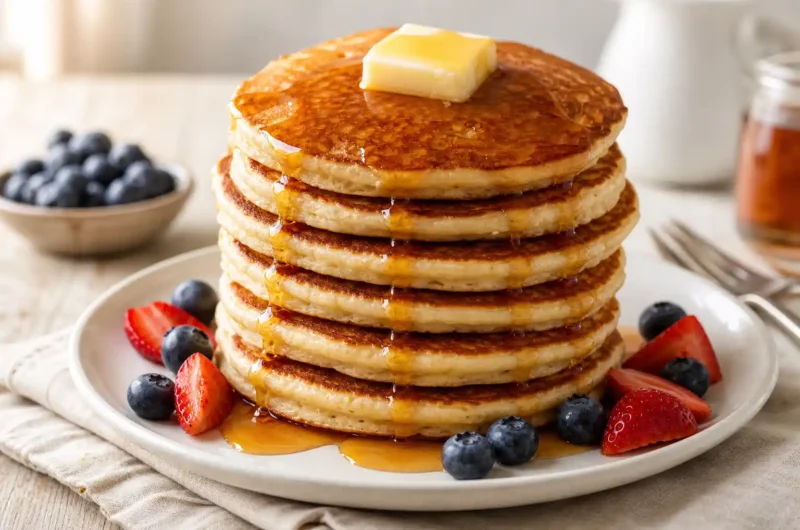
Cloud Like Fluffy Pancakes Recipe Anyone Can Make
8
servings10
minutes15
minutesThese fluffy pancakes combine buttermilk, separated eggs, and a double leavening system of baking powder and bicarbonate of soda, with whipped egg whites folded in for maximum height and softness. Cooked on medium-low heat for 2 to 3 minutes per side, they deliver thick, cloud-like results in under 25 minutes.
Ingredients
Pancake batter:
240g plain flour
2 tablespoons caster sugar
2 teaspoons baking powder
½ teaspoon bicarbonate of soda
½ teaspoon fine salt
2 large eggs, separated
300ml buttermilk, room temperature
60ml whole milk, room temperature
3 tablespoons unsalted butter, melted
1 teaspoon vanilla extract
For cooking:
1 tablespoon unsalted butter per batch
1 teaspoon neutral oil
For serving:
Maple syrup
Fresh berries
Extra butter
Icing sugar for dusting
- Separate eggs placing yolks in a large bowl and whites in a clean grease-free bowl
- Allow buttermilk and milk to reach room temperature for 20 minutes
- Whisk flour, sugar, baking powder, bicarbonate of soda, and salt together for 45 seconds
- Add buttermilk, whole milk, melted butter, and vanilla extract to the egg yolks
- Whisk wet yolk mixture until smooth and evenly combined
- Pour wet mixture into dry ingredients and fold with a spatula until just combined
- Stop folding immediately when no large dry flour pockets remain visible
- Beat egg whites on high speed for 2 to 3 minutes until firm glossy peaks form
- Add first half of whipped whites to batter and fold gently in slow deliberate strokes
- Add second half and fold until just incorporated leaving a few white streaks visible
- Heat a non-stick pan over medium-low heat
- Add butter and a splash of neutral oil and allow butter to melt and foam
- Pour approximately 80ml of batter per pancake into the pan
- Cook for 2 to 3 minutes until bubbles cover the full top surface and edges look set
- Flip once in a single confident motion using a wide spatula
- Cook for 1 to 2 minutes on the second side until golden brown
- Transfer to a warm plate and cover loosely with foil
- Add fresh butter and oil to pan between each batch
- Repeat with remaining batter cooking two pancakes at a time
- Serve immediately with maple syrup, fresh berries, and extra butter
FAQs
Q1: Can I make the batter ahead of time? The batter is best used immediately after making — the leavening reaction begins the moment the wet and dry ingredients combine, and resting the batter for more than 20 to 30 minutes allows the bubbles to escape before cooking. If you need to prep ahead, mix the dry ingredients in one bowl and the wet ingredients in another the night before, then combine and fold in the whipped whites immediately before cooking for the best result.
Q2: Why are my pancakes still raw in the middle? Raw centres almost always result from cooking on too high heat. The outside browns and sets before the thick interior has time to cook through. Reduce the heat to medium-low, cover the pan with a lid during the first side cook to trap heat around the top surface, and allow 2 to 3 full minutes before checking. A covered pan cooks the top surface from steam while the bottom browns — a technique that works particularly well for thick fluffy pancakes breakfast recipe stacks.
Q3: Can I make these pancakes without buttermilk? Yes — add 1 tablespoon of fresh lemon juice or white wine vinegar to 300ml of whole milk, stir once, and rest for 5 minutes until it looks slightly curdled. This buttermilk substitute works nearly as well as genuine buttermilk and produces a noticeably better quick fluffy pancake breakfast idea result than plain milk alone. Greek yogurt thinned with a small amount of milk also works well as a richer, tangier substitute.
Q4: Can I freeze leftover pancakes? Yes — cool completely on a wire rack, stack with pieces of parchment between each pancake to prevent sticking, and freeze in a zip-lock bag for up to 2 months. Reheat from frozen in a toaster for 2 minutes or in the oven at 180°C for 5 to 6 minutes. Toaster reheating produces a slightly crispier exterior than oven reheating but both methods restore the soft interior effectively.
Q5: What makes Japanese pancakes different from American pancakes? American style fluffy pancake recipe format produces a round, moderately thick pancake with a soft crumb and golden exterior, typically 1.5 to 2 cm tall. Japanese soufflé pancakes use a higher ratio of whipped egg whites, cook inside rings, and produce a dramatically taller result — 4 to 6 cm — with a lighter, more mousse-like interior texture. Japanese pancakes require more careful temperature control and longer cook times but produce a visually stunning result that standard American pancakes do not match for sheer impressive height.
Wrapping It Up
This fluffy pancake recipe easy enough for any morning delivers genuinely thick, soft, cloud-like results from a 25-minute process. Separate the eggs, combine dry ingredients without over-mixing, fold in whipped egg whites in two additions, cook on medium-low heat with butter and oil, and flip exactly once. Those five habits produce a perfect, tall, tender stack every single time.
Whether you make a classic American stack with maple syrup and fresh berries, attempt the Japanese soufflé version for a genuinely impressive weekend project, or simply want a reliable quick fluffy pancake breakfast idea that works every time without fail — this recipe delivers. Now separate those eggs and make something worth waking up for.