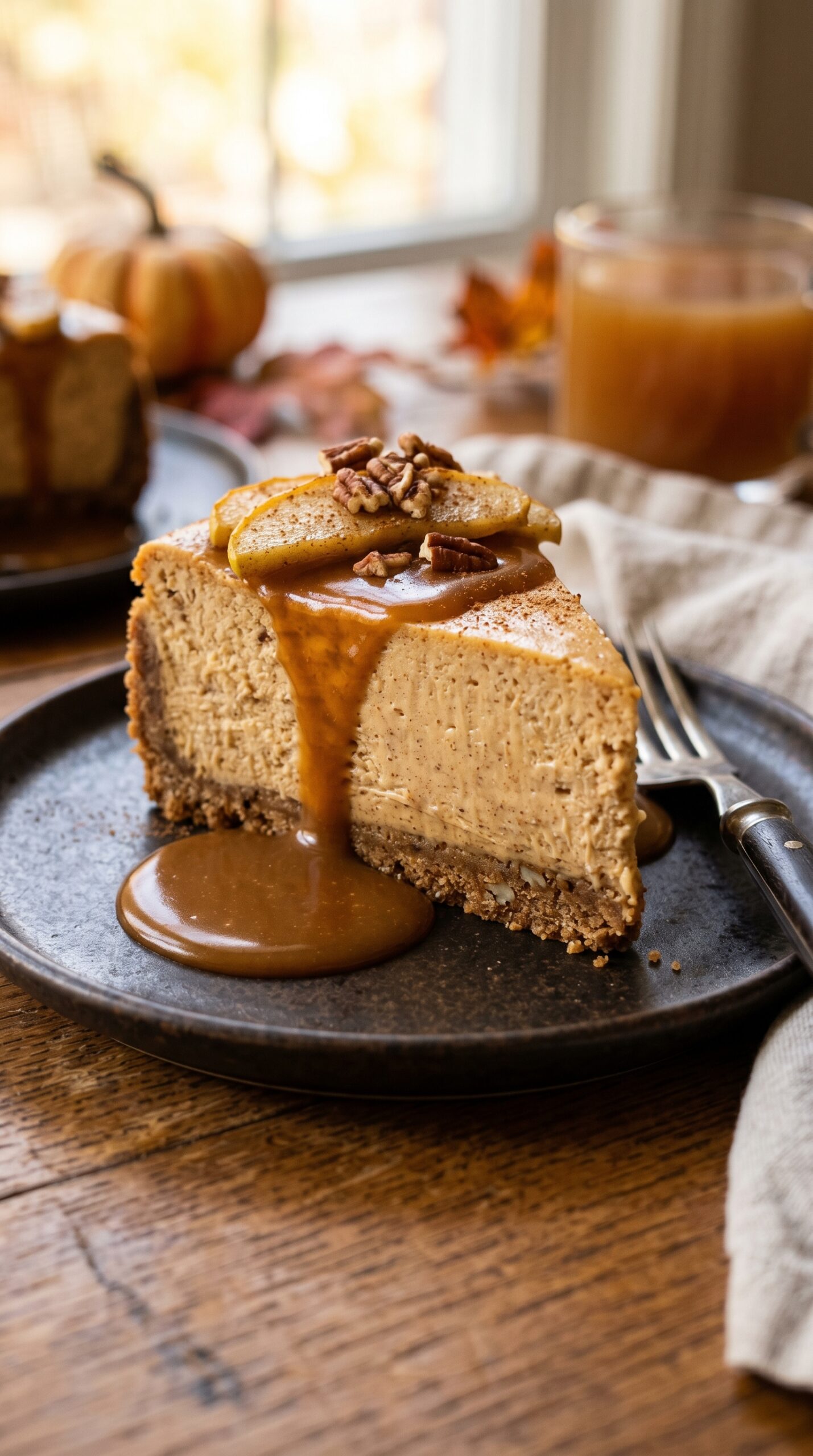
Apple pie gets all the attention every autumn, and honestly it has had its moment. This Apple Cider Cheesecake recipe is here to take that seasonal spotlight and hold onto it firmly. Creamy, tangy cheesecake filling infused with reduced apple cider, warm spices, and a buttery graham cracker crust — it tastes like fall decided to become a dessert.
I made this for the first time at a Thanksgiving gathering two years ago and it completely overshadowed the pie. Which, yes, caused a minor family controversy. But the empty pan by the end of the evening told the whole story. This baked apple cider cheesecake recipe is worth every minute of effort.
Servings: 10 to 12 slices Prep Time: 30 minutes Chill/Reduce Time: 30 minutes (for cider reduction) Bake Time: 1 hour to 1 hour 15 minutes Cooling and Chilling Time: Minimum 6 hours (overnight preferred) Total Time: Approximately 8 to 9 hours including chilling
What You Need — The Complete Ingredients List
This fall apple cheesecake recipe homemade uses focused, purposeful ingredients. Here is everything for a 23cm springform pan:
For apple cider reduction:
- 2 cups fresh apple cider (not apple juice — cider has depth that juice lacks entirely)
- 1 cinnamon stick
- 3 whole cloves
Graham cracker crust:
- 250g graham crackers or digestive biscuits, finely crushed (about 2 cups of crumbs)
- 80g unsalted butter, melted
- 2 tablespoons granulated sugar
- 1 teaspoon ground cinnamon
- 1/4 teaspoon ground nutmeg
For the cheesecake filling:
- 675g full-fat cream cheese, completely at room temperature (three standard 225g blocks)
- 200g granulated white sugar
- 3 large eggs, at room temperature
- 1/2 cup reduced apple cider (from the 2 cups you reduced — instructions below)
- 1/2 cup full-fat sour cream, room temperature
- 2 teaspoons pure vanilla extract
- 1 teaspoon ground cinnamon
- 1/2 teaspoon ground ginger
- 1/4 teaspoon ground allspice
- 1/4 teaspoon ground nutmeg
- 1/4 teaspoon salt
- 2 tablespoons all-purpose flour (prevents cracking and adds stability)
For the caramel apple cider topping (optional but highly recommended):
- 1 cup granulated sugar
- 6 tablespoons unsalted butter, cut into cubes
- 1/2 cup heavy cream, warmed
- 2 tablespoons apple cider
- 1/2 teaspoon ground cinnamon
- Pinch of salt
FYI, fresh apple cider from an orchard or farmer’s market produces dramatically better results than supermarket shelf-stable versions. The fresh cider has more natural apple flavor and reduces into a more concentrated, complex syrup that carries through clearly in the finished cheesecake.
The Making Process — Every Step in Complete Detail
Step 1: Reduce the Apple Cider First — Start Here
The apple cider reduction is what makes this an authentic spiced apple cider cheesecake dessert rather than just a regular cheesecake with apple flavoring added. You need to make this first because it needs time to cool before going into the batter. Reducing cider concentrates its natural sugars, deepens the apple flavor significantly, and removes the excess water content that would otherwise make your cheesecake filling too wet to set properly.
Pour two cups of fresh apple cider into a small saucepan. Add the cinnamon stick and whole cloves. Bring the cider to a gentle boil over medium heat, then reduce to a steady simmer. Let it reduce, stirring occasionally, for approximately 20 to 25 minutes until the volume shrinks down to approximately half a cup of thick, syrupy, deeply apple-flavored liquid. The cider will turn a darker amber color and smell intensely of concentrated apple and warm spice as it reduces.
Remove the cinnamon stick and cloves from the finished reduction and discard them. Pour the reduction into a small bowl and let it cool to complete room temperature before adding it to the cheesecake batter — hot liquid added to cream cheese causes it to partially melt and creates lumps rather than a smooth, homogeneous batter. Set it aside and start on the crust while it cools.
Step 2: Make and Bake the Spiced Graham Cracker Crust
Preheat your oven to 175 degrees Celsius. Crush the graham crackers or digestive biscuits into fine, even crumbs — you want a sandy, uniform texture with no large chunks remaining. Use a food processor for the most consistent results, or place them in a sealed zip-lock bag and crush thoroughly with a rolling pin. Uneven crumbs create a crust that bakes unevenly and crumbles inconsistently when sliced.
Combine the crumbs with melted butter, granulated sugar, ground cinnamon, and ground nutmeg in a large bowl. Stir everything together until every crumb is coated in butter and the mixture looks uniformly damp — similar in texture to wet sand that holds its shape when pressed. The butter binds the crumbs together during baking and creates a cohesive, sliceable crust rather than a pile of loose biscuit dust.
Pour the crumb mixture into a 23cm springform pan. Use the flat bottom of a measuring cup or drinking glass to press the crumbs firmly and evenly across the base and about 3cm up the sides of the pan. The pressing motion needs to be firm and deliberate — lightly tamped crumbs shift and crumble during filling and slicing, while firmly pressed crumbs hold together into a proper structured crust. Bake at 175 degrees Celsius for exactly 10 minutes until the crust looks set and smells toasty. Remove and let it cool while you make the filling.
Step 3: Prepare for a Water Bath — This Prevents Cracking
Wrap the outside of the springform pan in two to three layers of heavy-duty aluminum foil. Bring the foil up the sides of the pan as high as possible to create a waterproof barrier. This wrapping protects the crust and filling from water during the water bath baking method. A water bath — called a bain-marie — surrounds the cheesecake with gentle, moist heat during baking and prevents the rapid temperature changes that cause cheesecake to crack, overbrown, or bake unevenly.
Place the foil-wrapped pan inside a large roasting pan that can comfortably hold it with room on all sides. Set this whole setup aside and heat a kettle of water — you will pour the hot water into the roasting pan after the filled cheesecake goes in. Do not fill it yet. Water and unbaked cheesecake batter do not mix well when you are trying to transfer it to the oven without spilling.
Step 4: Make the Creamy Apple Cider Cheesecake Filling
Reduce your oven temperature to 160 degrees Celsius now. Place all three blocks of fully room-temperature cream cheese into the bowl of a stand mixer fitted with the paddle attachment. Beat on medium speed for three full minutes until the cream cheese looks completely smooth, light, and lump-free. This initial beating breaks down any remaining cold spots and creates the smooth base that every great creamy apple cider cheesecake bars or whole cheesecake filling needs.
Add the granulated sugar to the beaten cream cheese and mix on medium speed for two more minutes until fully incorporated and the mixture looks uniform. Scrape down the sides and bottom of the bowl thoroughly — cream cheese loves to hide in lumps at the bottom of the bowl underneath the paddle and never gets beaten unless you scrape it up manually. This scraping step is one of the most commonly skipped steps in cheesecake making, and skipping it causes lumpy batter.
Add the two tablespoons of flour, ground cinnamon, ginger, allspice, nutmeg, and salt to the cream cheese mixture. Mix on low speed until just combined — about 20 seconds. The flour adds a small amount of structure to the filling that helps it set cleanly and resist cracking during baking. It also absorbs some of the moisture from the sour cream and cider reduction, which contributes to a firmer, more sliceable finished texture.
Step 5: Add Eggs, Sour Cream, Cider, and Vanilla
Add the three room-temperature eggs to the batter one at a time, mixing on the lowest speed setting after each addition for just 15 to 20 seconds. You want the egg just barely incorporated — mixing too long or too vigorously after adding eggs incorporates excessive air into the batter. Air bubbles in cheesecake batter expand dramatically during baking and cause the top to puff up, then collapse and crack as it cools. Low and slow is the rule from this point forward.
Add the sour cream, cooled apple cider reduction, and vanilla extract to the batter. Mix on the lowest speed for just 20 to 30 seconds until everything is incorporated and the batter looks smooth and homogeneous. The reduced cider will tint the batter a warm amber color and fill the mixing bowl with the most incredible aroma of concentrated apple, cinnamon, and warm spice. Scrape down the bowl one final time and give it a gentle hand fold with a rubber spatula to ensure the very bottom of the bowl is fully mixed.
Step 6: Fill, Set Up the Water Bath, and Bake
Pour the finished batter over the cooled prebaked crust in the foil-wrapped springform pan. Tap the filled pan gently on the counter two or three times to release any visible surface bubbles. Smooth the top surface with an offset spatula or the back of a spoon until it looks completely even and level.
Place the filled springform pan inside the roasting pan and transfer the whole setup carefully to the preheated 160-degree Celsius oven — with the oven rack pulled out for safety. Pour enough hot water from the kettle into the roasting pan to come approximately halfway up the outside of the springform pan. Carefully slide the rack back in and close the oven door without jarring the setup.
Bake at 160 degrees Celsius for one hour to one hour and fifteen minutes. The cheesecake is ready when the edges look fully set and matte while the center two to three inches still wobble very gently — like soft jello — when you nudge the pan. This wobble indicates the center is just set enough to finish cooking through carry-over heat during cooling. If the entire surface wobbles uniformly like liquid, bake for another ten minutes and check again.
Step 7: Cool Gradually — The Most Patience-Testing Part
Turn the oven off when the cheesecake reaches the correct jiggle point. Leave the cheesecake inside the turned-off oven with the door cracked open about five centimeters. Let it sit inside the cooling oven for one full hour. This gradual cooling prevents the dramatic temperature drop that happens when you move a hot cheesecake directly to a cold kitchen counter — rapid temperature change is the number one cause of cracking in an otherwise perfectly baked cheesecake.
After one hour in the cooling oven, remove the cheesecake and let it come fully to room temperature on the counter — another one to two hours. Then transfer it — still in the springform pan — to the refrigerator. Chill for a minimum of six hours. Overnight chilling produces a significantly firmer, more sliceable, and better-flavored result. IMO, making this holiday apple cider cheesecake dessert the day before serving is genuinely the best approach — the flavors deepen and meld beautifully during overnight refrigeration.
Step 8: Make the Caramel Apple Cider Topping
This topping takes this caramel apple cider cheesecake recipe from excellent to extraordinary. Make it while the cheesecake chills. Place one cup of granulated sugar in a light-colored saucepan or skillet over medium heat. Let it melt without stirring — just swirl the pan gently as the edges begin to melt and turn amber. Stirring causes crystallization. Patience and occasional swirling are the correct technique.
Continue cooking the melted sugar until it turns a deep amber color throughout — similar to the color of honey or dark apple cider. This takes about six to eight minutes total and requires constant attention. The moment it hits deep amber, immediately remove the pan from the heat and add the cubed butter all at once. The mixture will bubble aggressively — this is normal. Whisk constantly until the butter fully melts into the caramel.
Pour the warmed heavy cream into the caramel while whisking continuously. Add the two tablespoons of apple cider, ground cinnamon, and salt. Return to low heat and whisk for one minute until smooth and unified. Pour into a jar and let it cool to room temperature before drizzling over the chilled cheesecake. The finished caramel keeps refrigerated for up to two weeks and is also extraordinary on ice cream, pancakes, and just about everything else.
Step 9: Unmold, Top, and Serve
Run a thin knife around the inside edge of the springform pan between the crust and the pan wall before releasing the springform latch. This prevents any stuck edges from tearing the crust when the pan opens. Release the latch slowly and lift the ring straight up. The cheesecake should hold its shape completely — firm, level, and beautifully golden-edged.
Drizzle the cooled caramel sauce over the top of the chilled cheesecake in a generous, rustic pattern. Add a light dusting of ground cinnamon over the caramel for visual impact and aroma. Slice with a sharp knife wiped clean between each cut for the cleanest, most professional-looking slices. Serve each slice with an additional small drizzle of warm caramel sauce alongside.
The No-Bake Version — For When the Oven Feels Like Too Much
A no bake apple cider cheesecake idea absolutely works and produces a genuinely impressive result with significantly less time and effort. Make the same graham cracker crust and press it into the pan, then refrigerate for 30 minutes to set rather than baking it.
For the filling, beat 675g of room-temperature cream cheese with 200g of powdered sugar until smooth. Add the cooled apple cider reduction, sour cream, vanilla, and all the same spices. In a separate bowl, whip one cup of heavy cream to stiff peaks, then fold it gently into the cream cheese mixture in three additions. Pour over the chilled crust and refrigerate for a minimum of eight hours or overnight. The no-bake version has a lighter, mousse-like texture compared to the dense baked version — both are excellent and serve completely different occasions.
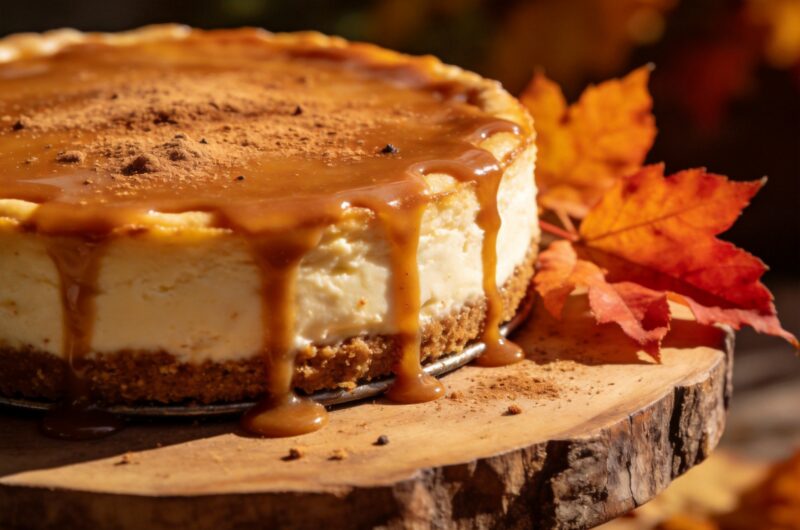
Baked Apple Cider Cheesecake With Caramel Drizzle
12
servings30
minutes30
minutes1
hour15
minutesThis Apple Cider Cheesecake uses reduced fresh apple cider, warm fall spices, and a cream cheese filling baked in a water bath over a spiced graham cracker crust. Finished with a caramel apple cider drizzle, it serves 10 to 12 people and delivers an exceptional seasonal dessert experience.
Ingredients
Apple Cider Reduction:
2 cups fresh apple cider
1 cinnamon stick
3 whole cloves
Graham Cracker Crust:
250g graham crackers or digestive biscuits, finely crushed
80g unsalted butter, melted
2 tablespoons granulated sugar
1 teaspoon ground cinnamon
1/4 teaspoon ground nutmeg
Cheesecake Filling:
675g full-fat cream cheese, room temperature
200g granulated white sugar
3 large eggs, room temperature
1/2 cup reduced apple cider (from above)
1/2 cup full-fat sour cream, room temperature
2 teaspoons pure vanilla extract
1 teaspoon ground cinnamon
1/2 teaspoon ground ginger
1/4 teaspoon ground allspice
1/4 teaspoon ground nutmeg
1/4 teaspoon salt
2 tablespoons all-purpose flour
Caramel Apple Cider Topping:
1 cup granulated sugar
6 tablespoons unsalted butter, cubed
1/2 cup heavy cream, warmed
2 tablespoons apple cider
1/2 teaspoon ground cinnamon
Pinch of salt
- Simmer two cups of fresh apple cider with a cinnamon stick and cloves over medium heat for 20 to 25 minutes until reduced to half a cup of thick, dark, concentrated syrup, then remove spices and cool completely to room temperature
- Preheat oven to 175 degrees Celsius, combine graham cracker crumbs with melted butter, sugar, cinnamon, and nutmeg, press firmly into the base and three centimeters up the sides of a 23cm springform pan, and bake for ten minutes until set
- Wrap the outside of the springform pan in two to three layers of heavy-duty aluminum foil and place inside a large roasting pan, then set aside
- Reduce oven temperature to 160 degrees Celsius
- Beat three blocks of room-temperature cream cheese on medium speed for three minutes until completely smooth, add sugar and beat two minutes more, then scrape down the bowl thoroughly
- Add flour and all spices and mix on low for 20 seconds, then add eggs one at a time on the lowest speed mixing for just 15 seconds after each
- Add sour cream, cooled cider reduction, and vanilla extract, mix on lowest speed for 20 to 30 seconds until just combined, then fold the bottom of the bowl by hand with a rubber spatula
- Pour filling over the cooled crust, smooth the top, tap gently to release surface bubbles, then place the setup in the oven and pour hot water into the roasting pan to reach halfway up the springform pan sides
- Bake at 160 degrees Celsius for one hour to one hour fifteen minutes until the edges are fully set and the center two to three inches still wobble gently
- Turn oven off, crack the door five centimeters, and leave the cheesecake inside for one full hour to cool gradually
- Remove from oven, cool to room temperature on the counter for one to two hours, then refrigerate in the pan for a minimum of six hours or overnight
- Make caramel by melting sugar in a saucepan without stirring until deep amber, add butter and whisk, pour in warmed cream, add apple cider, cinnamon, and salt, whisk smooth, then cool to room temperature
- Run a knife around the pan edge, release the springform, drizzle caramel generously over the top, dust with cinnamon, slice with a clean knife between each cut, and serve immediately
Common Mistakes That Ruin Apple Cider Cheesecake
Avoid these errors for a perfect apple cinnamon cheesecake recipe easy result:
- Using cold cream cheese: Creates lumps that no amount of mixing can fully smooth out — always use genuinely room-temperature cream cheese
- Skipping the cider reduction: Adding unreduced cider adds too much water to the filling and prevents proper setting — the reduction step is essential
- Overmixing after eggs are added: Incorporates excessive air that causes puffing and cracking during baking — mix minimally on the lowest speed after eggs go in
- Skipping the water bath: Produces dry edges, cracked tops, and uneven baking — the bain-marie is not optional for a smooth, crack-free result
- Cutting the chilling time short: Underset cheesecake slices break apart and look messy — minimum six hours, overnight is always better
- Moving from oven to counter immediately: Sudden temperature change causes cracking — always cool gradually in the turned-off oven first
Frequently Asked Questions
Q1: Can I use apple juice instead of apple cider in this recipe? Apple juice works as a substitute but produces a noticeably flatter, less complex apple flavor in the finished cheesecake. Apple cider contains more natural apple solids, tannins, and flavor compounds than filtered juice — these concentrate beautifully during the reduction process. If cider is unavailable, use 100 percent pure, unfiltered apple juice as the closest substitute and extend the reduction time by five to eight additional minutes since juice reduces slightly differently than cider.
Q2: Why did my cheesecake crack even though I used a water bath? Cracking can still occur despite a water bath if the eggs were overbeaten after adding, if the cheesecake was overbaked past the correct jiggle point, or if it cooled too rapidly after coming out of the oven. The oven door cracking method during the cool-down phase is critical — a one-hour gradual cool in the turned-off oven eliminates most post-water-bath cracking. Also ensure the foil wrapping on the springform pan has no gaps where water could seep in and make the crust wet and fragile.
Q3: Can I make this recipe as cheesecake bars instead of a whole round cheesecake? Yes — for creamy apple cider cheesecake bars, use a 23x33cm rectangular baking pan lined with parchment paper with overhang on both sides for easy lifting. Press the crust mixture into the bottom only — not up the sides. Pour the filling over the crust. Bake at 160 degrees Celsius in a water bath for 45 to 55 minutes until set. Chill overnight, then lift out using the parchment overhang and slice into bars.
Make This for Your Next Fall Gathering — They Will Talk About It
This easy apple cider cheesecake dessert combines two of the best things autumn has to offer — fresh apple cider and great dessert — into one genuinely stunning result. The reduced cider gives the filling a depth of flavor that no extract or artificial flavoring can replicate. The spiced caramel topping pulls everything together into a dessert that looks and tastes genuinely special.
Plan ahead, reduce that cider, use room-temperature ingredients, bake it gently, cool it gradually, and chill it overnight. Do all of that and you will have a cheesecake that stops conversation the moment it hits the table. The apple pie can wait until next year.