Hawaiian mac salad is one of those dishes that looks deceptively plain and then completely surprises you on the first bite. I tried it for the first time at a plate lunch spot in Honolulu and genuinely could not understand how something made of macaroni and mayonnaise tasted so good. Then I came home and spent three attempts replicating it before I finally nailed the texture and flavour ratio.
This creamy Hawaiian mac salad homemade version uses the exact technique that makes plate lunch macaroni salad taste different from every other pasta salad you have tried — specifically the two-stage dressing method and the intentional overcooking of the pasta. Both sound counterintuitive. Both are completely correct. Once you understand why they work, this easy Hawaiian macaroni salad becomes your most requested side dish at every gathering you attend.
What You’ll Need (Ingredients)
Clean, simple, and entirely pantry-friendly. The quality of the mayonnaise matters more in this recipe than in almost any other.
For the macaroni salad:
- 450g (1 lb) elbow macaroni
- 1 tablespoon salt for the pasta water
- 60ml (1/4 cup) whole milk — added to the hot pasta immediately after draining
- 1 medium carrot, peeled and finely grated
- 3 spring onions, thinly sliced — white and green parts both
- 2 stalks celery, finely diced
- 1/2 medium white onion, finely grated or minced
- 1 teaspoon apple cider vinegar
For the dressing:
- 360ml (1.5 cups) full-fat Japanese mayonnaise — Kewpie brand is strongly recommended
- 2 tablespoons whole milk
- 1 tablespoon white sugar
- 1/2 teaspoon salt
- 1/4 teaspoon white pepper
- 1/4 teaspoon garlic powder
How to Make It — Full Step-by-Step Process
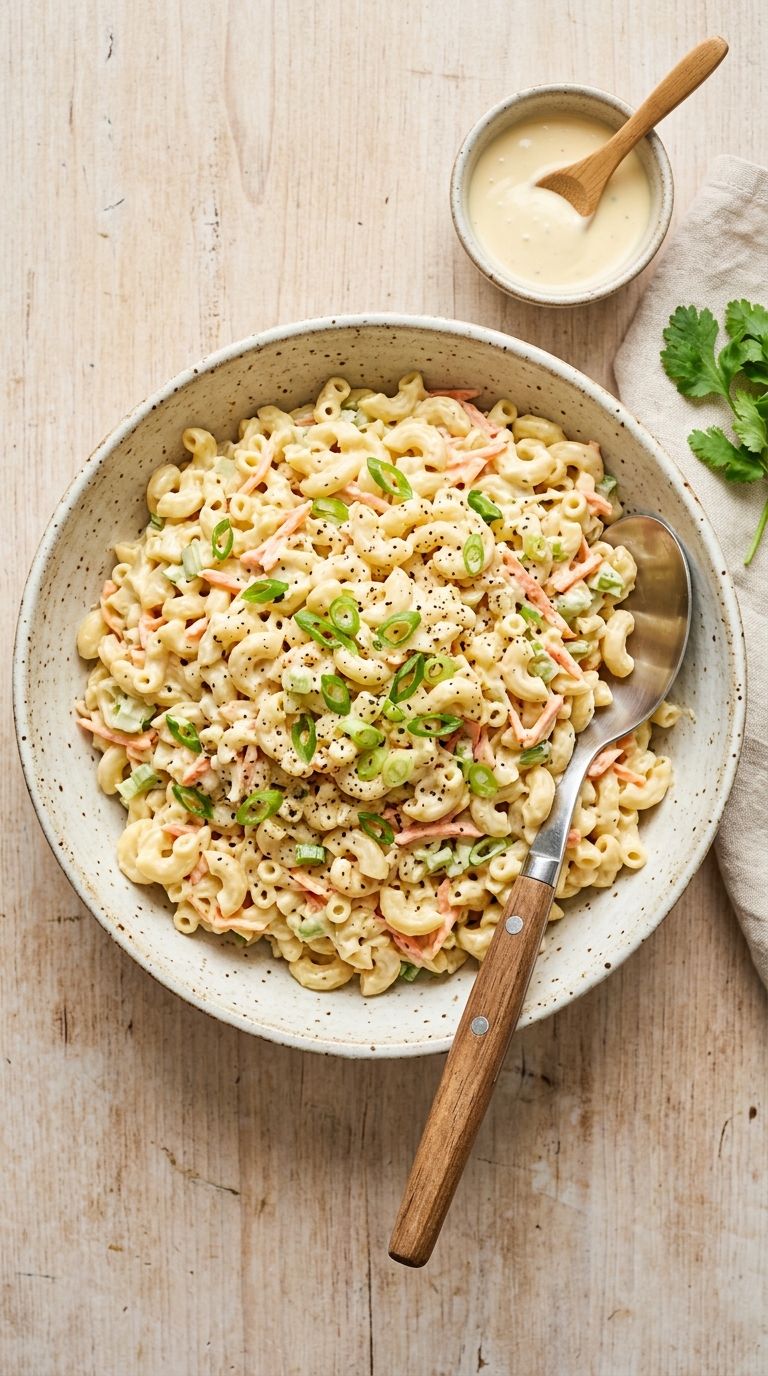
Step One: Cook the Pasta Properly — Yes, Overcook It
Fill a large pot with water and bring it to a full rolling boil. Add 1 tablespoon of salt — the pasta water needs to taste seasoned because this is the only opportunity to season the macaroni itself from the inside. Add 450g of elbow macaroni and cook it for 2 to 3 minutes beyond the packet’s recommended cooking time. For most elbow macaroni brands, this means cooking for 12 to 13 minutes total rather than the usual 9 to 10 minutes.
This deliberate overcooking is the most important and most misunderstood step in the authentic Hawaiian plate lunch mac salad technique. Overcooked macaroni is softer and more porous than al dente macaroni, which allows it to absorb the dressing more deeply and completely rather than just coating the surface. The finished salad has a creamier, more cohesive texture because the pasta and dressing integrate fully rather than sitting separately in the bowl.
Do not worry about the macaroni tasting mushy during cooking. Once chilled with the dressing absorbed into it, the texture firms back up to a pleasantly soft, creamy consistency that feels distinctly different from both al dente pasta salad and genuinely overcooked, waterlogged pasta. Drain it as soon as it reaches the right texture and move immediately to the next step without delay.
Step Two: Dress the Hot Pasta Immediately
After draining, transfer the hot macaroni immediately to a large mixing bowl — do not rinse it. Rinsing removes the surface starch that helps the dressing cling to the pasta. While the macaroni is still steaming hot, pour 60ml of whole milk directly over it and toss quickly to coat every piece.
The hot pasta absorbs the milk instantly, which adds a subtle creaminess and prevents the macaroni from clumping together as it cools. This milk-on-hot-pasta step is the first stage of the two-stage dressing technique. It seems like an odd step — pouring milk over pasta — but it contributes noticeably to the final texture. Skipping it produces a salad that is slightly drier and less creamy than the authentic Hawaiian macaroni salad with mayo version.
Add 1 teaspoon of apple cider vinegar to the hot pasta and toss again. The vinegar seasons the pasta directly while it is still hot enough to absorb liquid effectively, adding a subtle background tanginess that balances the sweetness of the mayonnaise dressing. Allow the pasta to cool at room temperature for 20 minutes after this step, stirring occasionally to prevent the pieces from sticking together.
Step Three: Prepare the Vegetables
While the pasta cools, prepare all the vegetables. Peel and finely grate 1 medium carrot directly into a small bowl — the fine grating produces thin, soft carrot shreds that distribute evenly through the salad and soften fully during chilling rather than staying crunchy and intrusive.
Finely grate or mince 1/2 medium white onion and add it to the carrot. Grated onion incorporates into the dressing far more evenly than diced onion and prevents the raw onion bitterness from concentrated in any single bite. Additionally, finely dice 2 celery stalks and thinly slice 3 spring onions, separating the white and green portions. Add all vegetables to the same bowl and set aside until the pasta cools enough to mix.
FYI — the vegetable preparation sounds finicky but the 5 minutes it takes makes a real difference to the finished texture. Coarsely chopped vegetables in a mac salad create uneven, chunky bites that interrupt the smooth, creamy consistency. Fine, uniform vegetable pieces blend invisibly into the dressing and deliver flavour without texture competition — which is exactly what the best Hawaiian macaroni salad recipe needs.
Step Four: Make the Dressing
In a separate medium bowl, combine 360ml of full-fat Japanese mayonnaise, 2 tablespoons of whole milk, 1 tablespoon of white sugar, 1/2 teaspoon of salt, 1/4 teaspoon of white pepper, and 1/4 teaspoon of garlic powder. Whisk everything together for about 30 seconds until the dressing looks completely smooth and uniform with no visible sugar granules.
Taste the dressing before adding it to anything. It should taste rich, creamy, very slightly sweet, and well-seasoned. The sweetness is intentional and characteristic — a classic Hawaiian BBQ mac salad side dish tastes noticeably sweeter than continental pasta salads, which surprises people the first time they try it. If you want a less sweet version, reduce the sugar to 1/2 tablespoon. However, the full tablespoon gives the most authentic result.
The choice of mayonnaise matters significantly here. Kewpie Japanese mayonnaise uses egg yolks rather than whole eggs, which produces a richer, creamier, more golden result than standard Western mayonnaise. It also has a slightly more complex, umami-forward flavour that contributes noticeably to the depth of the finished salad. If you cannot source Kewpie, use the best quality full-fat regular mayonnaise available — but use Kewpie if you can. IMO it makes the single biggest quality difference in this entire recipe. 🙂
Step Five: Combine Everything Together
Check that the cooled pasta feels close to room temperature before proceeding. Adding the dressing to hot or warm pasta causes the mayonnaise to thin and separate slightly, producing a greasy result rather than a thick, creamy coating. Room temperature pasta absorbs the dressing without melting it.
Add the prepared vegetables to the cooled pasta in the large mixing bowl and toss to distribute evenly. Pour approximately two-thirds of the prepared dressing over the pasta and vegetables. Fold everything together gently with a large spatula or wooden spoon, ensuring every piece of macaroni gets coated and the vegetables distribute evenly throughout. The salad will look generously dressed but not swimming in sauce at this stage — this is correct.
Reserve the remaining one-third of the dressing in a separate bowl and cover it tightly with cling film. You will add this second portion after chilling, and this is the second stage of the two-stage dressing method. The pasta continues absorbing the dressing as it chills, so adding all the dressing upfront produces a dry, under-dressed salad after refrigeration. Adding the reserved portion just before serving restores the creamy, generously dressed appearance that makes this sweet creamy mac salad Hawaiian style look and taste exactly right.
Step Six: Chill, Finish, and Serve
Cover the bowl tightly with cling film and refrigerate for a minimum of 1 hour. The chilling time is genuinely important rather than optional — it allows the flavours to meld, the dressing to permeate the pasta fully, and the vegetables to soften slightly in the acidic dressing. A mac salad served immediately after mixing tastes noticeably less cohesive than one that has rested for an hour in the fridge.
After at least 1 hour of chilling, remove the bowl from the fridge. The salad will look noticeably drier than when it went in — this is completely normal and expected. Add the reserved dressing and fold it through gently until the salad returns to a creamy, generously coated appearance. Taste and adjust seasoning — add a small pinch more salt or an extra 1/4 teaspoon of sugar if needed.
Transfer to a clean serving bowl. Scatter the green portions of the sliced spring onions across the top as a fresh garnish. For the most authentic quick Hawaiian pasta salad recipe presentation, serve the salad very cold alongside grilled meats, kalua pork, teriyaki chicken, or any BBQ protein. The cold, creamy salad contrasts beautifully with the warm, smoky char of grilled food — which is precisely why plate lunch culture built its entire identity around this combination.
Why Japanese Mayonnaise Changes Everything
Have you ever noticed that Hawaiian mac salad tastes distinctly richer and more complex than other pasta salads made with the same basic ingredients? The answer is almost always the mayonnaise. Japanese mayonnaise — particularly Kewpie — uses only egg yolks rather than whole eggs, which produces a much higher fat content per tablespoon and a correspondingly richer, more golden, more flavourful result.
Regular mayonnaise works and produces a good salad. However, Kewpie produces a salad that tastes genuinely restaurant-quality rather than home-style. The umami depth from the egg yolks adds a subtle savouriness that blends seamlessly with the sweetness from the sugar and the tanginess from the vinegar, producing a balanced, complex dressing that plain Western mayonnaise cannot quite replicate.
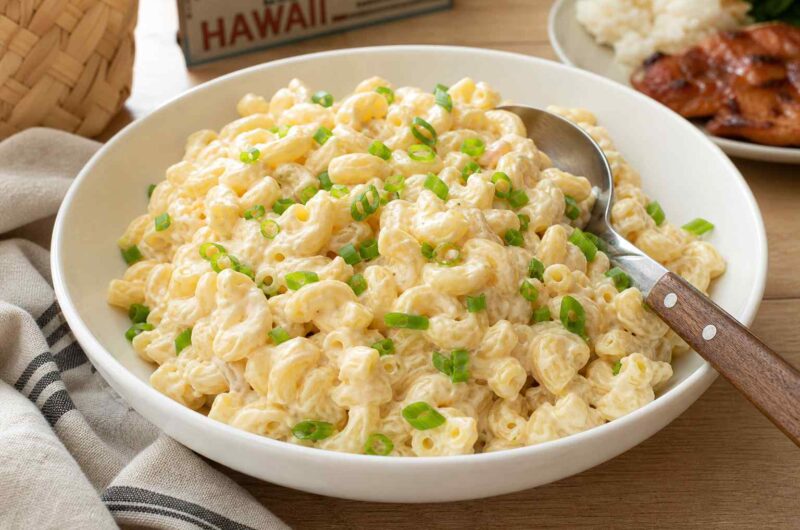
Hawaiian Mac Salad Recipe Better Than Any Restaurant
8
servings14
minutes12
minutesThis Hawaiian mac salad uses intentionally overcooked elbow macaroni dressed in two stages with a sweet, creamy Japanese mayonnaise dressing and finely grated vegetables. The pasta absorbs the first dressing portion during chilling, and the reserved second portion restores the creamy coating before serving — producing an authentic plate lunch texture every time.
Ingredients
Macaroni salad:
450g elbow macaroni
1 tablespoon salt for pasta water
60ml whole milk (for hot pasta)
1 medium carrot, finely grated
3 spring onions, thinly sliced
2 celery stalks, finely diced
1/2 medium white onion, finely grated
1 teaspoon apple cider vinegar
Dressing:
360ml full-fat Japanese mayonnaise (Kewpie recommended)
2 tablespoons whole milk
1 tablespoon white sugar
1/2 teaspoon salt
1/4 teaspoon white pepper
1/4 teaspoon garlic powder
- Bring a large pot of salted water to a full rolling boil
- Add elbow macaroni and cook for 2 to 3 minutes beyond the packet recommended time
- Drain without rinsing and transfer immediately to a large mixing bowl
- Pour 60ml of whole milk over the hot pasta and toss quickly to coat every piece
- Add 1 teaspoon of apple cider vinegar to the hot pasta and toss again
- Allow pasta to cool at room temperature for 20 minutes stirring occasionally
- Peel and finely grate 1 medium carrot into a small bowl
- Finely grate or mince half a white onion and add to the carrot
- Finely dice 2 celery stalks and thinly slice 3 spring onions
- Add all vegetables to the same bowl and set aside
- Combine Japanese mayonnaise, whole milk, white sugar, salt, white pepper, and garlic powder in a separate bowl
- Whisk the dressing together for 30 seconds until smooth and uniform
- Taste and adjust sweetness or seasoning as needed
- Add prepared vegetables to the cooled pasta and toss to distribute evenly
- Pour two-thirds of the dressing over the pasta and vegetables
- Fold gently until every piece of macaroni is evenly coated
- Reserve the remaining one-third of the dressing in a covered bowl
- Cover the pasta bowl with cling film and refrigerate for at least 1 hour
- After chilling, remove from fridge and note the pasta will look drier than before
- Add the reserved dressing and fold through until creamy and evenly coated
- Taste and adjust salt or sugar as needed
- Transfer to a serving bowl and scatter green spring onion tops across the surface
- Serve very cold alongside grilled meats or BBQ proteins
The Two-Stage Dressing Method Explained
This technique separates a genuinely great classic Hawaiian mac salad easy version from a mediocre one. Here is why it works:
Stage one: Two-thirds of the dressing goes in before chilling. The warm pasta absorbs a significant portion of this dressing during the cooling and chilling process. By the time an hour has passed, the pasta looks almost dry — but the flavour has penetrated deeply into every piece.
Stage two: The reserved one-third goes in immediately before serving. This final portion coats the surface of the now-fully-flavoured pasta and restores the creamy, generous appearance. The finished salad has both deep internal flavour from the absorbed first portion and a fresh, glossy coating from the second.
Combining both stages into one single application produces a salad that either looks over-dressed before chilling or under-dressed after chilling — but never both right simultaneously. The two-stage method solves this completely.
Common Mistakes to Avoid
Cooking the pasta al dente: Al dente pasta absorbs less dressing and produces a salad that tastes and feels like regular pasta salad rather than the specific creamy, soft texture that defines authentic Hawaiian mac salad. Always cook beyond the packet recommendation.
Rinsing the pasta after draining: Rinsing removes the surface starch that helps dressing adhere to the pasta. Never rinse macaroni destined for Hawaiian mac salad — drain and dress immediately.
Adding all the dressing before chilling: The pasta absorbs dressing during chilling and produces a dry-looking salad if you add everything upfront. Always reserve one-third for the final finish. :/
Using low-fat mayonnaise: Low-fat mayonnaise does not produce the same richness or body as full-fat. The fat content of the mayonnaise is what creates the creamy, indulgent texture that makes this salad so distinctive. Always use full-fat.
FAQs
Q1: Can I add protein to make this more substantial?
Yes — diced ham, shredded rotisserie chicken, canned tuna, or sliced hard-boiled eggs all work well folded into this salad. Add protein after the final dressing application immediately before serving rather than mixing it in before chilling, which keeps the protein texture fresh and prevents it from becoming overly soft during refrigeration.
Q2: How far in advance can I make Hawaiian mac salad?
Make it up to 24 hours in advance for the best flavour. Store with only the first two-thirds of the dressing applied and cover tightly in the fridge. Add the reserved dressing just before serving. Beyond 24 hours, the vegetables begin to soften past their ideal texture and the salad loses its freshness. Make it the day before for maximum convenience without quality loss.
Q3: Why does my mac salad taste too sweet?
The sweetness in this recipe is intentional and authentic to the Hawaiian plate lunch tradition. However, different mayonnaise brands have different base sweetness levels. If the salad tastes too sweet for your preference, reduce the sugar to 1/2 tablespoon and add an extra 1/4 teaspoon of apple cider vinegar to compensate. Taste the dressing before combining and adjust before adding it to the pasta.
Q4: Can I make this without the milk?
Yes, though the texture changes slightly. The milk thins the dressing to a flowing, smooth consistency that coats the macaroni more evenly. Without it, the dressing can feel thick and slightly sticky rather than creamy and smooth. If you skip the milk in the hot pasta step, the macaroni may clump together more during cooling. The milk addition genuinely improves both texture and absorption.
Q5: What pasta shape works best as a substitute?
Ditalini — small tube-shaped pasta — works as the closest substitute. Small shell pasta also works well. Both hold dressing in a similar way to elbow macaroni and produce a comparable texture after overcooking. Avoid large pasta shapes like penne or rigatoni — they produce an entirely different texture and visual profile that moves away from the classic Hawaiian mac salad aesthetic completely.
Wrapping It Up
This Hawaiian mac salad recipe delivers the authentic plate lunch experience using a two-stage dressing method, intentionally overcooked macaroni, and Japanese mayonnaise. Cook the pasta beyond al dente, dress with milk while hot, prepare vegetables finely, use full-fat Kewpie mayo, chill for a full hour, and apply the reserved dressing immediately before serving. Those six habits produce a perfect result every single time.
Whether you serve it alongside grilled chicken, pulled pork, or as a BBQ side dish — this salad consistently impresses everyone who tries it. Now go cook that pasta longer than every instinct tells you to.