There is a specific silence that happens when people take the first bite of this gooey coffee caramel cake. Not a polite silence — a genuine, involuntary pause because the caramel is still warm, the sponge is impossibly moist, and the coffee flavour hits at exactly the right moment. I have served this cake four times and experienced that silence four times.
This gooey coffee caramel cake recipe combines a soft coffee-infused sponge with a homemade sticky caramel sauce poured warm into the layers, then finished with a caramel buttercream frosting and a dramatic caramel drip over the top. Every single element reinforces the others. Nothing about this cake is subtle — and that is precisely the point.
What You’ll Need (Ingredients)
For coffee sponge layers:
- 250g (2 cups) plain flour
- 2 teaspoons baking powder
- 1/2 teaspoon bicarbonate of soda
- 1/2 teaspoon salt
- 200g (1 cup) light brown sugar — packed firmly
- 100g (7 tablespoons) unsalted butter, softened at room temperature
- 2 large eggs, room temperature
- 240ml (1 cup) buttermilk, room temperature
- 120ml (1/2 cup) hot strong brewed coffee — or 120ml hot water with 2 teaspoons instant espresso dissolved
- 2 teaspoons vanilla extract
- 2 tablespoons vegetable oil
Gooey caramel sauce:
- 200g (1 cup) caster sugar
- 80g (5.5 tablespoons) unsalted butter, cut into cubes
- 120ml (1/2 cup) heavy cream, room temperature
- 1 teaspoon vanilla extract
- 1/2 teaspoon fine sea salt — this is a salted caramel sauce and the salt is essential
For the caramel coffee buttercream:
- 200g (14 tablespoons) unsalted butter, softened at room temperature
- 380g (3.5 cups) icing sugar, sifted
- 4 tablespoons of the homemade caramel sauce — cooled to room temperature
- 1 tablespoon strong brewed coffee, cooled
- 1 pinch of salt
For decoration:
- Remaining caramel sauce for dripping over the top
- Flaky sea salt for scattering
- Caramel popcorn or toffee shards — optional but spectacular
How to Make It — Full Step-by-Step Process
Step One: Make the Caramel Sauce First
Start with the caramel sauce because it needs time to cool before going into the buttercream. Making it first and setting it aside removes all time pressure from the later stages of assembly. Place 200g of caster sugar in a medium heavy-bottomed saucepan — a light-coloured pan works best here because it allows you to see the colour of the caramelising sugar clearly.
Heat the sugar over medium heat without stirring. This is the most important instruction in this entire step — stirring crystallises the sugar and causes clumping that ruins the caramel completely. Instead, hold the pan handle and swirl it gently every 30 seconds to redistribute the heat and encourage even melting. Watch the edges of the sugar carefully — they will begin to melt and colour first while the centre remains granular and white.
Continue swirling and watching as the sugar gradually melts into a deep amber liquid. The colour should reach the shade of dark honey before you add anything else — too pale and the caramel tastes flat and sweet, too dark and it tastes burnt and bitter. The transition from deep amber to burnt happens in about 20 seconds, so stay attentive and trust your eyes rather than a timer.
Once the entire batch reaches deep amber, remove the pan from heat immediately and add 80g of cold butter cubes all at once. The mixture will bubble violently — this is normal. Whisk the butter in quickly until fully melted and incorporated. Return the pan to low heat and pour in 120ml of room temperature heavy cream slowly while whisking continuously. The cream also bubbles vigorously on contact with the hot caramel — keep whisking and do not stop until the mixture looks smooth and glossy.
Add 1 teaspoon of vanilla extract and 1/2 teaspoon of fine sea salt. Stir once more and pour the finished caramel sauce into a heatproof glass jar or bowl. Allow it to cool at room temperature for at least 30 minutes before using in the buttercream. The sauce thickens considerably as it cools — this is correct and expected. FYI, this caramel sauce recipe makes slightly more than you need for the buttercream, which means you will have plenty left for the drip decoration and for drizzling inside the layers.
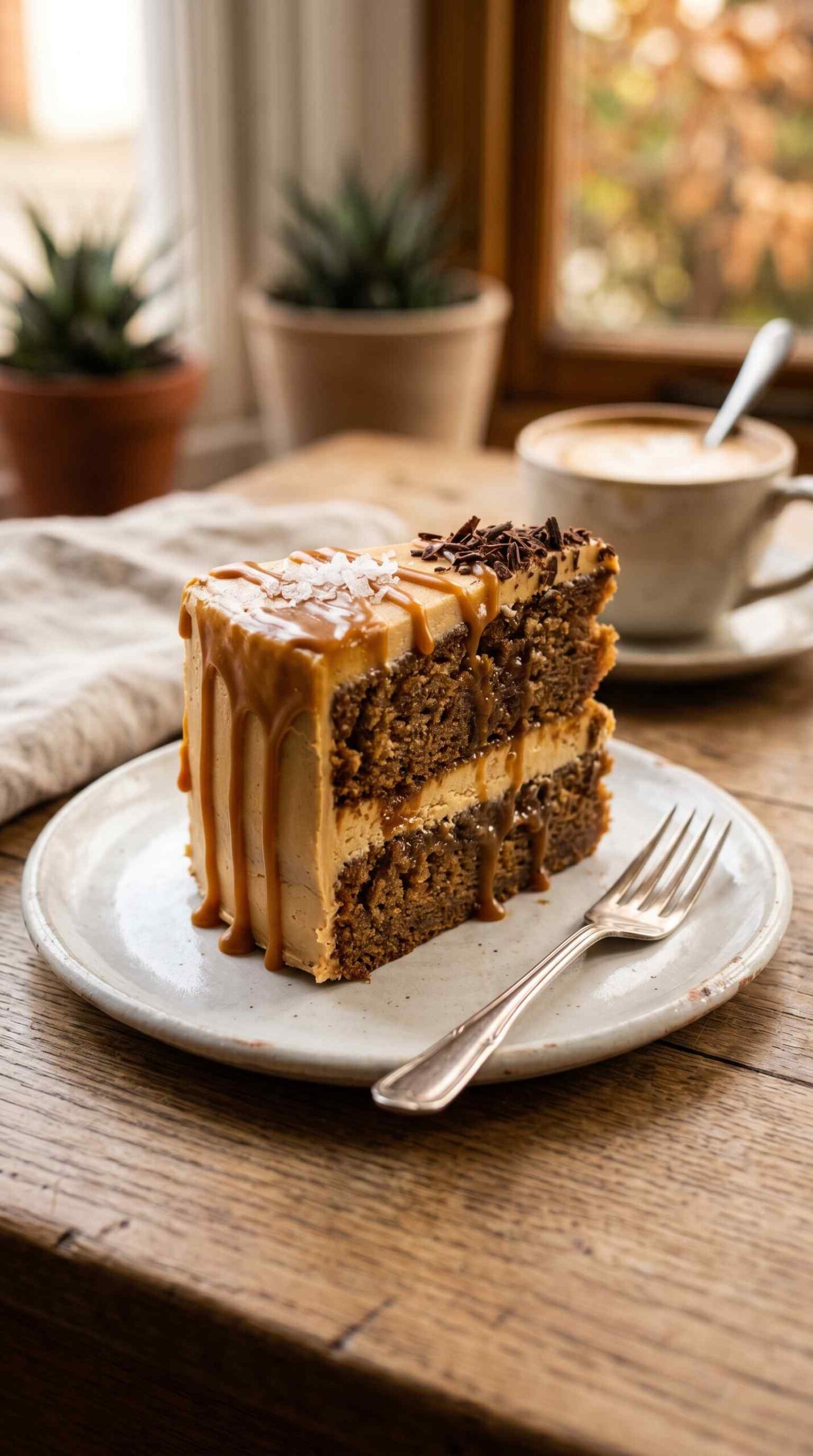
Step Two: Preheat Oven and Prepare Tins
Set your oven to 175°C (350°F) fan-forced or 180°C (360°F) conventional. Allow a full 20 minutes of preheating before the tins go in. Grease two 20cm (8 inch) round cake tins generously, line the bases with baking parchment circles, and grease the parchment as well.
Light brown sugar in the sponge creates a slightly stickier batter than standard white sugar cakes — the double greasing prevents any possibility of the cake layer sticking to the tin base during release. Taking 2 minutes on proper tin preparation prevents the frustration of a baked layer that tears on removal.
Step Three: Mix the Dry Ingredients
Sift 250g of plain flour, 2 teaspoons of baking powder, 1/2 teaspoon of bicarbonate of soda, and 1/2 teaspoon of salt into a medium bowl. Whisk briefly with a balloon whisk to distribute the raising agents evenly throughout the flour. Set aside while you prepare the wet ingredients separately.
The combination of baking powder and bicarbonate of soda in this soft coffee caramel sponge cake recipe serves distinct purposes. Baking powder provides primary lift. Bicarbonate of soda reacts with the acidity in the buttermilk to create additional bubbles and contributes to the slightly open, tender crumb structure that absorbs the caramel sauce so effectively during assembly.
Step Four: Cream Butter and Sugar
Place 100g of softened butter and 200g of packed light brown sugar into a large mixing bowl. Beat together on medium-high speed for 3 to 4 minutes until the mixture turns noticeably lighter in colour and slightly fluffy in texture. Light brown sugar contains molasses, which means it never turns as pale or as airy as white caster sugar during creaming — however, the extended beating still incorporates significant air and creates a noticeably lighter texture than under-creamed butter and sugar would produce.
Add the 2 room temperature eggs one at a time, beating on medium speed for 30 seconds after each addition. Adding eggs one at a time allows the emulsion to build gradually and prevents the mixture from curdling. After both eggs go in, add 2 teaspoons of vanilla extract and 2 tablespoons of vegetable oil. Beat for another 20 seconds until fully incorporated. The oil adds extra moisture that keeps the sponge tender for 2 to 3 days after baking — an important quality in a cake designed to be made and served at its absolute best.
Step Five: Fold in Dry and Wet Ingredients Alternately
Add the dry flour mixture to the creamed butter in three additions, alternating with the buttermilk in two additions. Start with the dry, add buttermilk, add dry, add buttermilk, finish with dry. Use a large spatula and fold each addition with wide, slow circular motions until just combined before adding the next. This alternating method keeps the batter emulsified and prevents it from becoming either too stiff or too liquid at any point during mixing.
After the final addition of dry ingredients, fold only until no visible flour streaks remain. Stop immediately and move to the coffee addition.
Step Six: Add the Hot Coffee
Pour 120ml of hot strong coffee slowly into the batter while folding gently. The batter will thin slightly and deepen in colour from pale cream to a warm caramel-brown. This thinning is correct — the hot coffee blooms the vanilla extract and enhances the overall depth of flavour in the sponge in the same way it deepens chocolate in a chocolate cake.
The coffee flavour in the finished sponge is present but not dominant — it adds warmth, depth, and a slight bitterness that prevents the caramel sauce from tasting overwhelmingly sweet when the two combine in the finished cake. This balance between coffee and caramel is what makes this rich gooey caramel coffee dessert cake taste genuinely complex rather than just very sweet.
Divide the finished batter evenly between both prepared tins. Smooth the surface with the back of a spoon and tap each tin firmly on the counter 3 to 4 times before baking.
Step Seven: Bake the Sponge Layers
Place both tins on the centre rack of the preheated oven with space between them. Bake for 30 to 34 minutes without opening the oven door during the first 25 minutes. At 30 minutes, insert a skewer into the centre of each layer. Moist crumbs clinging to the skewer means perfectly baked. Wet batter means 3 to 4 more minutes are needed.
Remove from the oven and cool in the tins for 15 minutes before inverting onto a wire rack. Peel the parchment off gently and cool completely for at least 45 minutes before assembling. This cooling time is not optional — the caramel sauce soaks into the sponge more evenly when the cake is cool rather than warm, and the buttercream holds its shape far better on a fully cooled surface.
Step Eight: Make the Caramel Coffee Buttercream
Place 200g of softened unsalted butter into a large bowl and beat on medium-high speed for 3 minutes until pale and fluffy. Add the sifted icing sugar in three additions, mixing on low speed after each addition to avoid a sugar cloud. After the final addition, increase to medium-high speed and beat for 2 minutes until smooth.
Add 4 tablespoons of the cooled caramel sauce and 1 tablespoon of cooled brewed coffee. Beat on medium speed for 1 minute until fully incorporated and the buttercream takes on a warm caramel colour throughout. Add a pinch of salt to sharpen the flavour. The finished buttercream should look smooth, hold soft peaks, and taste richly of caramel with a clear coffee note underneath. If it looks too soft, refrigerate for 10 minutes. If it looks too stiff, add 1 teaspoon of milk and beat briefly.
Step Nine: Soak the Layers With Caramel Sauce
Place the first cooled sponge layer on a flat serving plate or cake board. Use a skewer or thin chopstick to poke approximately 20 holes evenly across the surface of the layer — these holes allow the caramel sauce to penetrate into the interior of the sponge rather than simply sitting on the surface.
Spoon 3 to 4 tablespoons of the cooled caramel sauce slowly and evenly over the top of the first layer. Allow it to absorb for about 2 minutes before spreading any buttercream. The caramel sinks into the poke holes and distributes through the crumb, creating pockets of sticky caramel inside every slice. This is the technique that makes this moist coffee caramel layer cake recipe genuinely gooey rather than simply flavoured — and it is the step that most home bakers skip because they do not know to do it.
Step Ten: Assemble and Apply the Buttercream
Spread approximately one-third of the caramel coffee buttercream across the caramel-soaked first layer in an even layer. Place the second sponge layer on top, press gently to seat flat, and poke holes across this layer as well. Spoon another 3 tablespoons of caramel sauce over the surface of the second layer and allow 2 minutes of absorption before applying any frosting to the top.
Apply the remaining buttercream to the top and sides of the assembled cake in smooth, even strokes using an offset spatula. For the bakery style caramel coffee cake easy finish, use a bench scraper held vertically against the frosting while rotating the cake slowly to produce clean, even sides. Leave the top surface slightly textured and rustic — it will be covered by the caramel drip in the final step.
Step Eleven: The Caramel Drip and Final Decoration
Warm the remaining caramel sauce gently by placing the jar in a bowl of warm water for 5 minutes — the sauce should feel slightly warm to the touch and pour slowly rather than dripping instantly. If it pours too fast, allow it to cool further. If it does not move, warm it a little longer.
Stand directly above the cake and pour the warm caramel sauce slowly around the outer edge of the top, allowing it to spill over the edge in controlled drips down the frosted sides. The drip effect requires the frosting to be chilled first — refrigerate the frosted cake for 20 minutes before adding the drip so the buttercream surface is firm enough to guide the drips downward rather than absorbing them immediately. Pour the remaining sauce across the top surface and spread gently to fill the space between the drips.
Scatter flaky sea salt over the caramel top immediately before it sets. The salt crystals sit on the surface and create a visual texture as well as a flavour contrast that makes every bite taste noticeably more complex than caramel alone. Add caramel popcorn or shards of toffee across the top for a dramatic, textured decoration that suits this coffee flavored caramel drip cake ideas presentation perfectly. Refrigerate the finished cake for 20 minutes to set everything before slicing. IMO, this is the most impressive cake you can serve at a dinner party — period. 🙂
Why the Caramel Needs to Be Homemade
Have you ever used store-bought caramel sauce in a baking recipe and felt vaguely disappointed by the result? Store-bought caramel sauces contain stabilisers, thickeners, and artificial flavourings that affect how they behave when baked into a sponge or incorporated into a buttercream.
Homemade caramel made from caramelised sugar, butter, and cream tastes genuinely different — more complex, slightly bitter at the edges, and far more satisfying than any commercial version. The bitterness from the caramelised sugar balances the sweetness of the sponge and buttercream in a way that makes the whole cake taste balanced rather than cloying. Additionally, homemade caramel incorporates into the buttercream smoothly and without separating, which commercial sauces often fail to do reliably.
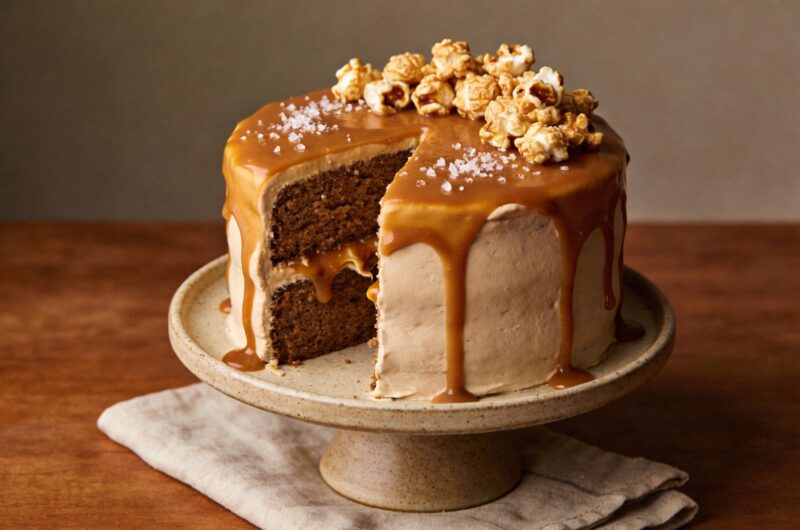
Caramel Coffee Cake With Homemade Caramel Drip
12
servings35
minutes32
minutes1
hourThis gooey coffee caramel cake combines a moist buttermilk and espresso sponge with warm homemade salted caramel soaked into the layers, rich caramel coffee buttercream frosting, and a dramatic warm caramel drip over the top. Every layer reinforces the others, producing a deeply indulgent, genuinely gooey caramel and coffee celebration cake.
Ingredients
Coffee sponge layers:
250g plain flour
2 teaspoons baking powder
1/2 teaspoon bicarbonate of soda
1/2 teaspoon salt
200g light brown sugar, packed
100g unsalted butter, softened
2 large eggs, room temperature
240ml buttermilk, room temperature
120ml hot strong brewed coffee
2 teaspoons vanilla extract
2 tablespoons vegetable oil
Gooey caramel sauce:
200g caster sugar
80g unsalted butter, cubed
120ml heavy cream, room temperature
1 teaspoon vanilla extract
1/2 teaspoon fine sea salt
Caramel coffee buttercream:
200g unsalted butter, softened
380g icing sugar, sifted
4 tablespoons cooled caramel sauce
1 tablespoon strong brewed coffee, cooled
1 pinch salt
Decoration:
Remaining caramel sauce for dripping
Flaky sea salt
Caramel popcorn or toffee shards (optional)
- Heat 200g caster sugar in a heavy saucepan over medium heat without stirring — swirl only
- Watch the sugar melt and turn deep amber in colour throughout
- Remove from heat and add cold butter cubes immediately — whisk vigorously
- Return to low heat and pour in room temperature heavy cream slowly while whisking continuously
- Add vanilla extract and fine sea salt and stir through
- Pour caramel into a heatproof jar and cool at room temperature for at least 30 minutes
- Preheat oven to 175°C fan or 180°C conventional for 20 minutes
- Grease two 20cm round tins, line bases with parchment, and grease parchment
- Sift flour, baking powder, bicarbonate of soda, and salt into a bowl and whisk briefly
- Beat softened butter and light brown sugar together for 3 to 4 minutes until lighter in colour
- Add eggs one at a time beating for 30 seconds after each addition
- Add vanilla extract and vegetable oil and beat for 20 seconds more
- Fold in dry ingredients in three additions alternating with buttermilk in two additions
- Fold only until just combined with no dry flour streaks visible
- Pour hot strong coffee into the batter slowly while folding gently
- Divide batter evenly between both prepared tins and smooth the surface
- Tap each tin firmly on the counter 3 to 4 times before baking
- Bake on centre rack for 30 to 34 minutes without opening door in the first 25 minutes
- Test with a skewer — moist crumbs means done, wet batter means 3 more minutes
- Cool in tins for 15 minutes then invert onto a wire rack and peel off parchment
- Cool completely for at least 45 minutes before assembling
- Beat softened butter for 3 minutes until pale and fluffy
- Add sifted icing sugar in three additions mixing on low between each addition
- Add 4 tablespoons cooled caramel sauce and 1 tablespoon cooled coffee and beat for 1 minute
- Add a pinch of salt and beat briefly until smooth
- Place first cooled sponge layer on a serving plate
- Poke approximately 20 holes evenly across the surface using a skewer
- Spoon 3 to 4 tablespoons of cooled caramel sauce slowly over the first layer and allow 2 minutes to absorb
- Spread one-third of caramel coffee buttercream across the caramel-soaked layer
- Place second sponge layer on top and press gently to seat flat
- Poke holes across the second layer and soak with another 3 tablespoons of caramel sauce
- Apply remaining buttercream to the top and sides of the assembled cake
- Smooth sides using a bench scraper held vertically while rotating the cake
- Refrigerate the frosted cake for 20 minutes to firm the buttercream
- Warm remaining caramel sauce gently in a bowl of warm water until pourable but not runny
- Pour warm caramel slowly around the outer edge allowing drips to fall down the frosted sides
- Pour remaining sauce across the top and spread gently between the drips
- Scatter flaky sea salt over the caramel top immediately before it sets
- Add caramel popcorn or toffee shards across the top if using
- Refrigerate for 20 minutes to set everything then slice and serve
The Coffee and Caramel Flavour Balance
The espresso caramel cake recipe easy approach works because coffee and caramel share several of the same aromatic compounds — both are products of heat transforming sugars and proteins into complex, roasted flavour molecules. They reinforce each other rather than competing, which is why the combination tastes so natural together.
The coffee in this recipe appears in three forms — in the sponge, in the buttercream, and as a complementary note against the caramel sauce. Each appearance contributes at a different intensity level, creating a layered coffee presence that builds gradually through the eating experience rather than hitting all at once.
Common Mistakes to Avoid
Stirring the caramel sugar: Stirring causes crystallisation and produces a grainy, lumpy caramel that cannot be saved. Always swirl the pan rather than stirring. If crystals form on the sides of the pan, brush them down with a pastry brush dipped in water.
Adding cold cream to hot caramel: Cold cream added to molten caramel causes the sauce to seize and harden instantly into a solid mass. Always use room temperature cream and add it slowly while whisking continuously.
Skipping the poke holes: Without poke holes, the caramel sauce sits on the surface of the sponge rather than soaking through it. The holes create channels that distribute the sauce through the interior, which is what makes this cake genuinely gooey throughout rather than just on the outside. :/
Applying the caramel drip to unchilled frosting: Warm caramel sauce dripped onto room temperature buttercream melts directly into the frosting rather than running down the outside. Always refrigerate the frosted cake for at least 20 minutes before adding the drip.
FAQs
Q1: Can I make the caramel sauce ahead of time?
Yes — make it up to 1 week ahead and store in a sealed glass jar in the fridge. Reheat gently by placing the jar in warm water for 5 to 10 minutes before using. Do not microwave the caramel sauce — uneven heating causes the butter to separate from the sugar and produces a grainy, broken sauce that cannot be rescued.
Q2: Why did my caramel sauce turn grainy?
Grainy caramel almost always results from either stirring during the melting process or from sugar crystals on the sides of the pan falling back into the liquid. Prevent both by never stirring — swirl only — and by keeping the sides of the pan clean using a pastry brush dipped in warm water during cooking.
Q3: Can I use instant coffee instead of brewed coffee?
Yes — dissolve 2 teaspoons of instant espresso powder in 120ml of hot water for the sponge and 1/2 teaspoon in 1 tablespoon of hot water for the buttercream. Instant espresso powder delivers a more intense, consistent coffee flavour than instant coffee granules and is worth the slight extra effort to source from a coffee supplier or large supermarket.
Wrapping It Up
This gooey coffee caramel cake recipe delivers a genuinely extraordinary result from a manageable two-hour process. Make the caramel sauce first and allow it to cool, bake the coffee sponge layers until just done, poke holes in both layers before applying the caramel soak, build the caramel coffee buttercream with cooled sauce, chill before the drip, and scatter flaky salt immediately after. Those seven habits produce a decadent gooey caramel cake recipe homemade result that genuinely rivals the best bakery version you have ever tasted.
Now go make it. And clear your schedule for the 20 minutes after you serve it — because answering requests for the recipe will take at least that long.