Prime rib has a reputation for being intimidating. People treat it like some mysterious culinary achievement reserved for professional chefs and five-star steakhouses. I used to think the same thing — until I made my first perfect prime rib roast recipe at home for Christmas dinner and realized the whole process is almost insultingly straightforward once you understand a few key principles.
The truth is that a juicy prime rib roast recipe asks very little of you. Season it well, roast it low and slow, hit the right internal temperature, and rest it properly. That is genuinely the whole method. Everything else is just details — and this article covers every single one of them so your roast comes out perfectly the first time.
Servings: 6 to 8 Prep Time: 20 minutes (plus overnight dry brine if possible) Cook Time: 3 to 4 hours (depending on size and desired doneness) Rest Time: 30 minutes minimum Total Time: Approximately 4 to 5 hours active day
What You Need — The Full Ingredients List
This garlic herb prime rib roast uses a short, focused ingredient list. Every item here pulls serious weight in the final result:
For prime rib roast:
- 1 bone-in prime rib roast, approximately 2.5 to 3kg (3 ribs — serves 6 to 8 people generously)
- 2 tablespoons kosher salt (for dry brining overnight — this step is worth planning for)
- 2 tablespoons olive oil or softened unsalted butter (for the herb crust)
- 8 cloves garlic, minced into a fine paste
- 2 tablespoons fresh rosemary, finely chopped
- 2 tablespoons fresh thyme leaves
- 1 tablespoon fresh parsley, finely chopped
- 1 teaspoon black pepper, coarsely ground
- 1 teaspoon onion powder
- 1/2 teaspoon smoked paprika
Au jus (pan drippings sauce):
- Pan drippings from the roasting pan (everything that collects during cooking)
- 1 cup beef broth
- 1/2 cup dry red wine (optional but recommended — Cabernet Sauvignon works perfectly)
- 1 teaspoon Worcestershire sauce
- Salt and pepper to taste
For serving:
- Prepared horseradish sauce
- Flaky sea salt for finishing
FYI, a bone-in roast delivers significantly better flavor than boneless. The bones act as a natural roasting rack, elevate the meat for even airflow underneath, and contribute gelatin and flavor to the drippings. If you prefer a boneless prime rib roast recipe, the method remains identical — just reduce cooking time by about 20 to 30 minutes.
The Making Process — Every Step in Complete Detail
Step 1: Dry Brine the Night Before — The Most Impactful Prep Step
If you plan ahead — and for prime rib, you really should — dry brine your roast the night before cooking. Remove the roast from its packaging, pat it completely dry with paper towels on all surfaces, and place it fat-cap side up on a wire rack set over a rimmed baking tray. Sprinkle the kosher salt generously and evenly over every exposed surface of the meat, including the sides and the bone area.
Place the salted roast uncovered in the refrigerator for at least 12 hours — 24 hours is better, and 48 hours is genuinely exceptional. The salt draws moisture to the surface initially, then the meat reabsorbs it along with the dissolved salt back into the muscle fibers. This process seasons the meat deeply from the inside rather than just on the surface, and the dry refrigerator air simultaneously dries the outer layer to create a better crust during roasting.
This single overnight step elevates the final result more dramatically than almost any other technique in the entire recipe. Have you ever cut into a prime rib at a restaurant and marveled at how deeply seasoned and flavorful every slice tasted — not just the crust? That is dry brining. It genuinely transforms the result from impressive to extraordinary.
Step 2: Prepare the Garlic Herb Crust
Remove the dry-brined roast from the refrigerator two full hours before you plan to put it in the oven. Bringing a large roast to room temperature is not optional — a cold three-kilogram roast placed directly into the oven takes significantly longer to cook through evenly and creates a larger temperature gradient between the crust and the center. Room temperature meat cooks more predictably from edge to center.
While the roast warms up, prepare your herb crust. Combine the minced garlic, chopped rosemary, thyme, parsley, black pepper, onion powder, and smoked paprika in a small bowl. Add the olive oil or softened butter and mix everything together into a thick, fragrant paste. The fat in the olive oil or butter helps the herb paste adhere to the meat surface and also helps it brown and crisp during the initial high-heat blast.
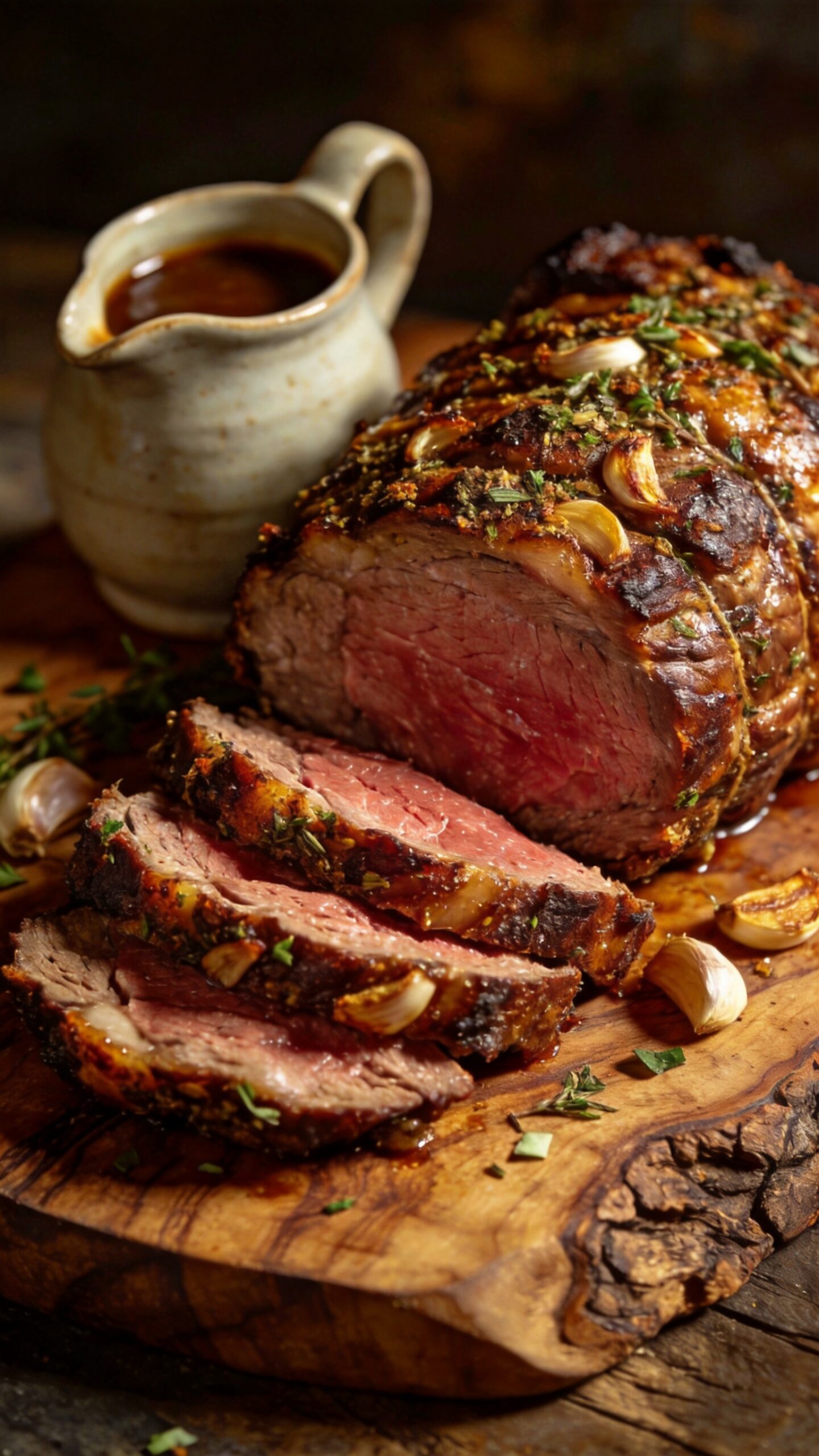
Apply the herb paste generously over every surface of the roast — the fat cap on top, the sides, and the exposed meat areas around the bones. Use your hands and really press the paste into every crevice and surface. The best prime rib seasoning recipe applied this way creates a deeply flavored, aromatic crust that forms a beautiful dark exterior during roasting. Let the coated roast sit at room temperature for the remaining warming time.
Step 3: Preheat the Oven and Set Up the Roasting Pan
Preheat your oven to 260 degrees Celsius — as hot as most domestic ovens will go. Place a roasting rack inside a large, sturdy roasting pan. If your roast is bone-in, stand it rib-bones-down on the rack — the bones form a natural rack that holds the meat elevated above the pan. This position allows hot air to circulate completely around the roast for even cooking and allows the drippings to fall freely into the pan below.
Position your oven rack in the lower third of the oven for a bone-in roast. This position keeps the top of the roast from getting too close to the heating element during the initial high-heat phase. The lower position also allows heat to build up around the bottom of the pan and contribute to even cooking through radiant heat from below.
Step 4: The High-Heat Blast First
Place the herb-crusted roast into the fully preheated 260-degree Celsius oven. Roast at this high temperature for exactly 15 minutes. This initial high-heat phase creates the deeply browned, flavorful crust on the outside of the roast — the Maillard reaction working at its most intense. The crust seals the surface, builds color, and produces the dramatic visual appearance that makes a perfect prime rib roast recipe look genuinely impressive on the table.
After exactly 15 minutes, reduce the oven temperature to 120 degrees Celsius without opening the oven door. This is the critical transition to the slow roasted prime rib recipe phase. The dramatic temperature drop shifts the cooking from aggressive surface browning to gentle, even, low-temperature cooking that brings the entire interior of the roast to the target temperature with perfect uniformity.
Do not open the oven during the transition or at any point during the low-temperature roasting phase unless you need to check the temperature. Every time the oven door opens, significant heat escapes and the cooking environment is disrupted. Insert an oven-safe meat thermometer probe before the roast goes in — one that you can read from outside the oven — and simply watch the temperature from there without opening the door.
Step 5: Slow Roast to the Perfect Internal Temperature
The roast now cooks at 120 degrees Celsius until it reaches your desired internal temperature in the very center of the thickest part. This phase takes approximately 2.5 to 3.5 hours depending on the exact size of the roast and your individual oven’s actual calibrated temperature. Here are your target temperatures for different doneness levels:
- Rare: Remove at 49 degrees Celsius — very red, very juicy center, cool interior
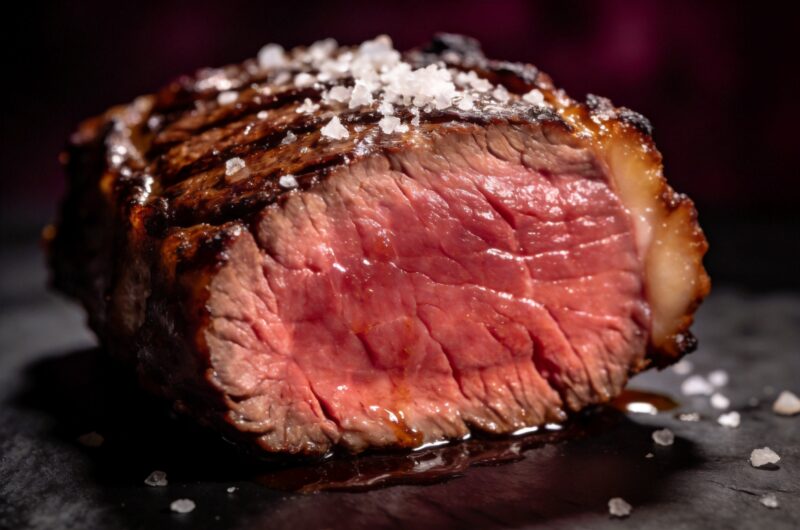
- Medium-rare: Remove at 52 degrees Celsius — pink throughout, juicy and tender, the classic and recommended target
- Medium: Remove at 57 degrees Celsius — slightly pink center, still quite juicy
- Medium-well: Remove at 63 degrees Celsius — very little pink, noticeably less juicy
- Well done: Remove at 68 degrees Celsius — no pink, significantly drier — IMO not the best use of prime rib, but your roast, your rules
Always remove the roast five to seven degrees below your final target temperature. Carry-over cooking — the continued temperature rise after the roast leaves the oven — will bring it up those remaining degrees during the resting period. Remove at 52 degrees for medium-rare and it will finish resting at 57 to 58 degrees, which is ideal.
Step 6: Rest the Roast — Thirty Minutes Minimum
Transfer the finished roast to a clean cutting board and tent it loosely with aluminum foil. Let it rest for a minimum of 30 minutes — 45 minutes is better for a roast this size. Do not skip or shorten this step. The resting period is where the internal temperature equalizes throughout the roast and the juices redistribute from the center back toward the edges.
Cutting into a prime rib immediately after it comes out of the oven sends all those concentrated juices flooding out onto your cutting board rather than staying inside the meat. A properly rested prime rib retains dramatically more moisture in every slice. The visual difference between a rested and unrested prime rib is immediately obvious — one produces juicy, glistening slices and the other produces a spreading pool of liquid on the board and noticeably drier meat.
While the roast rests, make the au jus from the pan drippings. This is the ideal window for the sauce because the roast needs the time and the sauce needs about 10 minutes.
Step 7: Make the Au Jus Pan Sauce
Place the roasting pan directly over two burners on your stovetop over medium heat. The drippings in the pan — rich with rendered beef fat, herb juices, and caramelized proteins — form the base of an extraordinarily flavorful au jus that no store-bought sauce can replicate.
Pour the red wine into the hot roasting pan and use a wooden spoon to scrape up all the browned bits from the bottom. These caramelized bits — called fond — dissolve into the wine and contribute intense beef flavor to the finished sauce. Let the wine reduce by half over three to four minutes, then add the beef broth and Worcestershire sauce.
Stir everything together and let the au jus simmer for five to six minutes until it reduces slightly and concentrates in flavor. Taste and adjust with salt and pepper. Strain the finished au jus through a fine mesh sieve into a warm serving jug — this removes any herb pieces or bone fragments and produces a smooth, restaurant-quality sauce. Serve it alongside the carved prime rib for guests to pour over their slices at the table.
Step 8: Carve and Serve
To carve a bone-in roast, use a sharp carving knife to cut along the bones first, separating the meat from the rib bones in one clean movement. Then lay the roast flat and slice it across the grain into individual portions of your preferred thickness — about 1.5 to 2cm per slice for a proper serving. Thinner slices cool down faster and lose their edge more quickly on the plate.
Arrange slices on a warmed serving platter, drizzle a small amount of au jus over the top for presentation, and sprinkle with flaky sea salt. Serve the horseradish sauce alongside for those who want it — the sharp, pungent heat of horseradish is the classic and perfect condiment pairing for the rich, buttery flavor of prime rib. This is your holiday prime rib dinner recipe moment — serve it with confidence.
Bone-In vs Boneless — An Honest Comparison
Choosing between bone-in and a boneless prime rib roast recipe genuinely matters for the final result:
- Bone-in: Better flavor from the bones, natural rack for roasting, more impressive visual presentation, slightly more forgiving during cooking due to the insulating effect of the bones on the meat near them
- Boneless: Easier to carve cleanly, slightly shorter cooking time, easier to find pre-tied in uniform shape at most butcher counters, better for even slice consistency across the entire roast
- Verdict: Bone-in wins on flavor and presentation. Boneless wins on convenience and carving ease. Both produce excellent results when the method is correct.
Make Juicy Prime Rib at Home With This Simple Method
6
servings20
minutes4
hours30
minutesThis Perfect Prime Rib Roast uses an overnight dry brine, a garlic herb crust, a high-heat blast to build the crust, and a slow low-temperature roast to the exact desired doneness. Serving six to eight people, it delivers genuinely restaurant-quality results with a rich homemade au jus pan sauce.
Ingredients
Prime Rib Roast:
1 bone-in prime rib roast, 2.5 to 3kg (3 ribs)
2 tablespoons kosher salt (dry brine)
2 tablespoons olive oil or softened butter
8 cloves garlic, minced to a paste
2 tablespoons fresh rosemary, finely chopped
2 tablespoons fresh thyme leaves
1 tablespoon fresh parsley, chopped
1 teaspoon coarsely ground black pepper
1 teaspoon onion powder
1/2 teaspoon smoked paprika
Au Jus:
Pan drippings from the roasting pan
1 cup beef broth
1/2 cup dry red wine
1 teaspoon Worcestershire sauce
Salt and pepper to taste
For Serving:
Prepared horseradish sauce
Flaky sea salt
- Pat the roast completely dry with paper towels, sprinkle kosher salt over every surface, and place uncovered on a rack in the refrigerator for 12 to 48 hours to dry brine
- Remove the roast from the refrigerator two full hours before cooking to bring it completely to room temperature
- Mix minced garlic, rosemary, thyme, parsley, black pepper, onion powder, smoked paprika, and olive oil into a thick herb paste
- Apply the herb paste generously over every surface of the roast, pressing it firmly into all surfaces and crevices
- Preheat the oven to 260 degrees Celsius with the rack in the lower third position
- Place the roast rib-bones-down on a rack in the roasting pan and insert an oven-safe probe thermometer into the thickest part of the center
- Roast at 260 degrees Celsius for exactly 15 minutes to build a deeply browned, flavorful crust
- Without opening the oven door, immediately reduce the temperature to 120 degrees Celsius
- Slow roast at 120 degrees Celsius for 2.5 to 3.5 hours, monitoring the internal temperature constantly via the probe thermometer
- Remove the roast from the oven when the internal temperature reads five to seven degrees below your target doneness — 52 degrees Celsius for medium-rare
- Transfer to a cutting board, tent loosely with foil, and rest for a minimum of 30 to 45 minutes without cutting
- While the roast rests, place the roasting pan over two stovetop burners on medium heat, deglaze with red wine, scrape up the fond, add beef broth and Worcestershire, and simmer for five to six minutes to make the au jus
- Strain the au jus through a fine mesh sieve into a warm serving jug
- Carve the rested roast by separating the bones first, then slicing across the grain into 1.5 to 2cm thick portions, and serve immediately with au jus and horseradish sauce
Doneness Guide — The Visual and Temperature Reference
Use this reference for your oven roasted prime rib recipe every time:
- Rare (49°C): Deep red throughout, very soft to the touch, copious juices — best for extreme red meat enthusiasts
- Medium-rare (52-54°C): Vibrant pink throughout, juicy, tender, rich — the universally recommended target for prime rib
- Medium (57-60°C): Light pink center, firm edges, less juice but still pleasant — good for mixed-preference tables
- Medium-well (63°C): Barely pink, quite firm, noticeably drier — for guests who are nervous about pink meat
- Well done (68°C+): Grey throughout, firm, dry — technically safe but a genuinely expensive way to eat grey beef :/
What to Serve With Prime Rib
This holiday prime rib dinner recipe pairs beautifully with classic, substantial sides:
- Yorkshire pudding: The traditional British pairing — crispy, eggy, hollow pastry that soaks up au jus perfectly
- Creamy horseradish sauce: Pungent and sharp — cuts through the richness of the beef brilliantly
- Garlic mashed potatoes: Rich and buttery — the natural companion to prime rib pan sauce
- Roasted root vegetables: Carrots, parsnips, and celeriac roasted in the oven alongside the beef
- Creamed spinach: Classic steakhouse pairing — rich, creamy, and slightly bitter to balance the meat
- Caesar salad: A crisp, bright salad provides contrast and refreshes the palate between rich bites
Common Mistakes That Ruin Prime Rib
Avoid these errors for a restaurant style prime rib at home result every time:
- Skipping the dry brine: Surface seasoning only goes so deep — overnight brining seasons the entire roast from inside out
- Cooking cold from the fridge: Cold roast creates uneven cooking from edge to center — always bring to room temperature
- Not using a thermometer: Guessing doneness on a three-kilogram roast is genuinely reckless — use a probe thermometer
- Cutting the rest time short: Juices redistribute during resting — cut early and they flood onto the board instead of staying in the meat
- Cooking at one temperature only: The high-heat blast creates the crust; the low-temperature phase cooks the interior evenly — both steps are essential
Frequently Asked Questions
Q1: How much prime rib do I need per person? Plan for approximately 350 to 450 grams of bone-in prime rib per person for a generous serving that accounts for bone weight and some trimming. For boneless prime rib, 250 to 300 grams per person is sufficient. A three-rib bone-in roast weighing around 2.5 to 3kg feeds six to eight people comfortably as a main course when accompanied by substantial side dishes.
Q2: Can I cook prime rib the day before and reheat it? You can, but the result will be noticeably different from freshly roasted. If you must cook ahead, roast the prime rib to rare — about 49 degrees Celsius internal — then refrigerate uncovered overnight. To serve, place slices in a 135-degree Celsius oven covered with foil and a splash of beef broth for 20 to 30 minutes until warmed through. The reheated result is acceptable but not equivalent to serving immediately after the rest.
Q3: What is the difference between prime rib and standing rib roast? They are the same cut of beef — the rib section of the cow, specifically ribs six through twelve. Standing rib roast is the butcher’s technical term while prime rib is the popular name used in restaurants and home cooking. The word prime refers to the cut’s position on the animal, not necessarily the USDA grade. However, purchasing USDA Prime or Choice grade standing rib roast delivers the best marbling and flavor for this recipe.
Q4: Do I need to tie the roast before cooking? Tying a bone-in roast is generally not necessary because the bones hold the roast’s structure naturally during cooking. A boneless prime rib roast, however, benefits significantly from tying at 2.5cm intervals with kitchen twine. Tying maintains a compact, uniform cylindrical shape that promotes even cooking and produces consistently-sized slices across the entire roast. Ask your butcher to tie it for you if this feels unfamiliar.
Make This for Your Next Special Occasion — You Are Ready
This prime rib recipe easy method proves that the most impressive centerpiece you can put on a table requires more patience than skill. Season it well, blast it hot, roast it low and slow, rest it properly, and carve it with confidence.
Buy a good roast, follow this method, and serve it to people who matter. The silence at the table when everyone takes their first bite is the only review you will ever need 🙂