This Risotto Recipe is the one that makes people think you trained in Italy for three years. Silky, creamy, deeply flavored, and finished with a generous amount of parmesan — it is genuinely one of the most satisfying things you can make on a weeknight with a glass of wine in the other hand.
Why This Risotto Recipe Intimidates People Unnecessarily
Most home cooks avoid risotto because they assume it requires constant attention and professional technique. However, the reality is much simpler than that reputation suggests. You just need patience, warm stock, and a willingness to stir — that is genuinely all there is to it.
Furthermore, once you understand the basic method, you can apply it to endless variations. Have you ever watched a chef make risotto and thought it looked impossibly technical? After making this recipe once, that intimidation disappears completely and permanently.
Nutrition Per Serving (Approximate)
- Calories: 420 kcal
- Protein: 12g
- Carbohydrates: 52g
- Fat: 16g
- Fiber: 2g
- Sodium: 680mg
Values are approximate and vary based on specific ingredients and additions used.
Ingredients You Will Need
For the Risotto Base:
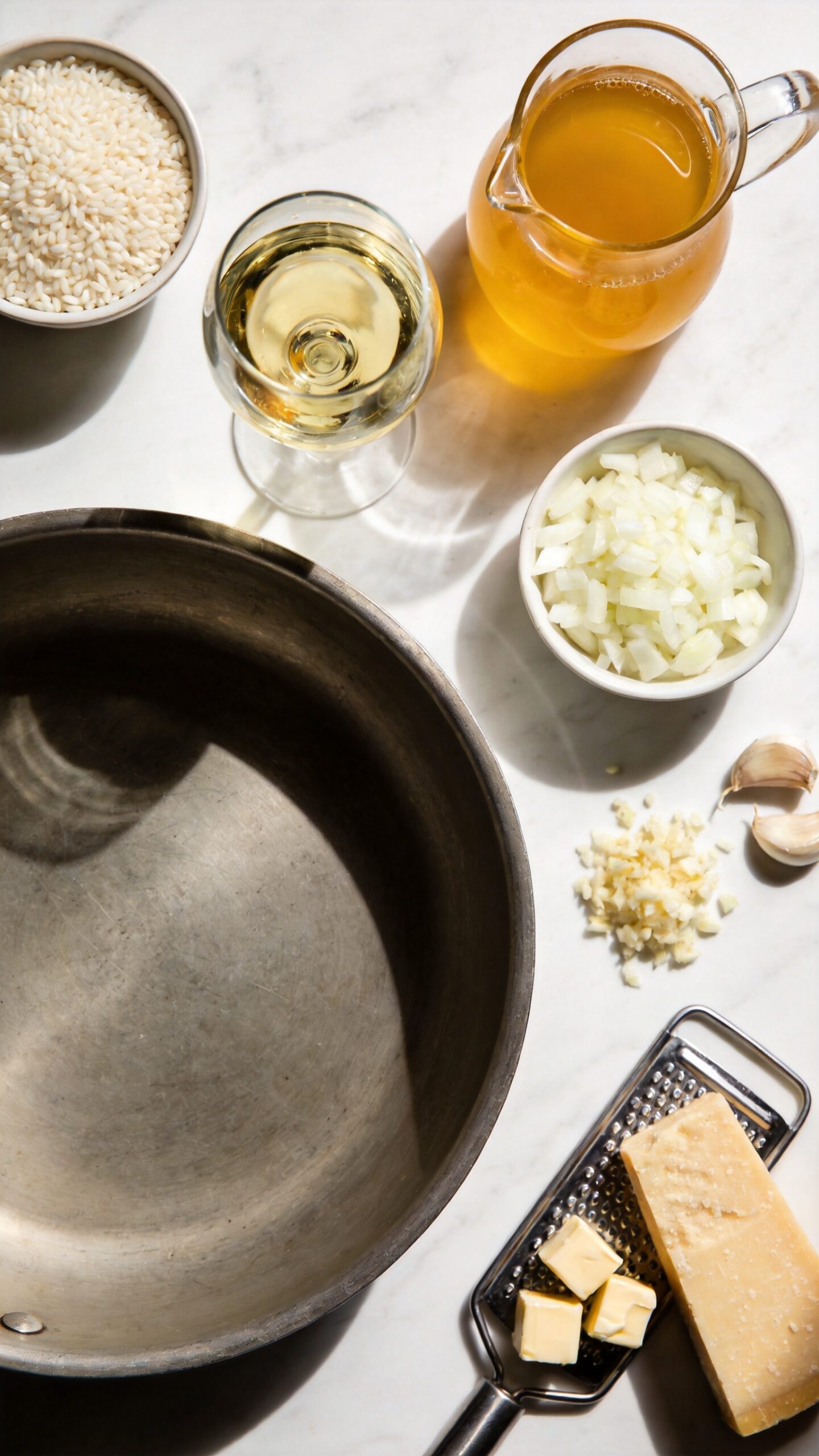
- 300 grams arborio rice
- 1 medium white onion, finely diced
- 3 cloves garlic, minced
- 150 ml dry white wine
- 1 litre good quality chicken or vegetable stock, kept warm
- 2 tablespoons unsalted butter
- 1 tablespoon extra virgin olive oil
- 1 teaspoon salt
- 1/2 teaspoon white pepper
For the Cheese Finish:
- 80 grams parmesan cheese, finely grated
- 2 tablespoons unsalted butter, cold and cubed
- Extra parmesan for serving
Optional Additions:
- 200 grams mushrooms, sliced and sauteed separately
- 150 grams cooked shrimp or chicken for protein
- 1 teaspoon lemon zest for brightness
- Fresh thyme or rosemary for extra aroma
- Truffle oil for drizzling at the end
How to Make Risotto Recipe Step by Step
Step 1 — Warm the Stock
- Pour the chicken or vegetable stock into a small saucepan and place it over low heat
- Keep the stock at a gentle simmer throughout the entire cooking process — never let it cool down
- Cold stock added to the risotto drops the temperature and disrupts the starch release that creates the creamy texture
- Furthermore, warm stock absorbs into the rice more evenly and consistently than cold stock does at any stage
Step 2 — Saute the Onion and Garlic
- Heat the butter and olive oil together in a wide, heavy-bottomed pan over medium heat
- Once the butter melts and begins to foam, add the finely diced onion to the pan
- Cook the onion for 5 to 6 minutes, stirring regularly, until it turns completely soft and translucent
- Then add the minced garlic and stir continuously for 1 minute until fragrant throughout the pan
- The onion and garlic form the aromatic base that supports every other flavor in the finished risotto
Step 3 — Toast the Arborio Rice
- Add the dry arborio rice directly to the pan with the softened onion and garlic
- Stir the rice continuously for 2 to 3 minutes until each grain looks slightly translucent at the edges and toasted
- This toasting step coats each grain in the butter and oil mixture which slows starch release later
- Furthermore, toasted rice holds its shape better during cooking and produces a more defined, slightly al dente texture in the final dish
Pro Tip: Never rinse arborio rice before making risotto. The surface starch on each grain is exactly what creates the creamy, flowing texture that defines a great risotto. Rinsing removes that starch entirely and produces a thin, separated result instead.
Step 4 — Add the White Wine
- Pour the dry white wine into the pan with the toasted rice and stir immediately
- The wine will sizzle loudly as it hits the hot pan and begin absorbing into the rice quickly
- Stir continuously until the wine absorbs completely and the pan looks almost dry again
- This step adds acidity and complexity that balances the richness of the butter and parmesan later in the recipe
Step 5 — Add the First Ladle of Warm Stock
- Add one ladle of warm stock to the rice and stir gently but continuously
- Keep stirring until the stock absorbs almost completely into the rice before adding the next ladle
- The constant stirring encourages the rice to release its starch gradually into the liquid
- Moreover, this gradual starch release is what creates that signature creamy sauce that coats every single grain beautifully
Step 6 — Continue Adding Stock Gradually
- Add another ladle of warm stock once the previous one has absorbed and repeat the process
- Continue this one-ladle-at-a-time method for 18 to 20 minutes until the rice reaches the right texture
- After each addition, stir steadily and allow the stock to absorb before pouring in the next ladle
- Additionally, keep the heat at a steady medium throughout — too high burns the bottom, too low makes the process take far too long
Step 7 — Test the Rice for Doneness
- After 18 minutes, taste a grain of rice to check the texture carefully
- The rice should feel tender throughout with just a very slight firmness at the very center — this is al dente
- If it still feels chalky or hard in the middle, add another ladle of stock and continue stirring for 2 more minutes
- Furthermore, the risotto itself should look flowing and slightly loose at this stage — not stiff or dry
Pro Tip: The correct consistency for finished risotto is what Italians call all’onda — meaning it flows like a wave when you shake the pan. If the risotto holds its shape rigidly without moving, add a small splash more stock and stir briefly to loosen it back to the right texture.
Step 8 — The Mantecatura Finish
- Remove the pan from the heat completely before adding the cheese and butter
- Add the cold cubed butter to the risotto and stir vigorously in large circular motions
- Then add the finely grated parmesan and continue stirring energetically for 1 full minute
- This vigorous stirring off the heat is called mantecatura — it emulsifies the fat into the starch and creates an incredibly silky, glossy finish
- Season with salt and white pepper to taste and add a squeeze of lemon juice if using for brightness
Step 9 — Rest and Serve Immediately
- Allow the finished risotto to rest in the pan for exactly 2 minutes before plating
- During this brief rest, the texture settles into the perfect flowing consistency for serving
- Spoon the risotto into warm shallow bowls immediately after resting — never let it sit too long
- Finish each bowl with extra grated parmesan, a crack of black pepper, and a drizzle of good olive oil before serving
Risotto Variations Worth Trying
Mushroom Risotto
- Saute 200 grams of mixed mushrooms in butter and garlic separately until golden and fragrant
- Stir them into the risotto during the last 5 minutes of cooking for maximum texture contrast
- Additionally, add a small drizzle of truffle oil over each bowl just before serving for an elevated finish
Baked Risotto Version
- Saute the onion, garlic, and toasted rice on the stovetop as normal and add the wine
- Then transfer everything to an oven-safe dish, pour in all the stock at once, and cover tightly with foil
- Bake at 180C for 25 to 28 minutes for a hands-off Baked Risotto that requires almost no stirring
Healthy Risotto With Vegetables
- Replace half the arborio rice with finely chopped cauliflower rice for a lighter, lower-carb version
- Furthermore, stir in fresh spinach, peas, and lemon zest during the final 3 minutes of cooking
- This Healthy Risotto Recipe version keeps all the creaminess while adding significant nutritional value throughout
Why This Risotto Recipe Works Every Time
Three clear reasons make this recipe consistently reliable and impressive:
- Keeping the stock warm throughout cooking maintains a consistent temperature that allows even, predictable starch release from every grain
- Toasting the rice before adding liquid coats each grain in fat which controls how quickly starch releases and prevents mushiness
- The mantecatura finish off the heat emulsifies cold butter and parmesan into the starch to create a genuinely silky and glossy restaurant-quality texture
Serving Ideas
Turn this into a full Risotto Dinner Ideas spread with these additions:
- Serve alongside a simple rocket and parmesan salad with lemon dressing for freshness
- Top with seared scallops or grilled chicken breast for a complete protein-rich meal
- Offer extra parmesan and black pepper at the table for personal finishing
- Pair with a glass of the same dry white wine used in the recipe for a proper Italian dinner experience
- IMO, risotto served in warm bowls with truffle oil and extra parmesan is one of the most satisfying meals you can make at home
Common Mistakes to Avoid
- Using cold stock — always keep it warm on a separate burner throughout the entire cooking process
- Adding all the stock at once — gradual addition is the entire mechanism behind the creamy texture
- Rinsing the arborio rice — the surface starch is essential and rinsing removes it completely before cooking even begins
- Walking away from the pan — risotto requires consistent attention and stirring throughout the full 18 to 20 minutes
- Adding parmesan on the heat — always remove from heat first or the cheese turns grainy and separates in the pan
Storage Tips
- Refrigerator: Store in an airtight container for up to 3 days — risotto thickens significantly in the fridge overnight
- Reheating: Add a splash of warm stock or water to loosen the risotto and reheat gently in a pan over medium-low heat while stirring
- Freezer: Risotto does not freeze particularly well — the texture becomes grainy and separated after thawing so always eat it fresh when possible
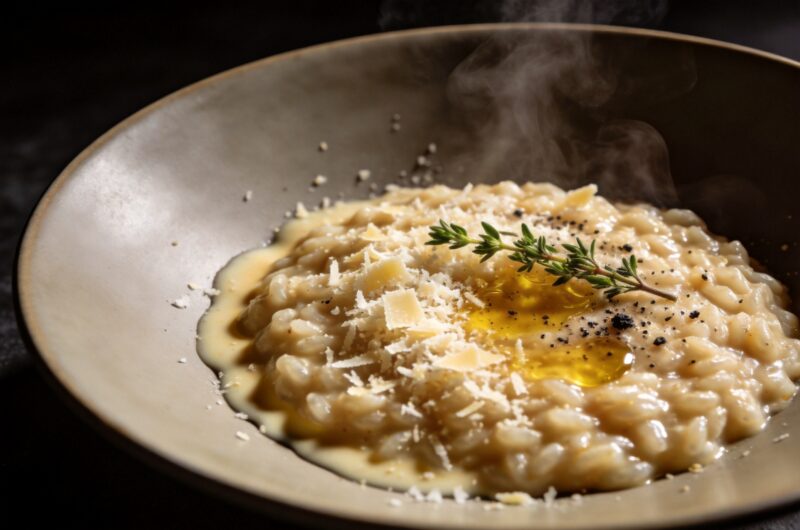
Classic Parmesan Risotto With Silky Butter Cheese Finish
Course: Recipes4
servings10
minutes35
minutes420
kcalThis Risotto Recipe toasts arborio rice with onion and garlic, adds white wine, then builds a creamy texture by gradually stirring in warm stock ladle by ladle. Finished off the heat with cold butter and parmesan for a silky result. Ready in 45 minutes and serves 4 people perfectly.
Ingredients
For the Risotto Base:
300g arborio rice
1 medium white onion, finely diced
3 cloves garlic, minced
150ml dry white wine
1 litre warm chicken or vegetable stock
2 tbsp unsalted butter
1 tbsp extra virgin olive oil
1 tsp salt
1/2 tsp white pepper
For the Cheese Finish:
80g parmesan cheese, finely grated
2 tbsp unsalted butter, cold and cubed
Extra parmesan for serving
Optional Additions:
200g mushrooms, sliced and sauteed
150g cooked shrimp or chicken
1 tsp lemon zest
Fresh thyme or rosemary
Truffle oil for drizzling
- Pour the stock into a small saucepan and keep it at a gentle simmer over low heat throughout cooking
- Heat butter and olive oil together in a wide heavy-bottomed pan over medium heat
- Add the finely diced onion and cook for 5 to 6 minutes until completely soft and translucent
- Stir in the minced garlic and cook for 1 minute until fragrant throughout the pan
- Add the dry arborio rice and stir continuously for 2 to 3 minutes until each grain looks lightly toasted
- Pour in the white wine and stir until it absorbs completely and the pan looks almost dry
- Add one ladle of warm stock and stir gently but continuously until it absorbs into the rice
- Continue adding stock one ladle at a time, stirring after each addition until absorbed before adding the next
- Repeat this process for 18 to 20 minutes until the rice reaches a tender al dente texture throughout
- Taste a grain of rice to check — it should feel tender with just a very slight firmness at the center
- Remove the pan from the heat completely before adding any cheese or butter
- Add the cold cubed butter and stir vigorously in large circular motions for 30 seconds
- Add the finely grated parmesan and continue stirring energetically for a full 1 minute until silky and glossy
- Season with salt, white pepper, and a squeeze of lemon juice if using and stir once more
- Allow the finished risotto to rest in the pan for exactly 2 minutes before spooning into warm bowls
- Finish each bowl with extra parmesan, black pepper, and a drizzle of good olive oil before serving immediately
Frequently Asked Questions
Q1: What rice works best for this risotto recipe? Arborio rice is the most widely available and produces excellent results for home cooking. However, carnaroli rice produces an even creamier and more stable result because it contains slightly more starch than arborio. Furthermore, carnaroli is the rice most professional chefs including those following Gordon Ramsay Risotto Recipes prefer for restaurant-quality texture.
Q2: Can I make risotto without white wine? Yes, absolutely. Replace the wine with an equal amount of extra warm stock plus a small squeeze of lemon juice for the acidity that wine normally provides. The result tastes slightly less complex but still produces a genuinely delicious Cheese Risotto that most people would never notice lacks wine at all.
Q3: How do I know when the risotto is ready? The rice should feel tender with a very slight firmness at the center and the overall texture should flow slowly like a wave when you shake the pan. Furthermore, a finished risotto should never look stiff or hold a rigid shape — if it does, add more stock immediately and stir to correct.
Q4: Can I use basmati rice instead of arborio for this recipe? Basmati rice does not contain enough surface starch to produce the creamy texture that defines proper risotto. Using basmati produces a dish that resembles pilaf rather than risotto — pleasant but fundamentally different. FYI, arborio or carnaroli are the only rice varieties that genuinely work for an authentic Creamy Risotto with Grated Cheese result.
Q5: What makes Gordon Ramsay risotto different from a standard recipe? Gordon Ramsay Risotto emphasizes the mantecatura finish — the vigorous off-heat stirring of cold butter and parmesan — as the most critical step for achieving a genuinely glossy, restaurant-quality texture. Additionally, he emphasizes seasoning at every stage rather than only at the end, which builds layered flavor throughout rather than correcting at the finish.
Final Thoughts
This Risotto Recipe delivers everything a great homemade risotto should — a creamy, flowing texture, deep savory flavor from the parmesan and butter finish, and that satisfying richness that makes every spoonful genuinely worth the stirring time. Moreover, once you master this basic method, every variation from mushroom to seafood to Baked Risotto becomes completely approachable.
Whether you make the classic parmesan version, try the Healthy Risotto vegetable variation, or go the hands-off baked route, this recipe always produces something genuinely impressive. Make it this weekend and discover exactly why risotto deserves its reputation as one of Italy’s greatest comfort foods.