The first time I made cheese fondue at home, I genuinely questioned why I had never done it sooner. It took 25 minutes, required one pot, and had everyone at the table laughing the whole evening. That’s the real power of a proper fondue night.
Easy cheese fondue sounds impressive but requires almost zero cooking skill. Because the technique is simple and the ingredients are easy to find, anyone can pull this off — even on a busy weeknight with no planning.
What You’ll Need (Ingredients)
Everything here comes from a regular supermarket. Nothing exotic, nothing that requires a specialist shop.
For the fondue:
- 200g (7 oz) Gruyere cheese, freshly grated
- 200g (7 oz) Emmental cheese, freshly grated
- 1 tablespoon cornstarch
- 1 garlic clove, halved
- 250ml (1 cup) dry white wine
- 1 tablespoon fresh lemon juice
- 1/4 teaspoon freshly grated nutmeg
- 1/4 teaspoon white pepper
- 1 tablespoon kirsch — cherry brandy, optional but traditional
For the cheese fondue dippers:
- 1 sourdough or French baguette, cut into bite-sized cubes
- 1 cup broccoli florets, lightly blanched
- 1 cup cauliflower florets, lightly blanched
- 1 medium apple, cored and sliced into wedges
- 1 cup baby potatoes, boiled and halved
- 8 to 10 cornichons
- 1 cup cherry tomatoes
How to Make It — Full Step-by-Step Process
Step 1: Grate Your Cheese Properly
- Start by taking both blocks of cheese out of the fridge about 20 minutes before you begin cooking. Room temperature cheese melts far more evenly than cold cheese straight from the fridge.
- Use the large holes of a box grater to grate all 200g of Gruyere and all 200g of Emmental into a large mixing bowl. Work quickly so the cheese doesn’t warm up too much from the heat of your hands.
- Avoid pre-grated supermarket cheese for this recipe entirely. Pre-grated cheese contains anti-caking agents that prevent smooth melting and create a grainy, unpleasant texture in the finished fondue.
- Once both cheeses sit together in the bowl, add 1 tablespoon of cornstarch on top. Toss everything together with your hands or a fork until every single strand of cheese gets lightly and evenly coated.
- This cornstarch coating step is critical — because it binds with the cheese proteins during melting, it prevents the fondue from separating into an oily mess later. Never skip this step, no matter how tempting it is to rush.
Step 2: Prepare Your Fondue Pot
- Take your fondue pot, a small heavy-bottomed saucepan, or a DIY fondue pot setup and rub the entire inside surface thoroughly with the cut side of your halved garlic clove.
- Press the garlic firmly against the base and work it in circular motions up the sides of the pot. This process infuses a gentle garlic flavour directly into the vessel without overpowering the cheese at all.
- After rubbing every surface, discard the garlic clove completely. You will not add it directly into the fondue — because the thin residue left on the pot surface provides all the garlic flavour this recipe needs.
- If you don’t own a traditional fondue pot, a small heavy-bottomed saucepan works perfectly well on the stove. However, transferring the finished fondue to a proper fondue pot with a stand and small flame underneath keeps everything warm throughout the meal — and that matters a lot during longer fondue dinner parties where people graze slowly over an hour or more.
Step 3: Heat the Wine Gently
- Pour 250ml of dry white wine into your garlic-rubbed pot and place it over medium heat on the stove.
- Add 1 tablespoon of fresh lemon juice directly to the wine at this stage. The acidity from both the wine and the lemon juice plays an important role — because it helps the cheese proteins stay loose and fluid, it prevents the fondue from turning stringy or clumping as it melts.
- Heat the wine slowly and steadily until it reaches a gentle simmer. You should see small, lazy bubbles forming around the edges of the pot and a little steam rising from the surface.
- Do not let the wine reach a full rolling boil at any point. A hard boil causes the liquid to reduce too quickly and can make the finished fondue taste sharp, overly alcoholic, and unbalanced. Medium heat and patience give you the best result here.
Step 4: Melt the Cheese Into the Wine
- Once the wine simmers gently, begin adding the cornstarch-coated cheese to the pot. Add it in small handfuls — roughly a quarter of the total cheese at a time — rather than dumping it all in at once.
- After each handful, stir the cheese into the wine using a wooden spoon or silicone spatula in a slow figure-of-eight motion. This specific stirring pattern helps the cheese incorporate evenly without creating lumps or pockets of unmelted cheese.
- Allow each handful to melt almost completely before adding the next one. Rushing this stage by adding too much cheese at once drops the temperature suddenly and causes the mixture to seize up rather than melt smoothly.
- Continue adding cheese in small portions and stirring steadily until all 400g has gone into the pot. The mixture should look creamy, smooth, and glossy at this point — almost like a thick, pourable sauce.
- If you notice any small lumps forming, keep the heat steady at medium and stir more vigorously in figure-of-eight motions. The cornstarch coating on the cheese usually resolves any lumping within 30 to 60 seconds of consistent stirring.
Step 5: Season and Finish
- Once all the cheese has melted smoothly into the wine, reduce the heat slightly to medium-low. The fondue should sit at a very gentle bubble — just enough to keep it fluid and warm without scorching on the bottom.
- Add 1/4 teaspoon of freshly grated nutmeg and 1/4 teaspoon of white pepper to the pot. Stir both in thoroughly so the seasoning distributes evenly throughout the entire batch.
- If you have kirsch available, add 1 tablespoon now and stir it in gently. Kirsch is a cherry brandy that adds a subtle fruity sharpness and is completely traditional in a proper Swiss cheese fondue. However, if you prefer to skip it, the fondue still tastes excellent without it.
- Taste the fondue carefully at this stage. Adjust the seasoning if needed — a small extra pinch of white pepper or a tiny squeeze of lemon juice can sharpen the flavour noticeably if it tastes flat.
- The fondue is ready when it looks smooth, coats the back of a spoon thickly, and flows slowly when you lift the spoon above the pot. That texture is exactly what you want for perfect dipping.
Step 6: Transfer and Set Up for Serving
- If you cooked the fondue in a regular saucepan, carefully pour it into a warmed fondue pot now. To warm the fondue pot beforehand, simply fill it with hot water for 2 minutes, then empty and dry it before pouring the cheese in.
- Place the fondue pot onto its stand over a small spirit burner or tea light flame set to the lowest possible setting. The goal at this stage is not to cook the fondue further — it is simply to maintain the temperature and keep it pourable throughout the meal.
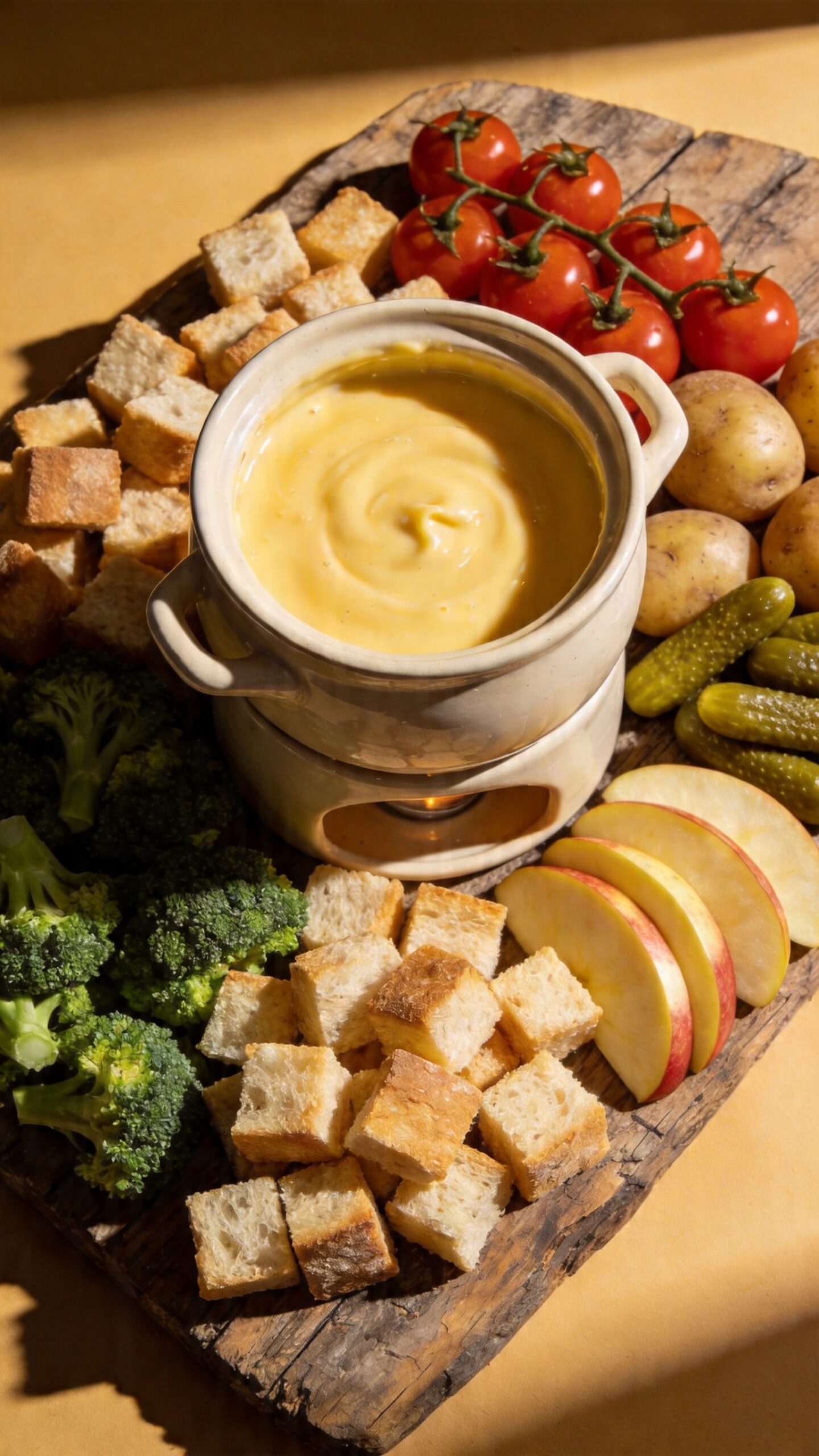
- Arrange all your cheese fondue dippers attractively around the pot on a large board or platter. Group similar items together — bread cubes in one section, vegetables in another, fruit and pickles in their own spots.
- Give everyone at the table a long fondue fork and let the meal begin. The whole setup makes for a genuinely interactive fondue dinner that encourages conversation and slows the meal down in the best possible way. 🙂
Choosing the Right Cheese
Have you ever wondered why some fondues taste flat while others taste rich and complex? The answer almost always comes down to cheese selection. The classic melting pot cheese fondue combination of Gruyere and Emmental exists for a very specific reason.
Gruyere brings a deep, nutty, slightly earthy flavour that forms the backbone of the fondue. Additionally, it melts extremely smoothly because of its relatively low moisture content and high fat content.
Emmental adds a milder, buttery flavour and a slightly stretchier texture. Together, these two cheeses balance each other perfectly — one adds depth, while the other adds smoothness and stretch.
Can You Swap the Cheese?
Yes, though the flavour profile changes. Here are the best alternatives:
- Fontina — creamy, mild, and melts beautifully; works as a full or partial Emmental substitute
- Raclette — stronger flavour, excellent melting properties, great for a bolder fondue
- Cheddar — less traditional but works well in an easy fondue recipes context; use mature cheddar for best flavour
- Gouda — smooth and mild; pairs well with Gruyere in a 50/50 split
IMO, sticking with Gruyere and Emmental gives you the most authentic Swiss cheese fondue result. However, experimenting with combinations is genuinely half the fun of fondue recipes cheese nights.
The Best Cheese Fondue Dippers
Honestly, the dippers make or break the fondue experience. A great fondue with boring dippers feels like a waste of good cheese. Here’s what works best:
Bread Dippers
- Sourdough cubes — the tangy flavour pairs perfectly with Gruyere
- French baguette cubes — classic, reliable, and universally loved
- Pretzel bread pieces — slightly salty and excellent for dipping
- Rye bread cubes — adds an earthy, robust contrast to the creamy cheese
Vegetable Dippers
- Broccoli florets, lightly blanched — holds up well on the fork and absorbs sauce beautifully
- Cauliflower florets, lightly blanched — mild flavour that lets the cheese shine
- Baby potatoes, boiled and halved — hearty and filling; one of the best things to dip in fondue
- Cherry tomatoes — the acidity cuts through the richness of the cheese perfectly
- Blanched asparagus spears — elegant and delicious at a fondue dinner party
Fruit and Pickle Dippers
- Apple wedges — the sweetness contrasts beautifully with the savoury cheese
- Pear slices — similar to apple but slightly softer and more delicate
- Cornichons — the sharp vinegar tang cuts through the fat of the cheese and refreshes the palate between dips
- Grapes — simple, sweet, and surprisingly effective as fondue dippers
FYI, setting everything out on a large wooden board creates what people now call a cheese fondue board — and it looks absolutely stunning as a centrepiece for any dinner table.
Tips for a Perfect Fondue Every Time
- Always grate your own cheese — pre-grated never melts as smoothly
- Keep the heat low after melting — high heat causes the cheese to separate and become grainy
- Stir in a figure-of-eight pattern — circular stirring can cause the cheese to ball up
- Add cheese gradually — patience during this step makes a significant difference to the final texture
- Use dry white wine — sweet wine throws off the balance and makes the fondue cloying
- Warm your fondue pot before transferring — cold pot surfaces can cause the cheese to seize suddenly
Fondue Night Ideas for Entertaining
Easy fondue is one of the best dishes for casual entertaining because it requires very little active cooking time. Additionally, it keeps guests involved and busy — and a busy guest is a happy guest.
For a full fondue dinner party spread, consider setting up multiple pots. A cheese fondue pot alongside a chocolate fondue pot gives guests both a savoury and sweet option throughout the evening. Meat fondue ideas like hot oil or broth fondue also pair well alongside the cheese version for a more substantial meal.
If you want to create a proper fondue dipping sauces station, set out small bowls of mustard, garlic aioli, chili sauce, and honey alongside the main pot. These fondue dipping sauces give guests extra variety and make the whole experience feel more interactive and generous.
Common Mistakes and How to Fix Them
The Fondue Is Too Thick
- Add a small splash of warm white wine and stir vigorously over low heat.
- Add the wine gradually — a tablespoon at a time — until the consistency loosens to your preference.
- Never add cold wine directly — because cold liquid shocks the cheese and can cause it to seize further.
The Fondue Is Too Thin
- Mix 1 teaspoon of cornstarch with 1 tablespoon of cold white wine in a small bowl until smooth.
- Pour this mixture slowly into the fondue while stirring constantly over medium heat.
- Allow 2 to 3 minutes for the cornstarch to activate and thicken the mixture before adding more.
The Fondue Has Gone Grainy or Separated
- This usually happens because the heat was too high at some point during cooking.
- Reduce heat to very low immediately, add a small squeeze of lemon juice, and stir briskly in figure-of-eight motions.
- In many cases, the fondue will come back together within 1 to 2 minutes of consistent stirring at low heat.
Melting Pot Cheese Fondue You Can Make From Scratch
Course: Recipes4
servings10
minutes15
minutes545
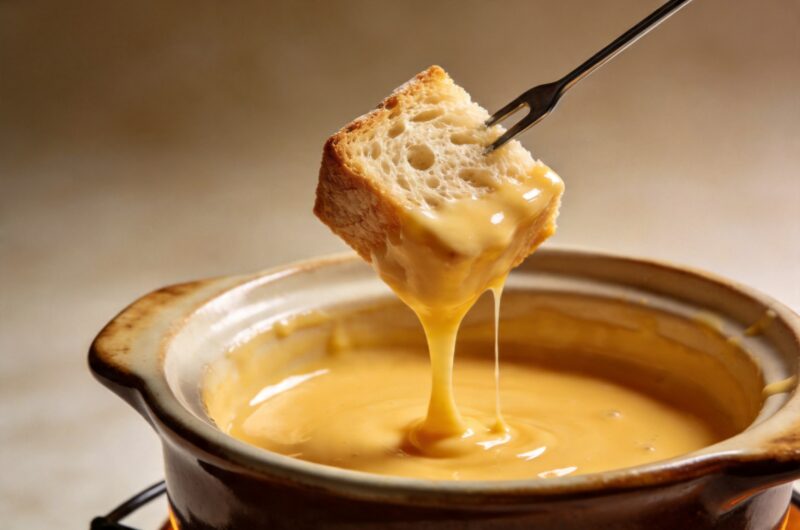
kcalThis easy cheese fondue combines Gruyere and Emmental melted into gently simmered white wine, seasoned with nutmeg and white pepper, and served with bread, vegetables, and fruit for dipping. Ready in just 25 minutes, it makes a stunning, interactive dinner that works perfectly for entertaining or a cosy night in.
Ingredients
For the fondue:
200g Gruyere cheese, freshly grated
200g Emmental cheese, freshly grated
1 tablespoon cornstarch
1 garlic clove, halved
250ml dry white wine
1 tablespoon fresh lemon juice
1/4 teaspoon freshly grated nutmeg
1/4 teaspoon white pepper
1 tablespoon kirsch (optional)
For the dippers:
1 sourdough or French baguette, cubed
1 cup broccoli florets, blanched
1 cup cauliflower florets, blanched
1 medium apple, sliced
1 cup baby potatoes, boiled and halved
8 to 10 cornichons
1 cup cherry tomatoes
- Step 1 — Grate and coat the cheese:
- Remove both cheeses from the fridge 20 minutes before cooking. Grate all 200g of Gruyere and all 200g of Emmental using the large holes of a box grater into a large bowl. Add 1 tablespoon of cornstarch and toss until every strand of cheese is lightly coated. Set aside.
- Step 2 — Rub the pot with garlic:
- Take your fondue pot or heavy saucepan and rub the entire inside surface firmly with the cut side of the halved garlic clove. Press hard and move in circular motions covering the base and sides. Discard the garlic clove after rubbing.
- Step 3 — Heat the wine:
- Pour 250ml of dry white wine and 1 tablespoon of lemon juice into the prepared pot. Place over medium heat and bring to a gentle simmer with small bubbles forming at the edges. Do not allow it to boil.
- Step 4 — Melt the cheese gradually:
- Add the coated cheese to the simmering wine in small handfuls. After each handful, stir in a figure-of-eight motion until almost fully melted before adding the next handful. Continue until all the cheese is incorporated and the fondue looks smooth and glossy.
- Step 5 — Season and finish:
- Reduce heat to medium-low. Add 1/4 teaspoon nutmeg, 1/4 teaspoon white pepper, and 1 tablespoon kirsch if using. Stir thoroughly, taste, and adjust seasoning as needed. The fondue is ready when it coats the back of a spoon thickly and flows slowly.
- Step 6 — Transfer and serve:
- Pour the fondue into a warmed fondue pot on a stand over a low flame. Arrange all dippers on a large board around the pot. Give everyone fondue forks and serve immediately while the cheese stays warm and fluid.
FAQs
Q1: Do I need a special fondue pot to make this recipe? No, you don’t need special equipment. A small heavy-bottomed saucepan works perfectly well for making the fondue on the stove. However, a proper fondue pot with a stand and flame keeps the cheese warm throughout the meal, which makes it far better for a relaxed fondue dinner party where people eat slowly over time.
Q2: Can I make cheese fondue without alcohol? Yes, absolutely. Replace the white wine with a mixture of equal parts unsalted chicken or vegetable stock and apple juice. The stock adds savoury depth, while the apple juice provides the mild acidity that white wine normally contributes. The result tastes slightly different but still produces a smooth, creamy fondue.
Q3: Why does my fondue keep going lumpy? Lumpy fondue usually happens for one of two reasons. Either the cheese was added too quickly without enough stirring, or the heat was too high and caused the proteins to seize. Additionally, using pre-grated cheese with anti-caking agents causes lumpiness. Always grate fresh, add cheese gradually, and stir in a figure-of-eight pattern throughout.
Q4: How long does leftover fondue keep? Store leftover fondue in an airtight container in the fridge for up to 2 days. Reheat it gently in a saucepan over low heat with a small splash of white wine, stirring constantly. It may not return to its original silky texture completely, but it still tastes excellent spread on toast or used as a sauce over vegetables.
Q5: What is the best wine for cheese fondue? Use a dry white wine with good acidity — Sauvignon Blanc, Pinot Grigio, or a dry Swiss white wine all work well. Avoid sweet wines entirely because they make the fondue cloying and unbalanced. The acidity in dry wine is what keeps the cheese proteins smooth and fluid during melting.
Wrapping It Up
This easy cheese fondue recipe delivers a genuinely impressive, crowd-pleasing dish in just 25 minutes. Grate your own cheese, add it gradually, keep the heat low, and stir in figure-of-eight motions — those four things make the biggest difference between a great fondue and a disappointing one.
Whether you set it up for a relaxed fondue dinner at home or a proper fondue dinner party with friends, this recipe delivers every single time. Now go melt some cheese and make some memories.