Pumpkin cinnamon sugar cookies are one of those seasonal bakes that people make once and then spend the rest of the year quietly waiting for autumn to come back around so they have an excuse to make them again. Deep orange dough rolled in cinnamon sugar, baked until the edges set and the centres stay gloriously soft — they look impressive, smell extraordinary, and disappear from any plate they are placed on at a speed that should frankly be studied by scientists.
This soft pumpkin sugar cookies cinnamon coating recipe uses canned pumpkin puree as the moisture and flavour base, a warm spice blend that goes well beyond just cinnamon, and a brown butter technique that adds a nutty, caramel-like depth to the dough that most pumpkin cookie recipes completely miss. The result tastes like the best pumpkin snickerdoodle cookies recipe easy enough to make on a weekday evening, with a cinnamon sugar crust that crackles slightly when you bite through it.
What You’ll Need (Ingredients)
Seasonal, warm, and built around one tin of pumpkin puree doing significant flavour work. The brown butter makes the biggest taste difference here.
For the pumpkin cookie dough:
- 280g (2¼ cups) plain flour
- 1 teaspoon bicarbonate of soda
- ½ teaspoon baking powder
- 1 teaspoon ground cinnamon
- ½ teaspoon ground ginger
- ¼ teaspoon ground nutmeg
- ¼ teaspoon ground cloves
- ½ teaspoon fine salt
- 115g (8 tablespoons) unsalted butter
- 200g (1 cup) light brown sugar, packed
- 80g (⅓ cup) caster sugar
- 80g (⅓ cup) pumpkin puree — not pumpkin pie filling
- 1 large egg yolk, room temperature
- 1 teaspoon vanilla extract
For the cinnamon sugar coating:
- 80g (6 tablespoons) caster sugar
- 1.5 teaspoons ground cinnamon
- ¼ teaspoon ground ginger — optional for extra warmth
Optional glaze:
- 80g (¾ cup) icing sugar, sifted
- 2 tablespoons whole milk
- ¼ teaspoon vanilla extract
- ¼ teaspoon ground cinnamon
How to Make It — Full Step-by-Step Process
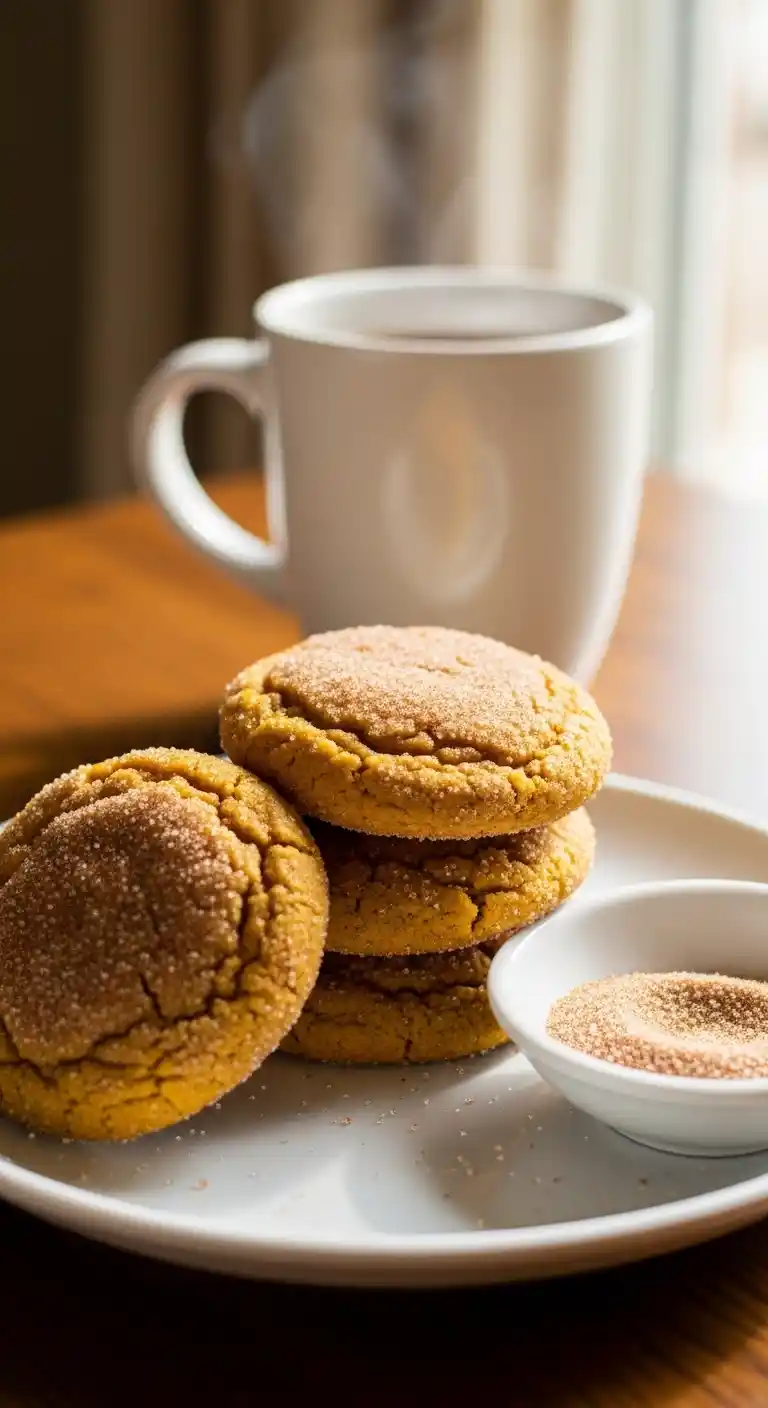
Step One: Brown the Butter
Place 115g of unsalted butter in a light-coloured saucepan — light-coloured is important because it lets you see the colour of the butter as it browns, which is the visual cue that tells you when to stop. Set the pan over medium heat and allow the butter to melt completely, stirring occasionally. Continue cooking the melted butter, stirring continuously, as it progresses through bubbling and foaming stages.
After 3 to 5 minutes the foam subsides and small golden-brown specks appear on the bottom of the pan — this is the milk solids caramelising and the moment you want. Remove the pan from the heat immediately and pour the brown butter into a large mixing bowl. The browned milk solids produce a rich, nutty, almost toffee-like flavour that standard melted butter simply cannot deliver and that makes the finished homemade pumpkin spice cookies soft chewy result taste noticeably more complex and sophisticated than a standard recipe. Allow the brown butter to cool in the bowl for 10 minutes before using.
Step Two: Reduce the Pumpkin Moisture
This is the step that most easy pumpkin spice cookies recipe homemade versions skip entirely — and it is the reason so many pumpkin cookies end up soft and cakey rather than chewy and structured. Pumpkin puree contains a significant amount of water, and that water, if added directly to cookie dough, produces a soft, cake-like texture rather than the dense, chewy consistency that defines a proper chewy pumpkin cinnamon cookies recipe easy result.
Spread 80g of pumpkin puree across a plate and press it firmly with several layers of kitchen paper, absorbing as much surface moisture as possible. Repeat with fresh kitchen paper two to three times until the pumpkin looks noticeably drier and more paste-like rather than wet and spreadable. The dried pumpkin contributes all the flavour, colour, and moisture needed for the dough without the excess water that makes the texture cakey. This step takes under 3 minutes and produces a visibly different dough consistency that bakes into a chewier, more structured cookie.
Step Three: Make the Cookie Dough
Add 200g of packed light brown sugar and 80g of caster sugar to the cooled brown butter in the large mixing bowl. Whisk together vigorously for 1 full minute until the sugars are fully incorporated into the butter and the mixture looks smooth and glossy. Add the dried pumpkin puree, 1 large room temperature egg yolk, and 1 teaspoon of vanilla extract. Whisk again for 1 minute until everything is uniformly combined and the mixture takes on the deep orange colour of the pumpkin throughout.
Sift 280g of plain flour, 1 teaspoon of bicarbonate of soda, ½ teaspoon of baking powder, 1 teaspoon of ground cinnamon, ½ teaspoon of ground ginger, ¼ teaspoon of ground nutmeg, ¼ teaspoon of ground cloves, and ½ teaspoon of fine salt directly into the bowl. Fold everything together using a large spatula in slow, deliberate strokes until no dry flour streaks remain and the dough looks uniform and slightly thick. The dough will look quite soft at this stage — softer than standard cookie dough — which is entirely correct and expected. Chill the dough in the fridge for 30 minutes before rolling and baking.
Step Four: Chill, Roll, and Coat
Chilling the dough for 30 minutes before rolling is not optional for this recipe — unchilled dough spreads too aggressively during baking and produces flat, thin cookies with crispy edges rather than the thick, soft centres that define the best pumpkin cinnamon cookies dessert recipe result. The chilling time also allows the flavours in the spice blend to develop and meld together more fully, producing a more complex, rounded flavour in the baked cookie. FYI, the dough can be chilled overnight for an even deeper, more developed spice flavour in the finished cookies.
Mix 80g of caster sugar, 1.5 teaspoons of ground cinnamon, and ¼ teaspoon of ground ginger in a shallow bowl and set beside your baking trays. Remove the chilled dough from the fridge. Scoop approximately 1.5 tablespoons of dough per cookie using a cookie scoop or tablespoon measure. Roll each portion firmly between your palms into a smooth, compact ball — the warmth of your hands softens the chilled dough just enough to roll without cracking. Drop each ball into the cinnamon sugar mixture and roll it gently until completely coated on all sides with an even, generous layer of cinnamon sugar.
Step Five: Bake to Soft, Chewy Perfection
Preheat your oven to 175°C (350°F) fan-forced or 180°C (355°F) conventional. Line two large baking trays with parchment paper. Place the coated dough balls on the lined trays with at least 5 cm of space between each — these cookies spread moderately during baking and need room to expand without merging together. Do not press the dough balls flat before baking — leaving them as balls produces the characteristic thick, domed centre that collapses slightly as the cookie cools into the crinkled, cinnamon-sugar-crusted fall pumpkin sugar cookies cinnamon sugar appearance.
Bake for 11 to 13 minutes until the edges look set and the centres look slightly underdone and still puffed — they will deflate and firm as they cool on the tray. Pulling the cookies at this stage rather than waiting until they look fully done is the key technique that produces soft, chewy centres rather than crispy, dry cookies. Remove from the oven and allow to cool on the trays for 5 full minutes before transferring — cookies moved too early break apart because the structure has not set. After 5 minutes on the tray they firm enough to transfer cleanly to a wire rack. 🙂
Why Brown Butter Transforms the Flavour
Have you ever made a pumpkin cookie that tasted pleasantly spiced but somehow lacked depth — like the flavour stopped at the top note without any richness underneath? The butter is almost always the missing element.
Standard melted butter adds fat and moisture to cookie dough but contributes very little distinctive flavour beyond a mild dairy richness. Brown butter, produced by cooking the butter until the milk solids caramelise and develop, adds a genuinely nutty, toffee-like, complex flavour that deepens every spice note in the dough rather than simply carrying them. The ground cinnamon tastes richer with brown butter underneath it. The pumpkin flavour reads as warmer and more autumn-forward.
The baked pumpkin cinnamon cookies recipe easy brown butter technique requires 5 minutes of active attention and produces a cookie that tastes as if considerably more effort went into it than the recipe actually demands. The flavour difference is immediately obvious to anyone who tastes a standard butter version alongside a brown butter version — the brown butter version consistently gets described as tasting more professional, more complex, and simply better.
Making the Optional Cinnamon Glaze
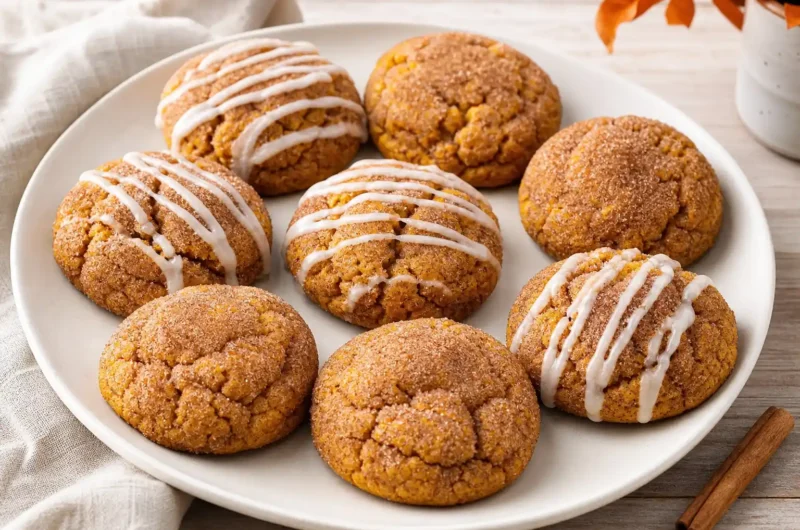
The optional cinnamon glaze takes these from a straightforward pumpkin sugar coated cookies fall recipe into something that looks bakery-finished and tastes considerably more indulgent than the plain cinnamon sugar version.
Whisk 80g of sifted icing sugar with 2 tablespoons of whole milk, ¼ teaspoon of vanilla extract, and ¼ teaspoon of ground cinnamon until completely smooth and pourable. Drizzle across the fully cooled cookies in a loose zigzag using a spoon or small piping bag. Allow the glaze to set for 5 minutes at room temperature until it firms into a thin, white coating that contrasts visually against the deep orange cinnamon sugar crust. IMO the glaze version looks significantly more impressive on a plate and takes under 3 minutes to add — absolutely worth doing for any occasion where appearance matters.
Baked Pumpkin Cinnamon Cookies Recipe Worth Every Bite
24
servings15
minutes30
minutes12
minutesThese pumpkin cinnamon sugar cookies brown butter for nutty depth, dry pumpkin puree for chewy texture, mix a warm spiced dough, chill for 30 minutes, roll in cinnamon sugar, and bake until just set. Ready in under an hour, they deliver soft, chewy, deeply autumnal results every time.
Ingredients
Pumpkin cookie dough:
280g plain flour
1 teaspoon bicarbonate of soda
½ teaspoon baking powder
1 teaspoon ground cinnamon
½ teaspoon ground ginger
¼ teaspoon ground nutmeg
¼ teaspoon ground cloves
½ teaspoon fine salt
115g unsalted butter
200g light brown sugar, packed
80g caster sugar
80g pumpkin puree, dried
1 large egg yolk, room temperature
1 teaspoon vanilla extract
Cinnamon sugar coating:
80g caster sugar
1.5 teaspoons ground cinnamon
¼ teaspoon ground ginger
Optional glaze:
80g icing sugar, sifted
2 tablespoons whole milk
¼ teaspoon vanilla extract
¼ teaspoon ground cinnamon
- Place butter in a light-coloured saucepan over medium heat and melt completely
- Continue cooking and stirring until golden-brown specks appear and butter smells nutty
- Pour brown butter immediately into a large mixing bowl and cool for 10 minutes
- Spread pumpkin puree on a plate and blot firmly with kitchen paper two to three times
- Repeat blotting with fresh kitchen paper until puree looks dry and paste-like
- Add light brown sugar and caster sugar to cooled brown butter
- Whisk vigorously for 1 minute until smooth and glossy
- Add dried pumpkin puree, egg yolk, and vanilla extract
- Whisk for 1 minute until uniformly combined and deep orange throughout
- Sift flour, bicarbonate of soda, baking powder, all spices, and salt into the bowl
- Fold with a spatula until no dry flour streaks remain
- Cover bowl and refrigerate dough for 30 minutes
- Preheat oven to 175°C fan and line two baking trays with parchment paper
- Mix caster sugar, cinnamon, and ginger together in a shallow bowl
- Scoop approximately 1.5 tablespoons of chilled dough per cookie
- Roll each portion firmly between palms into a smooth compact ball
- Drop each ball into cinnamon sugar and roll until completely coated
- Place coated balls on lined trays with at least 5 cm between each
- Do not press balls flat before baking
- Bake for 11 to 13 minutes until edges look set and centres appear slightly underdone
- Cool on trays for 5 minutes before transferring to a wire rack
- Whisk glaze ingredients until smooth and drizzle over cooled cookies if using
- Allow glaze to set for 5 minutes before serving
Common Mistakes to Avoid
Not drying the pumpkin puree: Wet pumpkin puree adds excess water to the dough and produces cakey, soft cookies that spread flat rather than maintaining their domed shape. Always blot with kitchen paper two to three times before using — this is the single most impactful technique adjustment in the entire recipe.
Skipping the chill time: Unchilled dough spreads too aggressively and produces flat, crispy cookies. Always chill for at least 30 minutes — the cookies hold their shape, bake thicker, and produce the soft chewy centre that defines this recipe.
Baking until they look fully done: Pumpkin cookies continue cooking from residual heat for several minutes after leaving the oven. Pull them when the edges are set and the centres look underdone — they firm perfectly on the cooling tray without over-baking. :/
Using pumpkin pie filling instead of pumpkin puree: Pumpkin pie filling contains added sugar and spices that throw off the balance of the dough completely. Always use pure pumpkin puree — the can label should list pumpkin as the only ingredient.
Not leaving enough space between cookies on the tray: These cookies spread during baking. Cookies placed too close together merge at the edges and bake into an irregular shape. Always leave at least 5 cm between each ball before baking.
FAQs
Q1: Can I make these cookies without browning the butter? Yes — standard melted and cooled unsalted butter works as a direct substitute. The cookies will still taste genuinely good — spiced, soft, and properly chewy. The brown butter version tastes noticeably richer and more complex, but the standard butter version produces an excellent result and is the better choice if you are short on time or making them with children who might not notice the difference.
Q2: Can I freeze the cookie dough? Yes — roll the dough into balls, coat in cinnamon sugar, and freeze on a parchment-lined tray until solid. Transfer to a zip-lock bag and freeze for up to 3 months. Bake directly from frozen at 175°C fan for 14 to 16 minutes — 2 to 3 minutes longer than the fresh dough version. The frozen and freshly baked result is virtually identical to a batch baked immediately after chilling.
Q3: Why did my cookies spread flat? Flat cookies almost always result from one of three causes — insufficient chilling time, too much moisture in the pumpkin puree, or butter that was too warm when the sugars were added. Chill the dough for the full 30 minutes, blot the pumpkin puree thoroughly before using, and allow the brown butter to cool for 10 minutes before adding the sugar.
Q4: Can I use fresh pumpkin instead of canned puree? Yes — roast 200g of fresh pumpkin flesh at 200°C for 20 minutes until soft, blend until smooth, and blot with kitchen paper to remove moisture exactly as described for canned puree. Fresh pumpkin produces a slightly less uniform flavour than canned but works well and produces a genuinely delicious result. Canned pumpkin puree is more consistent between batches and is the practical choice for reliability.
Wrapping It Up
This chewy pumpkin cinnamon cookies recipe easy enough for any home baker delivers genuinely soft, flavour-complex, autumnal cookies from a straightforward process. Brown the butter until nutty and golden, dry the pumpkin puree thoroughly, mix the dough with warm spices, chill for 30 minutes, roll into balls, coat generously in cinnamon sugar, and bake until the edges set and the centres look just underdone. Those seven steps produce a perfect result every single time.
Whether you make these as a classic cinnamon sugar version for a casual autumn bake, add the cinnamon glaze for a more finished appearance, freeze the dough balls for ready-to-bake cookies throughout the season, or simply make a batch because it is October and the kitchen should smell like this — they consistently impress every single person who tries one. Now brown that butter and make something genuinely worth the season.