Egg drop soup is one of those dishes that people order at Chinese restaurants without ever considering making at home — which is a genuine shame, because it takes 15 minutes, costs almost nothing, and tastes noticeably better when you make it yourself with a decent stock and the right technique. The silky egg ribbons, the glossy thickened broth, the spring onion finish — all of it comes together in one pot in the time it takes a delivery app to confirm your order.
This egg drop soup recipe easy enough for a complete beginner uses chicken stock as the base — which gives the soup its characteristic savoury depth — alongside cornstarch for the glossy, restaurant-style thickness, fresh eggs, and a handful of aromatics that take under a minute to prepare. The result tastes exactly like a restaurant style egg drop soup recipe result and costs a fraction of what you would pay for a takeout version of considerably lower quality.
What You’ll Need (Ingredients)
Simple, affordable, and almost certainly already in your kitchen. The stock quality makes the single biggest flavour difference here.
For egg drop soup base:
- 1 litre (4 cups) good quality chicken stock — homemade or shop-bought
- 3 tablespoons cornstarch mixed with 4 tablespoons cold water — the slurry
- 3 large eggs, beaten well
- 1 teaspoon toasted sesame oil
- 1 teaspoon light soy sauce
- ½ teaspoon fine salt — adjust to taste
- ¼ teaspoon ground white pepper
- ¼ teaspoon ground ginger — or ½ teaspoon freshly grated
- ¼ teaspoon garlic powder
Garnishing:
- 3 spring onions, thinly sliced — green parts only
- 1 teaspoon toasted sesame seeds
- A few drops of chilli oil — optional
Chicken egg drop soup recipe homemade variation:
- 150g (1 cup) cooked shredded chicken — added at the end with the eggs
- 1 extra tablespoon of soy sauce
- Extra spring onion for serving
Optional additions:
- 80g (½ cup) frozen sweetcorn — added with the stock
- 50g silken tofu, cubed — added at the same stage as the eggs
- 2 tablespoons frozen peas
How to Make It — Full Step-by-Step Process
Step One: Prepare Everything Before You Start Cooking
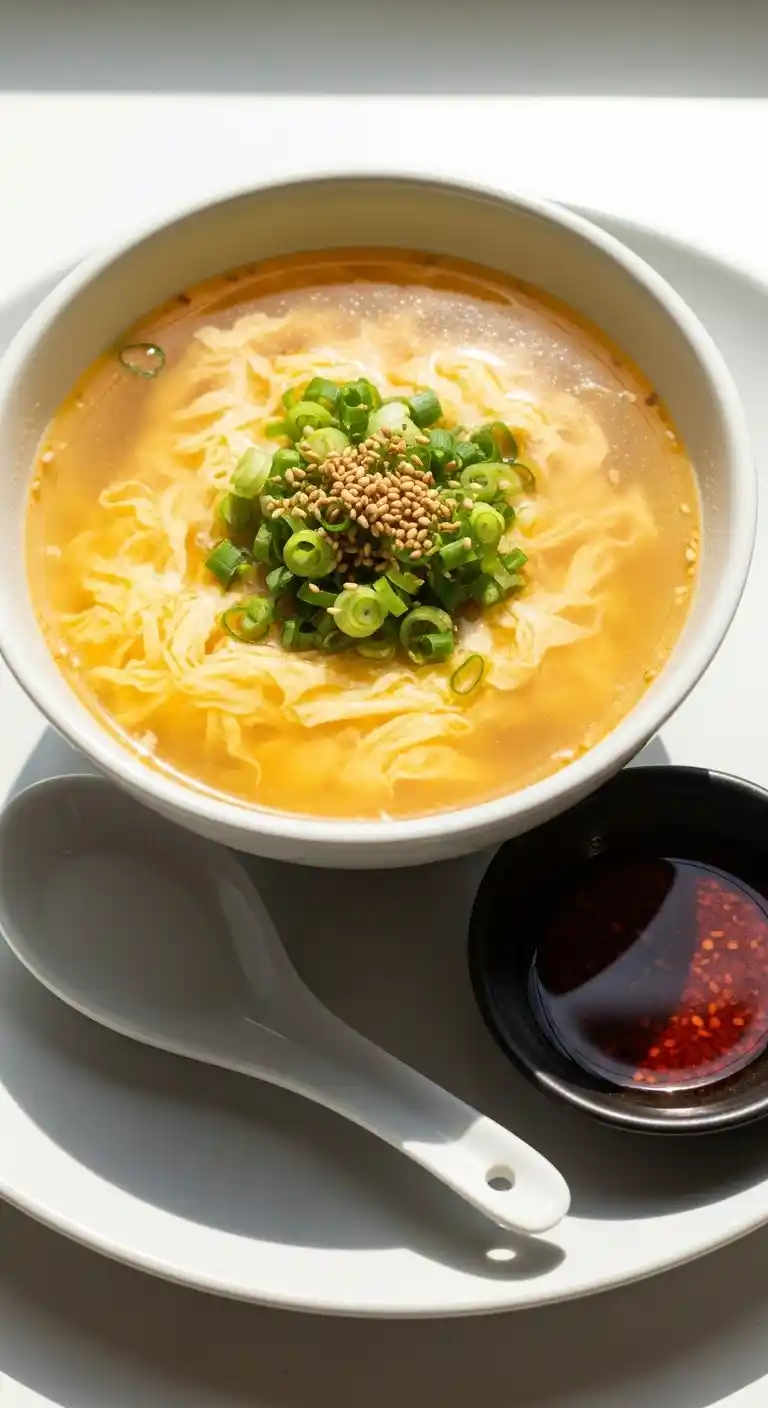
Egg drop soup comes together so quickly that having every component prepared and within arm’s reach before the stock goes on the heat is genuinely important — not just helpful. Measure and mix the cornstarch slurry in a small bowl and set it beside the hob. Beat the eggs thoroughly in a separate small bowl or jug with a pour spout — a jug with a spout gives you far more control over the pour speed than a bowl and a fork, and pour speed is the single most important technical factor in this entire recipe.
Slice the spring onions and set them aside in a small dish. Measure the sesame oil, soy sauce, white pepper, ginger, and garlic powder into a small bowl together so you can add them all at once rather than reaching for individual bottles at a critical moment. This preparation stage takes under 3 minutes and transforms the cooking process from a slightly stressful series of simultaneous actions into a calm, sequential process where each step follows naturally from the last.
Step Two: Heat and Season the Stock
Pour 1 litre of chicken stock into a medium saucepan and place it over medium-high heat. Bring the stock to a full, rolling boil — not a gentle simmer, but a proper boil with active bubbling across the entire surface of the liquid. Add 1 teaspoon of light soy sauce, ¼ teaspoon of ground white pepper, ¼ teaspoon of ground ginger, ¼ teaspoon of garlic powder, and ½ teaspoon of fine salt to the boiling stock and stir to combine. Taste the seasoned stock at this point — it should taste savoury, slightly salty, and well-rounded before any thickening or egg goes in.
White pepper rather than black pepper is the correct choice for authentic Chinese egg drop soup homemade results. White pepper has a sharper, more penetrating heat that distributes evenly through the broth rather than sitting as visible flecks on the surface — it is the spice that gives the soup its characteristic subtle warmth that most people taste but cannot identify. Black pepper works as a substitute but produces a visually speckled soup and a slightly different, less authentic flavour profile.
If you are adding frozen sweetcorn or peas to the soup, add them to the boiling seasoned stock at this stage and allow the stock to return to a full boil before proceeding to the thickening step. Frozen vegetables need 1 to 2 minutes of boiling stock to heat through completely — adding them after the cornstarch and egg stages means they never cook properly and sit cold in an otherwise hot bowl.
Step Three: Add the Cornstarch Slurry
Reduce the heat under the boiling stock to medium — you want an active simmer with visible movement across the surface but not the aggressive rolling boil of the previous stage. Stir the cornstarch slurry briefly one more time immediately before adding it — cornstarch settles to the bottom of the water within a few minutes of mixing and an unstirred slurry adds a blob of undissolved starch rather than a smooth, evenly distributed thickener.
Pour the cornstarch slurry into the simmering stock in a slow, steady stream while stirring the stock continuously with a wooden spoon or whisk in wide circular movements. Continue stirring for 1 to 2 minutes as the stock heats the starch and transforms from a thin, clear liquid into a noticeably thicker, slightly glossy broth. The finished consistency should coat the back of a spoon lightly — thick enough to have body and cling slightly to the egg ribbons once they form, but not so thick that it resembles gravy. This is the easy egg drop soup with cornstarch thickening that produces the characteristic restaurant-style texture. :/
If the soup looks too thick after adding the full slurry amount, add a small splash of extra stock or water and stir to loosen. If it looks too thin, mix a further teaspoon of cornstarch with 2 teaspoons of cold water, stir it well, and add in a slow stream while stirring. Both adjustments take 30 seconds and correct the consistency reliably.
Step Four: Create the Egg Ribbons
This is the step that defines the entire soup and the one that most people either get exactly right or completely wrong on their first attempt. Reduce the heat to low so the soup is barely simmering — active boiling at this stage disperses the eggs into tiny, indistinct particles rather than forming the long, silky ribbons that characterise a properly made one pot egg drop soup recipe result.
Hold the jug of beaten egg approximately 20 to 25 cm above the surface of the soup and pour the egg in an extremely slow, thin, steady stream while simultaneously stirring the soup slowly in one continuous circular direction using a chopstick or the handle of a wooden spoon. The height creates the thin stream that produces long ribbon formation. The slow circular stirring guides the egg ribbons as they set rather than breaking them into pieces. The low heat gives the ribbons time to set into a silky, intact form before the continued stirring disrupts them.
Pour the egg slowly — the entire pour should take approximately 20 to 30 seconds. If you pour too quickly, the egg clumps into large, rubbery masses rather than forming delicate ribbons. If the heat is too high when you pour, the egg sets immediately on contact and produces dense, over-cooked lumps rather than the soft, silky strands that define a healthy egg drop soup recipe easy enough to make every week. Stop stirring immediately after the last of the egg has been poured — the ribbons need 15 to 20 seconds of undisturbed rest in the hot soup to finish setting before serving. 🙂
Step Five: Finish and Serve
Remove the soup from the heat and add 1 teaspoon of toasted sesame oil. Stir gently once to distribute the sesame oil through the soup — toasted sesame oil added off the heat retains its aromatic, nutty fragrance fully, whereas sesame oil added to actively boiling soup loses most of its flavour immediately through evaporation. Taste the soup one final time and adjust the salt if needed, adding small amounts and tasting between additions until the seasoning feels exactly right.
Ladle the finished soup immediately into four warm bowls. Scatter the sliced spring onion greens across the surface of each bowl, add a small pinch of toasted sesame seeds, and add a few drops of chilli oil if using. Serve immediately — egg drop soup loses its silky texture relatively quickly as it sits, and the egg ribbons continue setting in the residual heat of the bowl. The soup is at its absolute best in the 5 minutes immediately after cooking, which is also conveniently when it is hottest and most comforting.
Why Stock Quality Changes Everything
Have you ever made egg drop soup with stock cubes and found the result drinkable but flat and slightly artificial compared to a restaurant version? The stock is almost always the difference.
A proper chicken stock — whether homemade or a good quality shop-bought fresh stock — contains collagen, gelatin, and naturally occurring glutamates that give the soup a rounded, savoury depth that no stock cube replicates. Stock cubes produce a salty, one-note base that the eggs and cornstarch cannot compensate for regardless of how well you execute the technique.
The authentic Chinese egg drop soup easy format traditionally uses a clear, well-seasoned chicken broth as the base — the egg ribbons and cornstarch thickening enhance the stock rather than substitute for it. Investing in good stock produces a soup that tastes genuinely restaurant-quality. Using a stock cube produces a soup that tastes like a stock cube with eggs in it. The difference takes no extra cooking time — only a slightly better ingredient choice at the supermarket.
Making the Chicken Version
The chicken egg drop soup recipe homemade variation adds shredded cooked chicken to the base recipe and produces a substantially more filling soup that works as a complete light meal rather than a starter.
Add 150g of cooked shredded chicken — leftover roast chicken works perfectly — to the soup after the cornstarch thickening stage and before adding the eggs. Stir the chicken through the thickened broth and allow it to heat through for 1 minute over medium-low heat before reducing to low and proceeding with the egg pour. The chicken should be already cooked before adding — raw chicken added at this stage does not cook through safely in the brief time available. FYI, this variation takes approximately 2 minutes longer than the standard version and produces a noticeably more substantial result that most people find considerably more satisfying as a standalone meal.
Common Mistakes to Avoid
Pouring egg into boiling soup: High heat produces large, rubbery egg clumps rather than silky ribbons. Always reduce to the lowest heat setting before pouring the egg — the residual heat in the thickened broth is sufficient to set the ribbons gently without over-cooking them.
Pouring egg too quickly: A fast pour dumps the egg into the soup before it has time to form ribbons, producing clumps. Always pour in a thin, slow stream over 20 to 30 seconds from a height of 20 to 25 cm above the soup surface.
Not stirring the cornstarch slurry before adding: Cornstarch settles to the bottom of the water within minutes. Always stir immediately before adding to ensure an even, smooth distribution through the broth rather than a lumpy, unevenly thickened result.
Using cold stock straight from the fridge: Cold stock takes longer to come to a full boil and the temperature difference can affect how the cornstarch hydrates. Use stock at room temperature or slightly warmed for the most predictable thickening result.
Skipping the sesame oil finish: Toasted sesame oil added off the heat is one of the defining flavour notes of an authentic low calorie egg drop soup recipe result. Without it, the soup tastes pleasant but lacks the aromatic, distinctly Chinese character that makes the restaurant version so satisfying.
Restaurant Style Egg Drop Soup Recipe From Scratch
4
servings5
minutes10
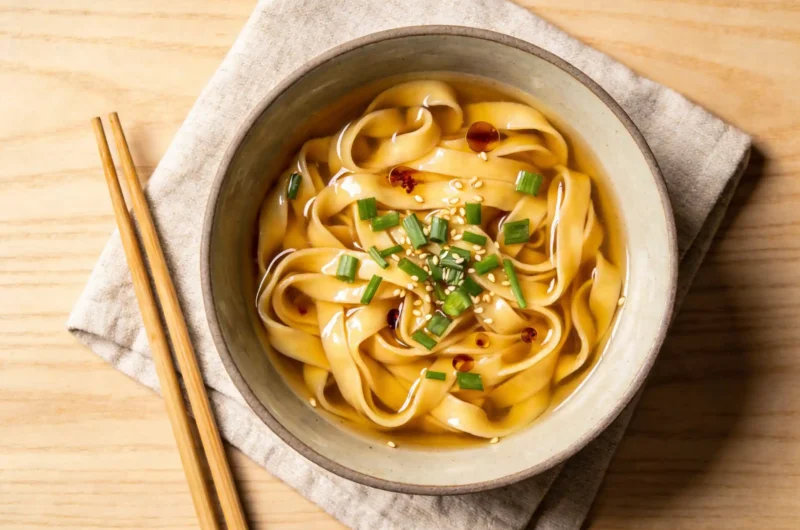
minutesThis egg drop soup brings seasoned chicken stock to a boil, thickens with a cornstarch slurry until glossy, reduces heat to low, then pours beaten eggs in a slow thin stream to form silky ribbons. Finished with sesame oil and spring onion, it delivers restaurant-quality results in 15 minutes.
Ingredients
Egg drop soup base:
1 litre chicken stock
3 tablespoons cornstarch mixed with 4 tablespoons cold water
3 large eggs, beaten well
1 teaspoon toasted sesame oil
1 teaspoon light soy sauce
½ teaspoon fine salt
¼ teaspoon ground white pepper
¼ teaspoon ground ginger
¼ teaspoon garlic powder
Garnish:
3 spring onions, thinly sliced
1 teaspoon toasted sesame seeds
Chilli oil, optional
Chicken variation additions:
150g cooked shredded chicken
1 extra tablespoon soy sauce
Optional additions:
80g frozen sweetcorn
50g silken tofu, cubed
2 tablespoons frozen peas
- Mix cornstarch slurry in a small bowl and set aside
- Beat eggs thoroughly in a small jug with a pour spout
- Slice spring onions and measure all seasonings into one small bowl
- Pour chicken stock into a medium saucepan over medium-high heat
- Bring stock to a full rolling boil
- Add soy sauce, white pepper, ginger, garlic powder, and salt to boiling stock
- Stir to combine and taste — adjust seasoning if needed
- Add sweetcorn or peas now if using and return to a full boil
- Reduce heat to medium for an active simmer
- Stir cornstarch slurry immediately before adding to redistribute settled starch
- Pour slurry into simmering stock in a slow steady stream while stirring continuously
- Stir for 1 to 2 minutes until broth thickens and looks glossy
- Check consistency — should coat the back of a spoon lightly
- Add extra slurry or stock to adjust thickness if needed
- Add shredded cooked chicken now if making the chicken variation
- Stir chicken through and heat for 1 minute over medium-low heat
- Reduce heat to the lowest setting until soup is barely simmering
- Hold beaten egg jug 20 to 25 cm above soup surface
- Pour egg in an extremely slow thin steady stream over 20 to 30 seconds
- Stir soup slowly in one continuous circular direction during the pour
- Stop stirring immediately after the last egg has been poured
- Allow ribbons to rest undisturbed for 15 to 20 seconds to finish setting
- Remove from heat and add toasted sesame oil
- Stir gently once to distribute sesame oil through the soup
- Ladle immediately into four warm bowls
- Garnish with spring onion, sesame seeds, and chilli oil if using and serve immediately
FAQs
Q1: Can I make this soup vegetarian? Yes — replace the chicken stock with a good quality vegetable stock and omit the chicken variation entirely. The cornstarch thickening, egg ribbons, and sesame oil technique all work identically with vegetable stock. Add a teaspoon of light soy sauce and a small piece of kombu seaweed simmered in the stock for 5 minutes before starting to add the savoury depth that chicken stock provides naturally — remove the kombu before proceeding with the recipe.
Q2: Why did my egg form clumps instead of ribbons? Egg clumps rather than ribbons result from one of three causes — pouring too fast, pouring from too low a height, or soup that was too hot when the egg went in. Reduce to the lowest heat, pour from 20 to 25 cm above the surface, and pour over a full 20 to 30 seconds. All three conditions together produce silky ribbons reliably every time.
Q3: Can I make this soup ahead of time? Egg drop soup is best made immediately before serving — the egg ribbons continue setting in the residual heat and the cornstarch thickening can become gelatinous on standing. If you need to prepare ahead, make the seasoned thickened broth base and reheat it to a gentle simmer just before serving, then add fresh beaten egg at the last moment. This produces a result virtually identical to freshly made soup with minimal last-minute effort.
Wrapping It Up
This quick egg drop soup recipe simple enough for any weeknight delivers a genuinely silky, warming, restaurant-quality bowl from a 15-minute process. Bring seasoned chicken stock to a boil, thicken with a cornstarch slurry, reduce to the lowest heat, pour beaten egg in a slow thin stream from height while stirring gently, finish with sesame oil, and serve immediately with spring onion and sesame seeds. Those five steps produce a perfect result every time.
Whether you make the classic version as a quick starter, add shredded chicken for a more substantial meal, include sweetcorn for sweetness and colour, or simply make a bowl because you need something warm and comforting in under 15 minutes — it consistently delivers a result that makes ordering takeout feel genuinely unnecessary. Now heat that stock and make something worth every silky spoonful.