Homemade bagels are one of those baked goods that look significantly more technical than they actually are. The moment a tray of glossy, golden, chewy bagels comes out of the oven with a perfectly blistered crust and a dense, springy interior, everyone assumes you spent the morning doing something that required professional training. You did not. You mixed a simple dough, shaped some rings, boiled them briefly, and baked them at high heat.
This easy homemade bagel recipe from scratch uses bread flour as the base — which gives bagels their distinctive chewy texture that plain flour simply cannot replicate — alongside instant yeast, a small amount of sugar, salt, and water. The boiling step before baking is the one thing that separates a proper chewy boiled bagels recipe classic result from a bread roll with a hole in it. It sounds unusual, it takes four minutes, and it makes an enormous difference to the final texture.
What You’ll Need (Ingredients)
Straightforward, affordable, and already in most kitchen cupboards. The bread flour is the one ingredient worth buying specifically for this recipe.
For bagel dough:
- 500g (4 cups) strong white bread flour, plus extra for dusting
- 7g (1 sachet) instant yeast
- 1 teaspoon caster sugar
- 1.5 teaspoons fine salt
- 300ml (1¼ cups) warm water — approximately 40°C
- 1 tablespoon neutral oil — vegetable or sunflower
Boiling water bath:
- 2 litres water
- 2 tablespoons honey or malt extract
- 1 teaspoon bicarbonate of soda
For the egg wash and toppings:
- 1 egg beaten with 1 tablespoon water
- 2 tablespoons sesame seeds
- 2 tablespoons poppy seeds
- 2 tablespoons everything bagel seasoning — for everything bagel recipe homemade version
- 1 teaspoon flaky sea salt — for plain salted bagels
Optional whole wheat variation:
- 350g (2¾ cups) strong white bread flour
- 150g (1¼ cups) whole wheat flour — for healthy whole wheat bagels recipe version
How to Make It — Full Step-by-Step Process
Step One: Make and Knead the Dough
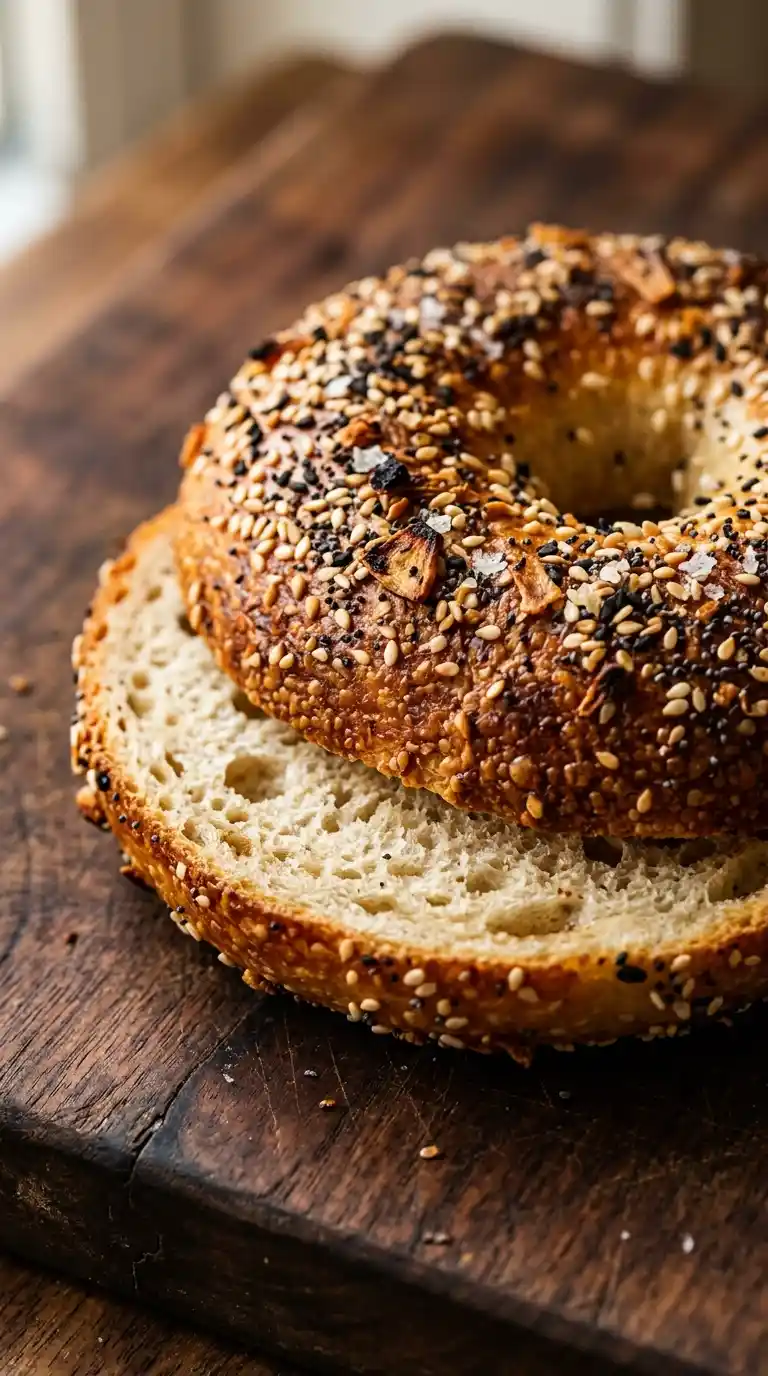
Combine 500g of strong white bread flour, 7g of instant yeast, 1 teaspoon of caster sugar, and 1.5 teaspoons of fine salt in a large mixing bowl. Stir the dry ingredients together briefly to distribute the yeast and salt evenly — keeping them on opposite sides of the bowl initially prevents the salt from directly contacting and slowing the yeast before the liquid goes in. Make a well in the centre of the dry ingredients.
Pour 300ml of warm water and 1 tablespoon of oil into the well and mix with a wooden spoon or your hand until the ingredients come together into a shaggy, rough dough with no dry flour remaining at the bottom of the bowl. Bagel dough is noticeably stiffer than standard bread dough — this is intentional and correct. A stiffer dough produces a denser, chewier crumb and holds its ring shape during both boiling and baking. If the dough feels impossibly stiff and will not come together at all, add water one teaspoon at a time, but resist the urge to add more than two or three teaspoons.
Turn the dough out onto a lightly floured surface and knead firmly for 10 full minutes by hand — push the dough away from you with the heel of your hand, fold it back toward you, rotate it a quarter turn, and repeat. Ten minutes of proper kneading develops the gluten structure that gives the best homemade bagels easy recipe their characteristic chew. If using a stand mixer with a dough hook, knead on medium speed for 6 to 8 minutes until the dough is smooth, elastic, and springs back when you poke it with a finger.
Step Two: First Rise
Shape the kneaded dough into a smooth ball by pulling the surface taut and tucking the edges underneath. Place it in a lightly oiled bowl and turn it once to coat the surface in a thin layer of oil — this prevents a dry skin from forming on the dough surface during rising. Cover the bowl tightly with cling film or a clean damp tea towel and leave it in a warm place for 1 hour until doubled in size.
The ideal rising environment is somewhere warm and draught-free — a switched-off oven with just the light on works perfectly, as does a spot near a warm radiator. If your kitchen is particularly cold, the dough may need 15 to 20 extra minutes to double fully. Do not rush this stage by placing the dough somewhere too hot — gentle, slow rising develops better flavour in the finished bagel than fast rising at high heat. FYI, you can also do a slow overnight rise in the fridge, which produces an even more flavourful result and means the dough is ready to shape the next morning.
Step Three: Shape the Bagels
Once the dough has doubled, turn it out onto a lightly floured surface and press it gently to deflate the larger air bubbles. Divide it into 8 equal pieces using a sharp knife or dough scraper — weigh them if you want precise sizing, aiming for approximately 100g per piece. Even sizing is important because it ensures all eight bagels bake at the same rate and look uniform on the tray.
Shape each piece into a smooth ball by pulling the surface taut and rolling it on the counter in a circular motion with a cupped hand. Take each ball and push your thumb through the centre to create a hole, then gently stretch the ring with both hands, rotating it around your fingers until the hole measures approximately 4 to 5 cm across. The hole shrinks during boiling and baking — a hole that looks too large at this stage will close to the correct size in the oven. Place each shaped bagel on a lightly floured baking tray, cover loosely, and rest for 15 minutes while you heat the boiling water.
Step Four: Boil the Bagels
Fill a large wide saucepan or stockpot with 2 litres of water and bring it to a rolling boil. Add 2 tablespoons of honey or malt extract and 1 teaspoon of bicarbonate of soda to the boiling water and stir briefly. The honey adds a subtle sweetness and shine to the bagel crust. The bicarbonate of soda raises the pH of the water slightly, which accelerates the Maillard reaction during baking and produces the characteristic deep golden-brown colour of a proper New York style bagels recipe homemade result.
Lower the bagels into the boiling water two or three at a time — do not overcrowd the pot. Boil each bagel for exactly 1 minute on the first side, then flip with a slotted spoon or spider strainer and boil for another minute on the second side. Two minutes total boiling time per bagel produces the chewy, dense texture of a classic deli bagel. Boiling for longer produces an increasingly tough, dense crust that can overpower the soft interior. Lift each boiled bagel out with the slotted spoon, allowing excess water to drain back into the pot, and transfer to a parchment-lined baking tray.
Step Five: Top and Bake
Preheat your oven to 220°C (425°F) fan-forced or 230°C (450°F) conventional while the bagels boil. Brush each boiled bagel generously with the beaten egg wash immediately — the warm surface of a freshly boiled bagel accepts egg wash better than a cooled one, and the wash produces a deep, glossy shine during baking that makes the finished bagels look genuinely professional.
Sprinkle your chosen toppings over the egg-washed surface immediately before baking — sesame seeds, poppy seeds, everything bagel seasoning, or flaky sea salt all adhere best to a freshly egg-washed surface while it is still tacky. Press the toppings lightly with your fingertips to help them stick rather than falling off during baking. Place both trays in the oven on separate racks and bake for 18 to 22 minutes, rotating the trays halfway through for even colouring. The bagels are ready when they are uniformly deep golden-brown across the entire surface. Transfer to a wire rack and cool for at least 10 minutes before slicing — cutting a hot bagel compresses the interior and ruins the chewy texture that the whole recipe exists to produce. :/
Why Boiling Makes All the Difference
Have you ever made a bagel recipe that produced something that looked like a bagel but tasted exactly like a bread roll? The missing step was almost certainly the boil.
Boiling bagels before baking sets the outer layer of dough into a firm, gelatinised shell before the interior has finished cooking. This shell restricts how much the dough expands in the oven, which produces the dense, chewy crumb structure rather than the open, airy crumb of a standard bread roll. It also creates the distinctive glossy, slightly blistered crust that no amount of steam-baking or egg wash alone can replicate.
The honey or malt extract in the boiling water is not decorative. Both add a thin layer of sugar to the surface of the dough during boiling, which caramelises in the hot oven and produces the deep amber colour and faintly sweet crust flavour that defines a proper fluffy baked bagels recipe easy enough for a home kitchen. Malt extract is the traditional choice for New York-style bagels — health food stores and online retailers stock it reliably — but honey produces an almost identical result and is significantly easier to find.
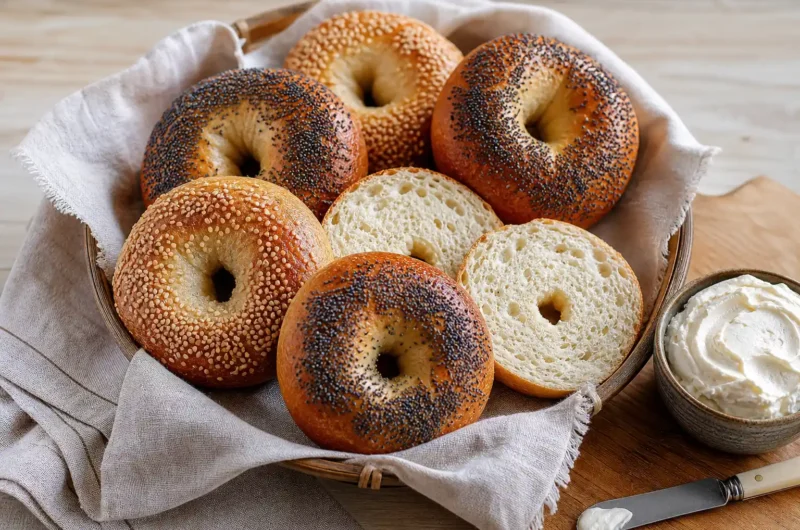
Healthy Whole Wheat Bagels Recipe From Scratch Easy
8
servings30
minutes1
hour20
minutesThese homemade bagels combine strong bread flour, instant yeast, and water into a stiff dough, rise for one hour, boil two minutes per side in honey water, then bake at high heat until deeply golden and chewy. Ready in under two hours, they deliver genuine deli-quality results with simple everyday ingredients.
Ingredients
Bagel dough:
500g strong white bread flour
7g instant yeast
1 teaspoon caster sugar
1.5 teaspoons fine salt
300ml warm water
1 tablespoon neutral oil
Boiling water bath:
2 litres water
2 tablespoons honey or malt extract
1 teaspoon bicarbonate of soda
Egg wash and toppings:
1 egg beaten with 1 tablespoon water
2 tablespoons sesame seeds
2 tablespoons poppy seeds
2 tablespoons everything bagel seasoning
1 teaspoon flaky sea salt
Optional whole wheat version:
350g strong white bread flour
150g whole wheat flour
- Combine bread flour, instant yeast, caster sugar, and salt in a large bowl
- Pour warm water and oil into the dry ingredients and mix into a stiff dough
- Knead firmly on a floured surface for 10 full minutes until smooth and elastic
- Shape dough into a ball and place in a lightly oiled bowl
- Cover tightly and leave in a warm place for 1 hour until doubled in size
- Turn risen dough out and divide into 8 equal pieces of approximately 100g each
- Shape each piece into a smooth ball then push thumb through the centre
- Stretch each ring until the hole measures approximately 4 to 5 cm across
- Place shaped bagels on a floured tray, cover loosely, and rest for 15 minutes
- Bring 2 litres of water to a rolling boil in a large wide saucepan
- Add honey and bicarbonate of soda to the boiling water and stir briefly
- Lower bagels into the water two or three at a time
- Boil for exactly 1 minute on the first side then flip with a slotted spoon
- Boil for 1 minute on the second side then lift out and drain
- Transfer boiled bagels to a parchment-lined baking tray
- Brush each bagel generously with egg wash while still warm
- Sprinkle chosen toppings over the egg-washed surface and press lightly to adhere
- Bake at 220°C fan for 18 to 22 minutes rotating trays halfway through
- Remove when uniformly deep golden-brown across the entire surface
- Cool on a wire rack for at least 10 minutes before slicing and serving
The Everything Bagel Topping Combination
The everything bagel recipe homemade topping takes a plain boiled bagel and turns it into something with considerably more personality and flavour complexity than any single-seed version.
Mix together 1 tablespoon of sesame seeds, 1 tablespoon of poppy seeds, 1 teaspoon of dried garlic flakes, 1 teaspoon of dried onion flakes, and 1 teaspoon of flaky sea salt in a small bowl. Sprinkle this mixture generously over the freshly egg-washed bagels before baking, pressing lightly to adhere. The combination of seeds, dried alliums, and salt toasts during baking and creates a savoury, fragrant crust that contrasts beautifully with the chewy, slightly sweet bagel underneath. IMO, the everything topping is the definitive bagel experience and completely worth making every single time you bake a batch.
Common Mistakes to Avoid
Using plain flour instead of bread flour: Plain flour does not contain enough gluten to produce the chewy, dense texture that defines a proper bagel. Bread flour — also called strong white flour — is non-negotiable for the right result. The difference in texture between a plain flour bagel and a bread flour bagel is immediately noticeable.
Skipping the boiling step: Unboiled bagels bake into bread rolls. The boil sets the crust structure, creates the chewy texture, and produces the glossy surface. This step takes four minutes and cannot be substituted with any oven technique.
Making the dough too wet: Bagel dough should feel stiff and firm, not soft and tacky like standard bread dough. A wet dough produces bagels that spread flat during boiling and lose their round shape. Resist adding extra water beyond what the recipe specifies.
Not leaving a large enough hole: A hole that looks correct before boiling closes significantly during cooking. Make it larger than you think looks right — approximately 4 to 5 cm — and trust the process.
Slicing too soon: Cutting a hot bagel compresses the interior crumb and produces a gummy, dense texture. Wait a full 10 minutes after removing from the oven before slicing, even when they smell incredible and every instinct says to cut one immediately.
FAQs
Q1: Can I make bagels without yeast? Yes — a no yeast bagels recipe quick version uses self-raising flour and Greek yogurt in equal weights, mixed into a soft dough, shaped into rings, and baked without boiling. The result is softer and more bread-like than a traditional yeast bagel but produces a decent result in under 30 minutes. The simple 2 ingredient bagels recipe format — self-raising flour and yogurt — works well for a fast weekday bake when you do not have time for a full yeast dough.
Q2: Can I freeze homemade bagels? Yes — bagels freeze exceptionally well. Cool completely after baking, slice in half, and freeze in a zip-lock bag for up to 3 months. Toast directly from frozen in a toaster or oven at 180°C for 8 to 10 minutes. Slicing before freezing means you can toast individual halves without defrosting the whole bagel first, which is genuinely useful for weekday mornings.
Q3: Why did my bagels turn out dense and heavy? Dense bagels almost always result from under-kneading the dough, under-proofing during the first rise, or boiling for too long. Knead for the full 10 minutes, allow a complete doubling during the rise, and stick to exactly 1 minute per side during boiling. Over-boiled bagels develop an increasingly thick, tough outer shell that makes the finished bagel feel more like a rubber ring than a bread product.
Wrapping It Up
This chewy boiled bagels recipe classic method delivers genuine deli-quality bagels from a straightforward home baking process. Mix a stiff bread flour dough, knead for 10 minutes, rise for 1 hour, shape into rings, boil two minutes per bagel in sweetened water, egg wash and top generously, then bake at high heat until deeply golden. Those seven steps produce a consistent, impressive result every single time.
Whether you make plain sesame bagels for everyday breakfast, go all out with an everything bagel topping for maximum flavour, bake a whole wheat batch for something nuttier, or freeze a full batch for the week ahead — these bagels consistently impress everyone who tries them. Now activate that yeast and make something worth slicing.
Bake