Persimmons sit at the greengrocer looking orange, slightly alien, and deeply underappreciated. Most people pick them up once, put them back, and choose something they recognise. I did exactly this for years until a neighbour gave me a bag from her garden and I made this jam. I have not ignored persimmons since.
This persimmon jam recipe homemade version uses just a handful of ingredients and produces a gorgeous, deep amber jam with a honey-like sweetness and a warmly spiced finish. It is one of the most rewarding autumn preserves you can make — and arguably the best use of a fruit that most home cooks completely overlook every single season.
What You’ll Need (Ingredients)
Simple, clean, and seasonal. The persimmons carry most of the flavour here.
For the jam:
- 1kg (2.2 lbs) ripe Fuyu persimmons — peeled, cored, and roughly chopped
- 400g (2 cups) white caster sugar — or 300g for the low sugar persimmon jam recipe version
- 3 tablespoons fresh lemon juice — from approximately 2 lemons
- 1 teaspoon lemon zest
- 1/2 teaspoon ground cinnamon
- 1/4 teaspoon ground ginger
- 1/4 teaspoon ground nutmeg
- 1/4 teaspoon vanilla extract
- 1/4 teaspoon salt
Optional additions:
- 1 tablespoon liquid pectin — only needed if persimmons are very under-ripe
- 1 star anise — added during cooking and removed before jarring
- 1 tablespoon brandy or rum — stirred in at the very end for depth
How to Make It — Full Step-by-Step Process
Step One: Choose and Prepare the Persimmons
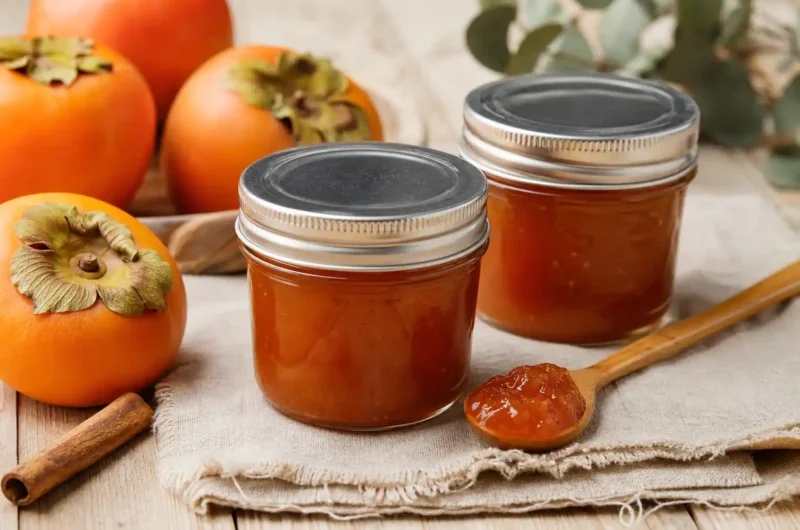
Use Fuyu persimmons for this recipe — they are the squat, tomato-shaped variety that feels firm when ripe and can be eaten like an apple without the astringency of Hachiya persimmons. Hachiya persimmons — the elongated, acorn-shaped variety — must be fully soft and almost jelly-like before they become palatable, because unripe Hachiyas contain soluble tannins that cause an intensely unpleasant puckering sensation in the mouth.
Peel each persimmon using a sharp vegetable peeler, working from the stem end downward. Remove the calyx — the flat, leaf-shaped crown at the top — and cut out any hard core pieces near the stem. Roughly chop the peeled persimmons into 2 to 3cm chunks and transfer to a large heavy-bottomed saucepan or preserving pan. The rough chopping size does not need to be precise because the fruit will cook down and break apart completely during the jam-making process anyway.
Step Two: Macerate With Sugar and Lemon
Add 400g of caster sugar, 3 tablespoons of fresh lemon juice, and 1 teaspoon of lemon zest to the chopped persimmons in the pan. Stir everything together thoroughly and leave the mixture to sit at room temperature for 20 to 30 minutes.
This macerating period allows the sugar to draw moisture out of the persimmon flesh and creates a natural syrup in the pan before any heat is applied. Starting the cooking process with this pre-formed syrup prevents the sugar from burning against the dry base of the pan in the early stages of heating. The lemon juice adds acidity that not only brightens the final flavour but also provides a natural source of pectin that helps the jam set without requiring commercial pectin in most cases.
Step Three: Cook the Jam
Place the macerated persimmon and sugar mixture over medium heat. Stir continuously for the first 3 to 4 minutes as the mixture heats and the remaining sugar dissolves completely. Once the mixture comes to a gentle simmer, add the ground cinnamon, ginger, nutmeg, vanilla extract, salt, and star anise if using. These warm spices transform a basic sweet persimmon fruit jam recipe into the spiced persimmon jam recipe easy approach that makes this particular preserve so distinctive and memorable.
Increase the heat to medium-high and bring the jam to a rolling boil — the kind of vigorous, active boil that cannot be stirred down. Maintain this rolling boil for 20 to 25 minutes, stirring regularly every 2 to 3 minutes to prevent the jam from sticking to the base of the pan. As the jam cooks, it will reduce, deepen in colour from pale orange to a rich deep amber, and thicken noticeably. The surface will shift from a watery, active boil to a slower, more languid bubble as the pectin activates and the mixture concentrates. FYI — persimmons are naturally low in pectin, so this longer cooking time compensates and produces a set jam without needing commercial additives.
Step Four: Test the Set
The jam is ready when it reaches the gel point — approximately 105°C (220°F) on a jam thermometer. If you do not own a thermometer, use the classic cold plate test. Place two small ceramic plates in the freezer at the start of cooking. After 20 minutes, spoon a small amount of jam onto one frozen plate. Push it gently with your fingertip after 30 seconds — if the surface wrinkles and the jam does not flood back into the gap, it has set. If it flows back immediately, cook for another 3 to 5 minutes and test again.
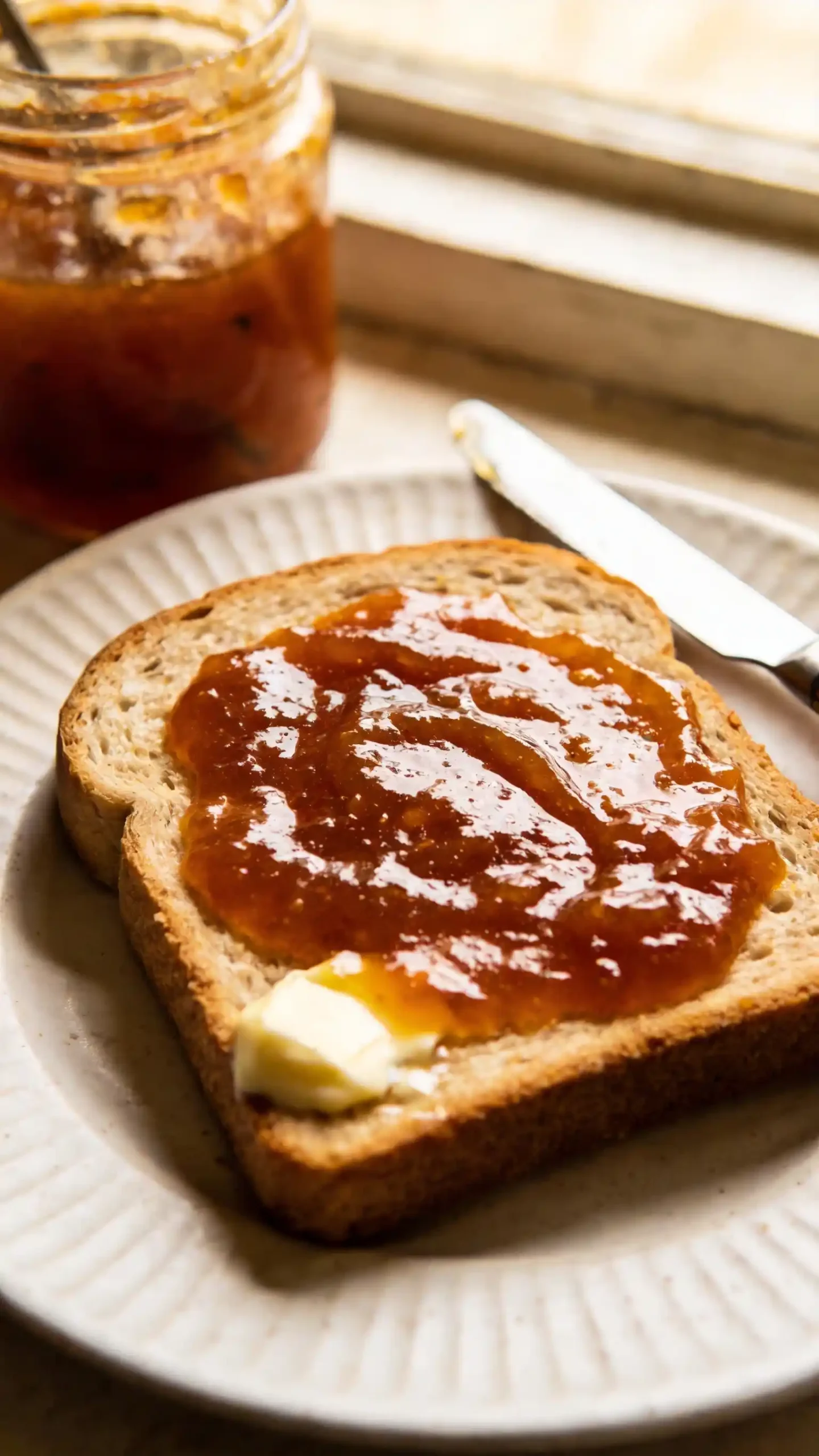
Remove the pan from heat once the set test confirms readiness. Add the vanilla extract now if not added earlier, and stir in the tablespoon of brandy or rum if using. Remove and discard the star anise. Allow the jam to sit in the pan for 3 minutes — this brief settling period reduces the formation of air bubbles in the finished jam. IMO, this autumn persimmon jam recipe homemade result looks most beautiful in clear glass jars that show off the rich amber colour — choose your jars for how they display as well as how they seal.
Step Five: Sterilise Jars and Jar the Jam
Sterilise your jars before the jam is ready. Wash jars and lids in hot soapy water, rinse thoroughly, and place upright in an oven at 120°C (250°F) for 15 minutes. Remove using clean oven gloves and place on a clean towel. Only sterilise as many jars as you need — this recipe fills approximately 3 to 4 standard 250ml jam jars.
Pour the hot jam into the hot sterilised jars immediately using a jam funnel or a ladle and a steady hand. Fill each jar to within 1cm of the rim. Wipe the rims clean with a damp cloth if any jam drips on them — residue on the rim prevents a proper seal. Seal with the lids immediately while the jam is still hot. As the jam cools, the heat creates a vacuum seal inside each jar — you may hear a satisfying clicking sound as the lids pull down. Allow jars to cool completely at room temperature before checking the seal and storing.
Fuyu vs. Hachiya Persimmons for Jam
Have you ever wondered which persimmon type produces the best jam? The answer depends entirely on what texture you want.
Fuyu persimmons produce a brighter, cleaner flavour and a firmer chunk texture in the finished jam if you prefer a slightly chunky preserve. They also cook down more predictably because their lower tannin content means they behave consistently regardless of ripeness stage. Hachiya persimmons, when fully ripe and almost jelly-like, produce a smoother, richer, more intensely flavoured jam — similar to a thick fruit butter rather than a chunky preserve. Fully ripe Hachiya jam needs slightly less sugar because the ripe fruit is considerably sweeter than Fuyu at the same stage.
Low Sugar Version
The low sugar persimmon jam recipe version reduces the caster sugar from 400g to 300g and adds 1 tablespoon of liquid pectin to compensate for the reduced natural setting ability. The lower sugar version tastes brighter and more fruit-forward because the sugar does not dominate the persimmon flavour as completely.
However, low-sugar jams have a shorter shelf life — approximately 3 weeks refrigerated after opening rather than the 6 to 8 weeks of a standard sugar jam. Store low-sugar versions in the fridge from day one rather than at room temperature, and process them in a boiling water bath for shelf stability if making in larger quantities.
Serving and Pairing Ideas
This natural persimmon spread recipe easy enough for any skill level pairs extraordinarily well with a wide range of foods.
On bread and pastry:
- Thick on warm sourdough toast with salted butter
- Spread inside croissants as a filling
- Dolloped onto ricotta toast with a drizzle of honey
With savoury foods:
- Alongside a cheese board — persimmon jam pairs beautifully with aged cheddar and brie
- As a glaze for roast pork or duck during the last 20 minutes of roasting
- Stirred into a vinaigrette for autumn salads with walnuts and blue cheese
As a dessert component:
- Spooned over vanilla ice cream or panna cotta
- Swirled into Greek yogurt for breakfast
- Layered into a trifle with sponge and cream
Fresh Persimmon Jam Canning Recipe for Beginners
15
minutes35
minutesIngredients
1kg ripe Fuyu persimmons, peeled, cored, and chopped
400g caster sugar (or 300g for low sugar version)
3 tablespoons fresh lemon juice
1 teaspoon lemon zest
1/2 teaspoon ground cinnamon
1/4 teaspoon ground ginger
1/4 teaspoon ground nutmeg
1/4 teaspoon vanilla extract
1/4 teaspoon salt
Optional: 1 star anise, 1 tablespoon brandy or rum, 1 tablespoon liquid pectin
- Peel, core, and roughly chop 1kg of ripe Fuyu persimmons
- Add to a large heavy-bottomed saucepan with caster sugar, lemon juice, and lemon zest
- Stir together and leave to macerate at room temperature for 20 to 30 minutes
- Place two small plates in the freezer for the set test
- Place saucepan over medium heat and stir continuously for 3 to 4 minutes until sugar dissolves
- Add ground cinnamon, ginger, nutmeg, vanilla extract, salt, and star anise if using
- Increase heat to medium-high and bring to a rolling boil
- Maintain rolling boil for 20 to 25 minutes stirring every 2 to 3 minutes
- Test the set at 20 minutes using a frozen plate — jam should wrinkle when pushed
- Cook for further 3 to 5 minutes and retest if jam still flows back
- Remove from heat once set test confirms readiness
- Remove and discard star anise and stir in brandy or rum if using
- Allow jam to rest in the pan for 3 minutes
- Sterilise jars at 120°C for 15 minutes while jam cooks
- Pour hot jam into hot sterilised jars using a jam funnel leaving 1cm headspace
- Wipe jar rims clean with a damp cloth
- Seal with lids immediately while jam is hot
- Allow to cool completely at room temperature before storing
Common Mistakes to Avoid
Using unripe Fuyu persimmons: Unripe Fuyus contribute little sweetness and can add astringency to the finished jam. Always use persimmons that feel slightly soft at the base and smell fragrant near the stem.
Not stirring frequently enough: Persimmon jam contains significant natural sugar that burns on the pan base without regular stirring. Stir every 2 to 3 minutes throughout the full 20 to 25 minutes of cooking.
Skipping the set test: Persimmon pectin levels vary between batches. Always test the set rather than relying purely on time — under-set jam stays liquid in the jar and cannot be fixed after jarring. :/
Jarring into cold jars: Cold jars can crack when hot jam contacts them. Always sterilise jars in the oven and keep them warm until you fill them immediately from the hot pan.
FAQs
Q1: How long does homemade persimmon jam keep?
Properly sealed jars of persimmon jam keep for up to 12 months in a cool, dark cupboard. Once opened, store in the fridge and use within 6 to 8 weeks for best quality. Always check for any signs of mould or an off smell before using — these indicate the seal was compromised during cooling and the jar should be discarded.
Q2: Can I make persimmon jam without a thermometer?
Yes — the cold plate test works reliably as a substitute. Place two plates in the freezer before you start cooking. Drop a small spoonful of jam onto the frozen plate after 20 minutes of boiling. If the surface wrinkles when pushed with a fingertip after 30 seconds, the jam has set. If it flows back, cook longer. Run the test every 5 minutes until the wrinkle forms clearly.
Q3: Can I use frozen persimmons?
Yes — thaw completely and drain any excess liquid before macerating with sugar. Frozen persimmons release more water than fresh, so you may need to cook the jam for an extra 5 minutes to compensate for the additional moisture. The finished flavour is slightly less bright than fresh persimmon jam but still excellent and completely worth making.
Q4: Do I need to add commercial pectin?
Not for Fuyu persimmons at peak ripeness — the combination of the fruit’s natural pectin and the lemon juice provides sufficient setting ability. However, if your persimmons were very under-ripe or if previous batches have set too softly, add 1 tablespoon of liquid pectin at the end of cooking. Powdered pectin can also substitute but requires different quantities — follow the packet instructions.
Q5: Can I make this jam without the spices?
Yes — the spices create the spiced persimmon jam recipe easy character but the base persimmon jam tastes excellent without them. A plain version uses only persimmons, sugar, and lemon juice and produces a cleaner, more neutral fruit flavour that works particularly well alongside delicate cheeses and plain yogurt. The spiced version suits toast, charcuterie boards, and roasted meats more naturally.
Wrapping It Up
This easy persimmon jam from scratch delivers a genuinely stunning, deeply flavoured autumn preserve using minimal ingredients and straightforward technique. Choose ripe Fuyu persimmons, macerate with sugar and lemon first, cook at a rolling boil for 20 to 25 minutes with warm spices, test the set carefully, sterilise jars properly, and seal while hot. Those six habits produce a perfect result every time.
Whether you spread it on toast, serve it with cheese, or gift it in pretty jars to people who have never tried persimmon before — this jam consistently surprises everyone. Now go buy those unusual orange fruits from the greengrocer and finally find out what they taste like.