Roasted vegetables have a reputation problem. People hear the phrase and immediately picture sad, limp, grey vegetables from a school cafeteria. Then they try a properly made sheet pan roasted vegetables recipe — golden edges, caramelised surfaces, tender interiors — and completely reset their expectations.
I make garlic herb roasted vegetables easy enough for a weeknight at least twice a week. They pair with everything, they store beautifully, and they genuinely taste good on their own without needing anything to prop them up. This recipe gives you the exact technique that produces crispy, deeply flavourful results every single time.
What You’ll Need (Ingredients)
Any vegetables work here. These are the ones that roast most reliably together with minimal timing adjustment.
For the vegetables:
- 1 medium zucchini, cut into 2cm half-moons
- 1 red bell pepper, cut into 3cm chunks
- 1 yellow bell pepper, cut into 3cm chunks
- 200g (7 oz) cherry tomatoes, left whole
- 1 medium red onion, cut into thick wedges
- 200g (7 oz) broccoli florets
- 200g (7 oz) baby potatoes, halved
For the seasoning:
- 3 tablespoons olive oil
- 4 garlic cloves, finely minced
- 1 teaspoon dried oregano
- 1 teaspoon dried thyme
- 1/2 teaspoon smoked paprika
- 1 teaspoon salt
- 1/2 teaspoon black pepper
- Juice of half a lemon — added after roasting
Optional finishing touches:
- 2 tablespoons fresh parsley, roughly chopped
- 30g (1 oz) feta cheese, crumbled — for a Mediterranean roasted vegetables recipe finish
- 1 tablespoon balsamic glaze drizzled over before serving
How to Make It — Full Step-by-Step Process
Step One: Preheat the Oven Properly
Set your oven to 220°C (425°F) fan-forced or 230°C (450°F) conventional. Allow a full 20 minutes of preheating before anything goes in. A properly preheated oven starts caramelising the vegetable surfaces immediately on contact — an under-heated oven starts the cooking process slowly and produces steamed rather than roasted results.
Place your largest baking tray or two standard baking trays in the oven while it preheats. Preheating the tray is the technique that separates genuinely crispy oven roasted vegetables recipe results from ones that look pale and soft. When cold vegetables hit a hot tray, the direct contact immediately begins caramelising the underside — producing that golden, slightly charred edge before the vegetables even lose moisture.
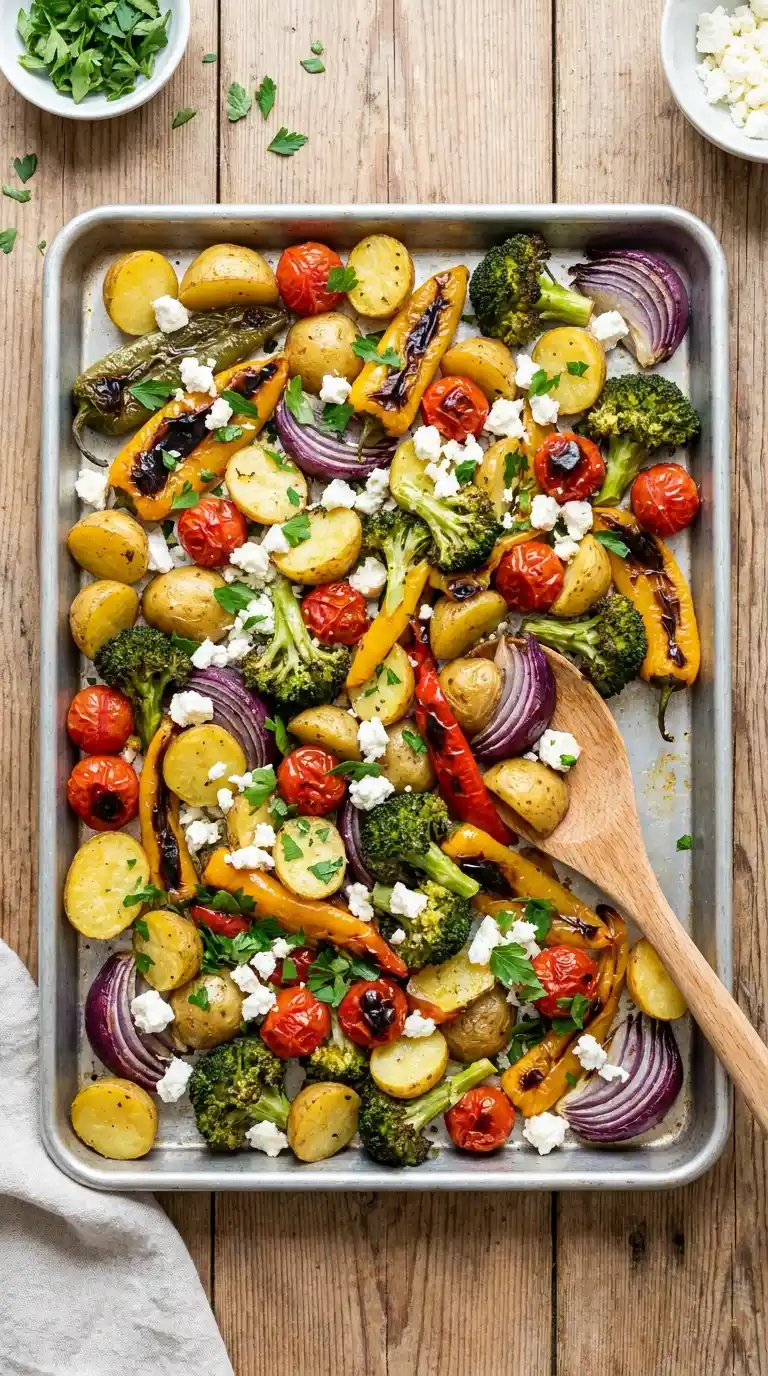
Step Two: Prepare and Dry the Vegetables
Cut all vegetables to relatively consistent sizes so they cook at the same rate. Potatoes and broccoli take longer than softer vegetables like zucchini and peppers — halve the potatoes and cut broccoli into medium florets to compensate. Inconsistent sizing produces some perfectly cooked pieces and some undercooked or burnt ones in the same tray simultaneously.
Pat the cut vegetables dry with paper towels before seasoning. Excess moisture on the vegetables creates steam in the oven and is the primary reason vegetables turn out soggy rather than crispy. The drier the vegetables before they enter the oven, the more effectively the high heat caramelises their surfaces. FYI — this single step makes a bigger difference to crispiness than almost any other adjustment in the entire recipe.
Step Three: Season and Coat Evenly
Add all the dried vegetables to a large mixing bowl. Pour 3 tablespoons of olive oil over everything, then add the minced garlic, dried oregano, dried thyme, smoked paprika, salt, and black pepper. Toss thoroughly using your hands or two large spoons for about 1 minute until every vegetable looks evenly coated in the oil and seasoning.
Every surface needs contact with oil for effective caramelisation and flavour distribution. Vegetables that go into the oven with dry, un-oiled patches roast unevenly and taste under-seasoned in those areas. The olive oil also prevents sticking to the hot tray — which protects the caramelised crust that forms on the vegetable surface during roasting from tearing off when you remove them.
Step Four: Arrange on the Hot Tray
Remove the preheated baking tray from the oven carefully using oven gloves. Spread the seasoned vegetables in a single even layer across the hot tray surface. Leave visible space between pieces — at least 2cm of air gap around most vegetables. This spacing is the most commonly violated rule in roasting and the most consequential.
Overcrowded vegetables trap the steam they release during cooking between each other. That steam prevents the oven heat from reaching the vegetable surfaces directly, and the result is braised, soft, waterlogged vegetables instead of roasted crispy ones. If your tray cannot fit all the vegetables in a single layer with spacing, use two trays rather than overcrowding one. This is genuinely non-negotiable for crispy results.
Step Five: Roast Without Disturbing Too Early
Place the loaded tray on the centre rack of the fully preheated oven. Roast for 20 minutes without opening the oven door or stirring anything. Opening the oven too early releases heat and steam, dropping the temperature at exactly the moment when the caramelisation process needs sustained high heat to develop properly.
After 20 minutes, remove the tray and flip the vegetables using a spatula or tongs. Some pieces will look deeply golden on the underside — this is correct and what you want. Return the tray to the oven for a further 10 to 15 minutes until the vegetables look caramelised and slightly charred at the edges. The broccoli florets should have dark, crispy tips. The potatoes should look golden and feel tender when pierced. The peppers and zucchini should show visible browning on at least two sides.
Step Six: Finish and Serve
Remove the tray from the oven. Squeeze the juice of half a lemon over the hot vegetables immediately — the acid brightens every flavour simultaneously and cuts through the richness of the olive oil. Scatter fresh parsley over the top if using. Transfer to a serving dish or serve directly from the tray.
For the Mediterranean roasted vegetables recipe version, scatter 30g of crumbled feta across the hot vegetables and drizzle a tablespoon of balsamic glaze over everything. The feta melts slightly from the residual heat and the balsamic glaze caramelises on the surface of the vegetables into a sweet, tangy finish that takes this dish from a straightforward side to something genuinely impressive on the dinner table. IMO this finishing combination is worth doing every single time. 🙂
Why High Heat Is Non-Negotiable
Have you ever made roasted vegetables at 180°C and wondered why they came out soft and pale rather than caramelised and golden? The Maillard reaction — the chemical process that produces browning, caramelisation, and deep flavour — only activates significantly above 200°C. Below that temperature, the vegetable surfaces heat gradually and produce steamed results before the Maillard reaction has time to develop.
High heat also drives moisture out of the vegetables quickly, which prevents them from sitting in their own liquid during cooking. The combination of a preheated tray, high oven temperature, and adequately spaced vegetables creates the conditions for genuine roasting rather than indirect steaming. These three factors together are what define a genuinely crispy oven roasted vegetables recipe.
Roasted Vegetables as Meal Prep
This recipe works brilliantly as roasted vegetables meal prep ideas for the week ahead. Double the batch, roast everything completely, and cool to room temperature before storing in sealed containers in the fridge for up to 4 days.
Reheated roasted vegetables work over grain bowls, stirred into pasta, layered into sandwiches, or served cold in salads with a light vinaigrette. The flavour actually develops and deepens after 24 hours in the fridge as the garlic and herbs continue infusing. Making a large batch on Sunday produces four days of easy, healthy side dishes with zero additional cooking effort. :/
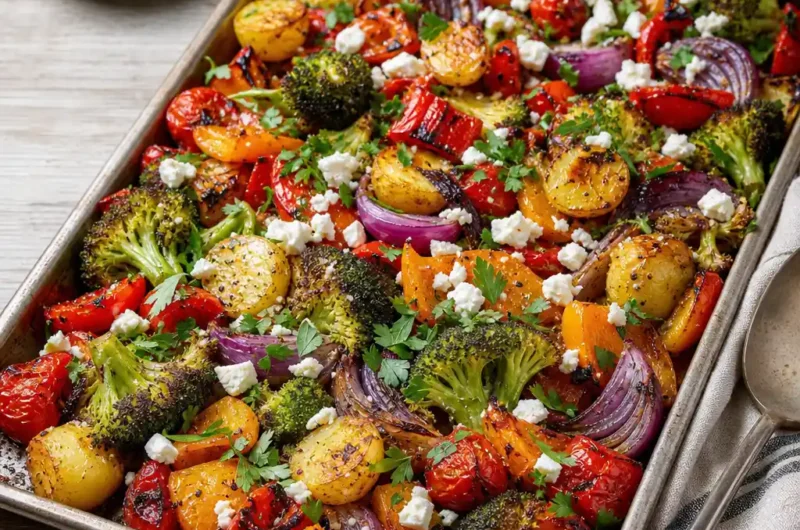
Healthy Roasted Vegetables Side Dish Done Right
4
servings10
minutes30
minutesThis easy roasted vegetables recipe uses a preheated tray, high oven heat, and proper spacing to produce genuinely crispy, caramelised mixed vegetables seasoned with garlic, herbs, and smoked paprika. Finished with fresh lemon juice and optional feta, it delivers a healthy, flavourful side dish or meal prep base ready in 45 minutes.
Ingredients
Vegetables:
1 medium zucchini, cut into 2cm pieces
1 red bell pepper, cut into 3cm chunks
1 yellow bell pepper, cut into 3cm chunks
200g cherry tomatoes, whole
1 medium red onion, cut into wedges
200g broccoli florets
200g baby potatoes, halved
Seasoning:
3 tablespoons olive oil
4 garlic cloves, minced
1 teaspoon dried oregano
1 teaspoon dried thyme
1/2 teaspoon smoked paprika
1 teaspoon salt
1/2 teaspoon black pepper
Juice of half a lemon
Optional finishing:
2 tablespoons fresh parsley
30g feta cheese, crumbled
1 tablespoon balsamic glaze
- Preheat oven to 220°C fan or 230°C conventional for 20 minutes with baking tray inside
- Cut all vegetables to consistent sizes appropriate to their density
- Pat all cut vegetables dry with paper towels to remove excess surface moisture
- Add all vegetables to a large bowl with olive oil, garlic, oregano, thyme, paprika, salt, and pepper
- Toss thoroughly for 1 minute until every piece is evenly coated
- Remove preheated tray from oven using oven gloves
- Spread vegetables in a single layer across the tray with space between each piece
- Roast on centre rack for 20 minutes without opening the oven or stirring
- Remove tray and flip vegetables with a spatula or tongs
- Return to oven for 10 to 15 more minutes until caramelised and slightly charred at edges
- Remove from oven and squeeze lemon juice over the hot vegetables immediately
- Scatter fresh parsley and crumbled feta if using
- Drizzle balsamic glaze over the top for the Mediterranean version
- Serve immediately or cool and store in sealed containers for meal prep
Common Mistakes to Avoid
Skipping the preheat for the tray: A cold tray produces soft vegetable undersides. Always preheat the tray in the oven for the full 20 minutes before adding vegetables.
Using too little oil: Under-oiled vegetables do not caramelise properly and stick to the tray. Three tablespoons for the stated vegetable quantity is the minimum for proper coating and non-stick performance.
Adding delicate vegetables too early: Cherry tomatoes and zucchini cook faster than potatoes and broccoli. If you want all vegetables to finish at the same time, start the denser vegetables first and add the softer ones 10 minutes into the roasting time.
Seasoning without salt: Salt draws moisture from vegetables before roasting and seasons them from the surface inward. Under-salted roasted vegetables taste flat regardless of how well they caramelise. Season generously.
FAQs
Q1: Can I roast frozen vegetables?
Yes, with one key adjustment — do not thaw them first. Add frozen vegetables directly to the hot oiled tray from the freezer. Thawed frozen vegetables release significant water and produce a steamed result. Frozen vegetables placed directly on a preheated hot tray produce surprisingly good caramelisation because the surface moisture freezes off rather than pooling.
Q2: Which vegetables should not be roasted together?
Avoid combining very dense vegetables like whole carrots or large potato chunks with very soft vegetables like spinach or cherry tomatoes in the same tray at the same time. The cooking time difference is too significant. Either cut dense vegetables much smaller or roast them on a separate tray that starts cooking earlier.
Q3: How do I stop vegetables from sticking to the tray?
Three things prevent sticking — a preheated tray, adequate oil coating on the vegetables, and parchment lining if needed. Parchment prevents sticking completely but slightly reduces crispiness on the underside. For maximum crispiness, use a non-stick tray, preheat it, and ensure vegetables are well oiled. Avoid silicone mats — they trap moisture and prevent crispy undersides.
Q4: Can I add protein to make this a complete meal?
Yes — chicken thighs, sausages, chickpeas, or halloumi all work well on the same tray. Place protein in the centre and arrange vegetables around the edges. Protein generally takes longer to cook than vegetables, so start the protein first, then add the vegetables for the final 25 to 30 minutes of cooking time.
Q5: What is the best seasoning for roasted vegetables?
The simple garlic herb roasted vegetables easy combination in this recipe — garlic, oregano, thyme, smoked paprika, salt, and pepper with olive oil and lemon — works with virtually every vegetable combination. For a simple roasted vegetables seasoning recipe variation, try cumin and coriander for a Middle Eastern profile, or Italian seasoning with Parmesan for a more European result.
Wrapping It Up
This roasted vegetables recipe easy enough for any weeknight delivers genuinely crispy, caramelised, deeply flavoured results using one tray and straightforward technique. Preheat the tray, dry the vegetables, coat evenly in oil and seasoning, space properly without overcrowding, roast at high heat without disturbing for 20 minutes, flip, and finish with lemon juice. Those seven habits produce perfect results every single time.
Whether you make this as a healthy roasted vegetables side dish, a complete meal with added protein, or a batch for meal prep, it consistently delivers. Now preheat that oven and make vegetables worth eating.