Swedish meatballs have no business being as good as they are. They are, on paper, just small spiced meatballs in a cream sauce. And yet somehow they have conquered the global food consciousness to the point where millions of people make special trips to a furniture store specifically to eat them. I respect that enormously.
This authentic Swedish meatballs homemade recipe gives you the real version — tender, lightly spiced pork and beef meatballs in a rich, silky cream gravy that tastes genuinely Scandinavian rather than generic. Once you make these properly at home, you will never understand why you waited in that car park queue for a plate of frozen ones. Not even slightly.
What You’ll Need (Ingredients)
Two components make this recipe — the meatballs and the sauce. Both are straightforward with nothing unusual required.
For meatballs:
- 300g (10.5 oz) minced beef — 15 to 20 percent fat content
- 200g (7 oz) minced pork — higher fat content keeps the meatballs moist
- 60g (1/2 cup) fine breadcrumbs
- 60ml (1/4 cup) whole milk
- 1 small onion, very finely grated
- 1 large egg
- 1 teaspoon salt
- 1/2 teaspoon white pepper — white pepper is traditional and distinct from black
- 1/4 teaspoon ground allspice
- 1/4 teaspoon ground nutmeg
- 1 tablespoon unsalted butter — for frying
Creamy Swedish meatball gravy:
- 2 tablespoons unsalted butter
- 2 tablespoons plain flour
- 400ml (1.75 cups) beef stock, warm
- 200ml (3/4 cup) double cream or heavy cream
- 1 tablespoon soy sauce
- 1 teaspoon Dijon mustard
- 1/2 teaspoon white pepper
- Salt to taste
- 1 teaspoon lingonberry jam — stirred in at the end, optional but traditional
For serving:
- Mashed potatoes or egg noodles
- Lingonberry jam on the side
- Fresh flat-leaf parsley, chopped
How to Make It — Full Step-by-Step Process
Step One: Soak the Breadcrumbs
Place 60g of fine breadcrumbs into a large mixing bowl. Pour 60ml of whole milk over the breadcrumbs and stir to combine. Allow them to sit and absorb for 5 minutes — the breadcrumbs will swell and form a soft, paste-like mixture called a panade.
The panade is the structural secret of a genuinely tender meatball. The milk-soaked breadcrumbs dilute the meat protein concentration in the mixture, which prevents the proteins from binding too tightly during cooking. Over-tight protein bonds produce a dense, rubbery meatball. A panade keeps the proteins loose and the texture soft, producing a meatball that feels genuinely tender and light rather than compact and chewy.
Five minutes of soaking is the minimum. The breadcrumbs should look fully saturated and the milk should no longer pool separately in the bowl before you add any meat. If the breadcrumbs still look dry in patches after 5 minutes, add an extra teaspoon of milk and wait another minute.
Step Two: Mix the Meatball Mixture
Add 300g of minced beef, 200g of minced pork, 1 large egg, 1 finely grated onion, 1 teaspoon salt, 1/2 teaspoon white pepper, 1/4 teaspoon allspice, and 1/4 teaspoon nutmeg to the bowl with the soaked breadcrumbs. Mix everything together using your hands for approximately 1 to 2 minutes until the mixture feels cohesive and all ingredients are evenly distributed throughout.
The white pepper and allspice combination is what defines the traditional Swedish meatballs dinner flavour profile. White pepper delivers a more floral, less sharp heat than black pepper — it tastes distinctly different and cannot be simply substituted. Allspice adds a warm, slightly sweet, aromatic note that is immediately recognisable in authentic Swedish meatballs. These two spices together are the flavour signature of this recipe and neither should be omitted.
Do not over-mix. One to two minutes of mixing is sufficient to bind everything together. Over-mixed meatball mixture develops excess gluten from the breadcrumbs and produces a firmer, denser texture than you want. The mixture should feel soft, slightly sticky, and hold its shape when pressed but not feel tight or rubbery. Cover the bowl with cling film and refrigerate for 15 minutes — chilling firms the mixture slightly and makes it much easier to roll into clean, uniform balls.
Step Three: Roll the Meatballs
Remove the chilled meatball mixture from the fridge. Dampen your hands lightly with cold water — wet hands prevent the mixture from sticking to your palms as you roll. Scoop approximately 1.5 tablespoons of mixture per meatball — a small cookie scoop or tablespoon measure helps produce consistent sizes.
Roll each portion between your palms using a gentle, circular motion. Apply light, even pressure rather than squeezing — pressing too hard compacts the mixture and removes the airiness that the panade created. Each meatball should look smooth and round with no visible cracks. Aim for approximately 3 to 3.5cm diameter — this size cooks evenly and resembles the classic Swedish meatballs recipe easy format.
Place the rolled meatballs on a clean plate or baking tray as you work. Keep re-wetting your hands every 5 or 6 meatballs to maintain the non-stick quality. This recipe produces approximately 24 to 28 meatballs at the stated size, which gives each person 6 to 7 meatballs per serving.
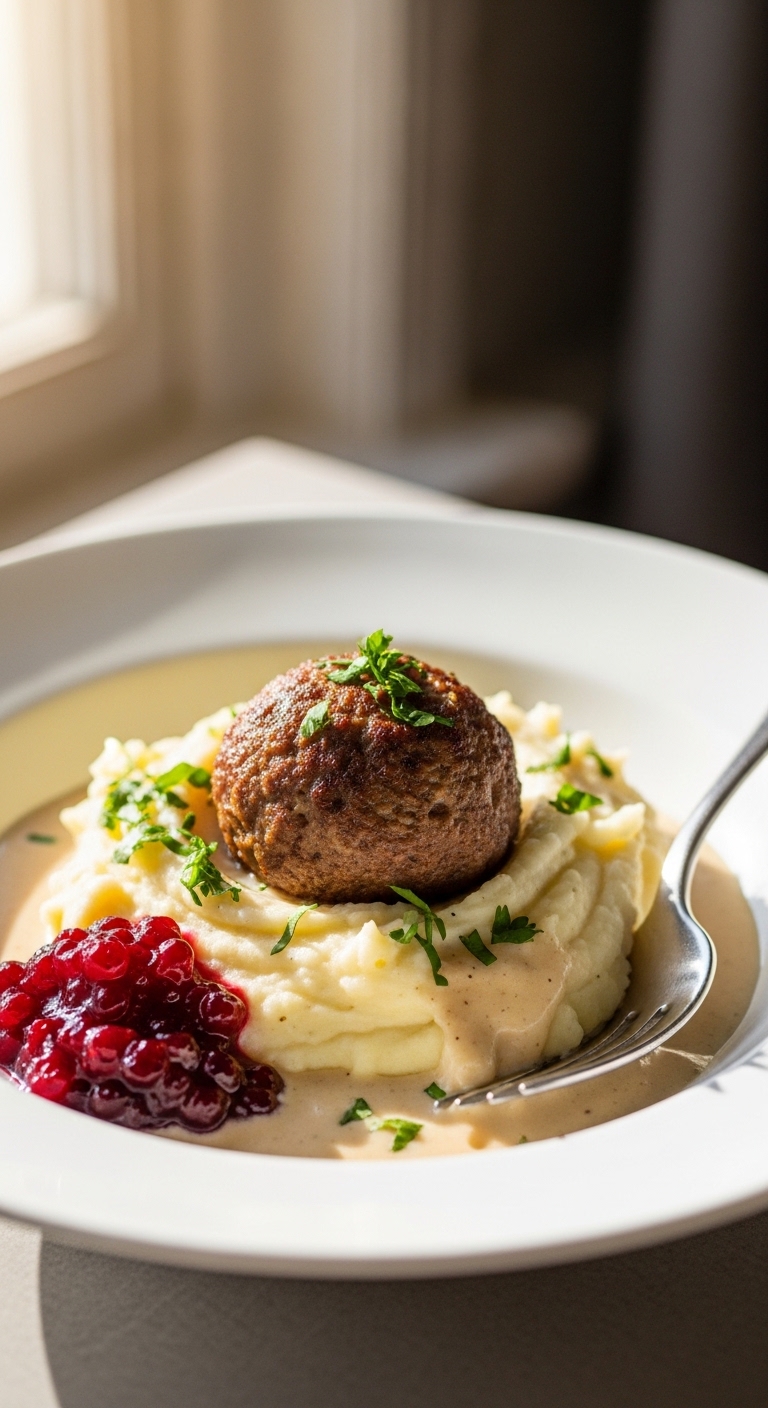
Step Four: Fry the Meatballs
Heat 1 tablespoon of butter in a large wide skillet over medium-high heat until the butter melts and begins to foam. Add the meatballs in a single layer — do not crowd them. If your skillet cannot fit all the meatballs with space between each, fry in two batches. Crowding drops the pan temperature and causes the meatballs to steam rather than brown.
Cook the meatballs for approximately 8 to 10 minutes total, turning them every 2 minutes using tongs or a spoon so all sides colour evenly. The exterior should develop a golden-brown crust all around — not just on two flat sides. The browning creates both flavour and a slightly crisp surface that contrasts pleasantly with the soft interior and the creamy sauce.
After browning, check one meatball by cutting it in half. It should look cooked through with no pink remaining in the centre. If any pink remains, continue cooking for another 2 to 3 minutes on medium heat with the lid on. Transfer the cooked meatballs to a warm plate. Leave the butter and any browned bits in the pan — you will build the sauce directly in this pan, and those caramelised bits carry significant flavour.
Step Five: Make the Creamy Swedish Meatball Gravy
Add 2 tablespoons of butter to the same pan over medium heat. Once the butter melts, add 2 tablespoons of plain flour and whisk continuously for 1 to 2 minutes. The flour and butter cook together into a roux — the base of the sauce. The roux should turn a pale golden colour and smell slightly nutty after about 1.5 minutes. Under-cooked roux produces a raw, starchy flavour in the finished sauce. Cook it for the full time.
Begin adding the warm beef stock to the roux, pouring it in a slow, steady stream while whisking vigorously. Adding the stock slowly and whisking continuously prevents lumps from forming. If the stock goes in too fast, the temperature differential creates clumps that are difficult to whisk out. After all the stock is incorporated, the sauce will look thin and slightly glossy — this is correct at this stage.
Add 200ml of double cream, 1 tablespoon of soy sauce, 1 teaspoon of Dijon mustard, and 1/2 teaspoon of white pepper. The soy sauce might surprise you here — it adds a deep umami note rather than a soy flavour, and it makes a noticeable difference to the complexity of the best Swedish meatball sauce recipe. Simmer the sauce over medium heat for 3 to 4 minutes, stirring regularly, until it thickens enough to coat the back of a spoon. Taste and adjust salt as needed.
Step Six: Combine and Finish
Return all the cooked meatballs to the pan with the cream sauce. Stir gently to coat each meatball evenly in the gravy. Reduce the heat to low and allow the meatballs to simmer gently in the sauce for 3 to 5 minutes — this reheats the meatballs through and allows them to absorb some of the sauce’s flavour. Stir in 1 teaspoon of lingonberry jam if using — it adds a subtle sweet-tart note that lifts the richness of the gravy.
Taste the finished sauce one final time. It should taste rich, creamy, deeply savoury, and mildly spiced. A tiny splash of extra soy sauce or a pinch more salt sharpens the flavour if it tastes flat. Scatter fresh chopped parsley over the top immediately before serving. The green parsley against the pale cream sauce creates an immediately appetising visual contrast that makes classic Swedish meatballs and sauce look every bit as good as they taste.
Why the Beef and Pork Combination Matters
Have you ever made meatballs with all beef and found them slightly dense and one-dimensional? The addition of minced pork changes both the texture and the flavour in ways that make a genuine difference.
Pork contains more intramuscular fat than lean beef, which keeps the meatballs moist throughout cooking even when the exterior browns fully. Pure beef meatballs can dry out slightly under extended heat because the lower fat content leaves less moisture reserve in the meat. The pork fat melts during cooking and bastes the interior continuously, producing a meatball that stays tender and juicy from the outside in.
Additionally, pork has a milder, slightly sweeter flavour than beef, which allows the allspice and white pepper to come through more clearly. IMO the pork-beef combination is non-negotiable for the authentic flavour profile of this dish. 🙂
IKEA Copycat Version vs. Traditional
The Ikea Swedish meatballs copycat recipe versions circulating online typically use all beef, skip the allspice, and use a sauce made primarily from cream of mushroom soup. The result is pleasant but noticeably sweeter and less complex than the traditional version.
The traditional recipe uses the pork-beef blend, white pepper, allspice, and a from-scratch roux-based cream sauce with beef stock as the primary liquid. The stock-based sauce produces a deeper, more savoury result that tastes noticeably more sophisticated than the tinned soup shortcut.
Both are good. However, the traditional version delivers a significantly more memorable result that justifies the extra 10 minutes of effort.
Slow Cooker and Oven Variations
Slow cooker Swedish meatballs recipe: Brown the meatballs in a skillet first for colour, then transfer to the slow cooker with the completed cream sauce poured over. Cook on low for 3 to 4 hours. The meatballs absorb the sauce deeply and become very tender. This method works well for batch cooking and entertaining.
Baked Swedish meatballs recipe easy oven version: Arrange the rolled meatballs on a lined baking tray. Bake at 200°C (400°F) fan for 18 to 22 minutes until golden and cooked through. They lack the pan-fried crust but stay moist and cook very evenly. Make the cream sauce separately and serve alongside. This approach works brilliantly when making large batches.
Common Mistakes to Avoid
Skipping the panade: Meatballs made without the milk-soaked breadcrumbs turn dense and rubbery rather than tender and light. The panade is not optional for the correct texture.
Using all beef: All-beef meatballs dry out faster and lack the characteristic flavour of traditional Swedish meatballs. Always use the pork-beef blend for the authentic result.
Adding cold stock to the roux: Cold stock added too quickly to hot roux creates lumps that are difficult to remove. Use warm stock and add it slowly while whisking continuously. :/
Not browning the meatballs properly: Under-browned meatballs look pale and lack the flavour complexity that the Maillard reaction produces on the browned surface. Brown them fully before adding the sauce.
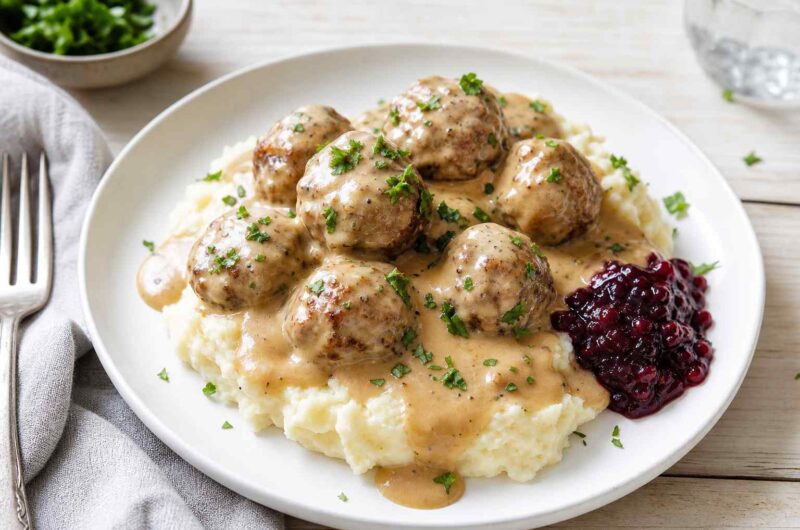
Creamy Swedish Meatballs That Beat the IKEA Version
4
servings20
minutes30
minutesThese Swedish meatballs combine a pork and beef blend with white pepper, allspice, and a milk-soaked breadcrumb panade for tenderness, then simmer in a rich, silky cream gravy made from scratch in the same pan. Served over mashed potatoes with lingonberry jam, they deliver a genuinely authentic Scandinavian dinner every time.
Ingredients
Meatballs:
300g minced beef
200g minced pork
60g fine breadcrumbs
60ml whole milk
1 small onion, finely grated
1 large egg
1 teaspoon salt
1/2 teaspoon white pepper
1/4 teaspoon ground allspice
1/4 teaspoon ground nutmeg
1 tablespoon unsalted butter for frying
Creamy gravy:
2 tablespoons unsalted butter
2 tablespoons plain flour
400ml warm beef stock
200ml double cream
1 tablespoon soy sauce
1 teaspoon Dijon mustard
1/2 teaspoon white pepper
Salt to taste
1 teaspoon lingonberry jam (optional)
For serving:
Mashed potatoes or egg noodles
Lingonberry jam
Fresh flat-leaf parsley, chopped
- Combine breadcrumbs and whole milk in a large bowl and allow to soak for 5 minutes until fully absorbed
- Add minced beef, minced pork, grated onion, egg, salt, white pepper, allspice, and nutmeg to the bowl
- Mix with hands for 1 to 2 minutes until cohesive and evenly combined
- Cover bowl with cling film and refrigerate for 15 minutes to firm the mixture
- Dampen hands lightly with cold water before rolling
- Scoop 1.5 tablespoons of mixture per meatball and roll between palms with gentle even pressure
- Place rolled meatballs on a clean tray — makes approximately 24 to 28 total
- Heat 1 tablespoon butter in a large skillet over medium-high heat until foaming
- Add meatballs in a single layer without crowding — fry in batches if needed
- Cook for 8 to 10 minutes turning every 2 minutes until golden-brown all around
- Check doneness by cutting one in half — no pink should remain in the centre
- Transfer cooked meatballs to a warm plate and leave the pan fat
- Add 2 tablespoons butter to the same pan over medium heat until melted
- Add 2 tablespoons plain flour and whisk continuously for 1 to 2 minutes until pale golden
- Pour warm beef stock in a slow steady stream while whisking vigorously to prevent lumps
- Add double cream, soy sauce, Dijon mustard, and white pepper
- Simmer for 3 to 4 minutes stirring regularly until sauce coats the back of a spoon
- Taste and adjust salt as needed
- Return all meatballs to the pan and stir gently to coat in the gravy
- Simmer on low heat for 3 to 5 minutes to heat through and absorb flavour
- Stir in 1 teaspoon of lingonberry jam if using
- Scatter fresh chopped parsley over the top and serve immediately over mashed potatoes
FAQs
Q1: Can I make Swedish meatballs ahead of time?
Yes — make and fry the meatballs up to 2 days ahead and refrigerate in a sealed container. Make the sauce fresh on the day of serving for the best texture. Alternatively, freeze the cooked meatballs for up to 1 month. Thaw overnight in the fridge and reheat in the freshly made sauce over medium-low heat for 8 to 10 minutes.
Q2: What is the difference between Swedish and Italian meatballs?
Swedish meatballs use white pepper, allspice, and nutmeg with a cream-based gravy. Italian meatballs use Italian herbs, garlic, and Parmesan with a tomato-based sauce. The texture also differs — Swedish meatballs tend to be softer and more delicate because of the higher breadcrumb ratio, while Italian meatballs are denser and firmer to hold up in a long-simmered tomato sauce.
Q3: Can I use all pork instead of pork and beef?
Yes — all-pork meatballs produce a softer, more delicate result that works well in this sauce. However, the all-pork version has a milder flavour that allows the spices to dominate more strongly, which some people find unbalanced. All-beef meatballs without pork produce a tougher, drier result. The mixed version hits the ideal balance of flavour and texture for this specific recipe.
Wrapping It Up
This Swedish meatballs recipe easy enough for any weeknight delivers a genuinely authentic, deeply satisfying result using the pork-beef blend, the panade technique, white pepper, and allspice — all the elements that make this recipe taste genuinely Scandinavian. Make the roux-based cream sauce in the same pan as the meatballs, add warm stock slowly, finish with cream and mustard, and simmer together briefly. Those habits produce a perfect result every time.
Whether you serve these over mashed potatoes for a traditional dinner or over egg noodles for a quick weeknight meal, this recipe consistently impresses. Now go make the meatballs and ignore the IKEA car park forever.