Afternoon tea is one of those experiences that feels extravagant and completely achievable simultaneously — provided you know what you are making and in what order. I hosted my first British afternoon tea recipe setup at home for four friends last spring, convinced it would be complicated, and discovered it was mostly just organised. Three tiers of food, a pot of proper tea, and two hours of genuinely lovely conversation. Nobody wanted to leave.
This fancy afternoon tea party recipes easy guide covers all three essential tiers — classic finger sandwiches, freshly baked scones with clotted cream and jam, and elegant sweet pastries — plus everything you need to know about presentation, timing, and making the whole thing feel genuinely special without spending a fortune or losing your mind in the kitchen.
Servings: 4 to 6 people Prep Time: 1 hour 30 minutes Cook Time: 25 to 30 minutes (scones) Assembly Time: 30 minutes Total Time: Approximately 2.5 hours
What You Need — The Complete Ingredients List
This traditional English afternoon tea recipes spread covers all three tiers. Here is everything for four to six people:
For classic finger sandwiches (makes approximately 24 fingers):
- 12 slices thin white or wholemeal sandwich bread, crusts removed
- 100g full-fat cream cheese, room temperature
- 1/2 cucumber, very thinly sliced
- 1/2 teaspoon dried dill
- 3 tablespoons mayonnaise
- 150g good quality smoked salmon
- 1 tablespoon fresh lemon juice
- Fresh dill for garnish
- 80g unsalted butter, room temperature
- 4 large eggs, hard-boiled, peeled, and finely chopped
- 2 tablespoons mayonnaise
- 1 teaspoon Dijon mustard
- Salt and white pepper
Classic scones (makes 8 to 10):
- 350g self-raising flour, plus extra for dusting
- 1 teaspoon baking powder
- 1/4 teaspoon salt
- 85g cold unsalted butter, cut into small cubes
- 4 tablespoons caster sugar
- 175ml full-fat milk, slightly warm
- 1 large egg, beaten (for egg wash)
- Clotted cream and good quality strawberry jam for serving
Sweet tier — lemon drizzle petit fours (makes approximately 16):
- 175g unsalted butter, room temperature
- 175g caster sugar
- 3 large eggs
- 175g self-raising flour, sifted
- Zest of 2 lemons
- 2 tablespoons fresh lemon juice
- 3 tablespoons icing sugar mixed with 1 tablespoon fresh lemon juice (for drizzle)
For the tea:
- Good quality loose-leaf English Breakfast or Earl Grey tea
- Full-fat milk for serving
- Sugar cubes or granulated sugar
FYI, the quality of bread matters significantly for finger sandwiches. Thin-cut white sandwich bread from a proper bakery or supermarket premium range cuts more cleanly and tastes better than standard sliced bread. Day-old bread is actually easier to work with than very fresh bread — it holds its shape better when sliced into fingers without compressing under the knife.
The Making Process — Every Step in Full Detail
Step 1: Bake the Lemon Drizzle Petit Fours First
The sweet tier items need the most time and must cool completely before glazing, so always start here. Preheat the oven to 180 degrees Celsius. Grease a 20x20cm square baking tin and line with parchment paper. Beat room-temperature butter and caster sugar together on medium-high speed for three to four minutes until pale, fluffy, and visibly aerated. The extended beating creates the light texture that makes these petit fours moist rather than dense.
Add the three eggs one at a time, beating for 20 to 30 seconds after each. Add the lemon zest and lemon juice. Fold in the sifted self-raising flour by hand using a rubber spatula — just until no dry flour streaks remain. Pour the batter into the prepared tin and spread level. Bake at 180 degrees Celsius for 22 to 25 minutes until a toothpick comes out clean and the surface springs back when touched.
Let the sponge cool completely in the tin — at least 30 to 40 minutes — before drizzling with the lemon icing sugar mixture. Once drizzled and set, cut into 16 small squares approximately 4x4cm each. These small elegant squares represent the homemade afternoon tea sweets ideas tier perfectly — simple, bright, and beautiful when presented on the top level of the cake stand.
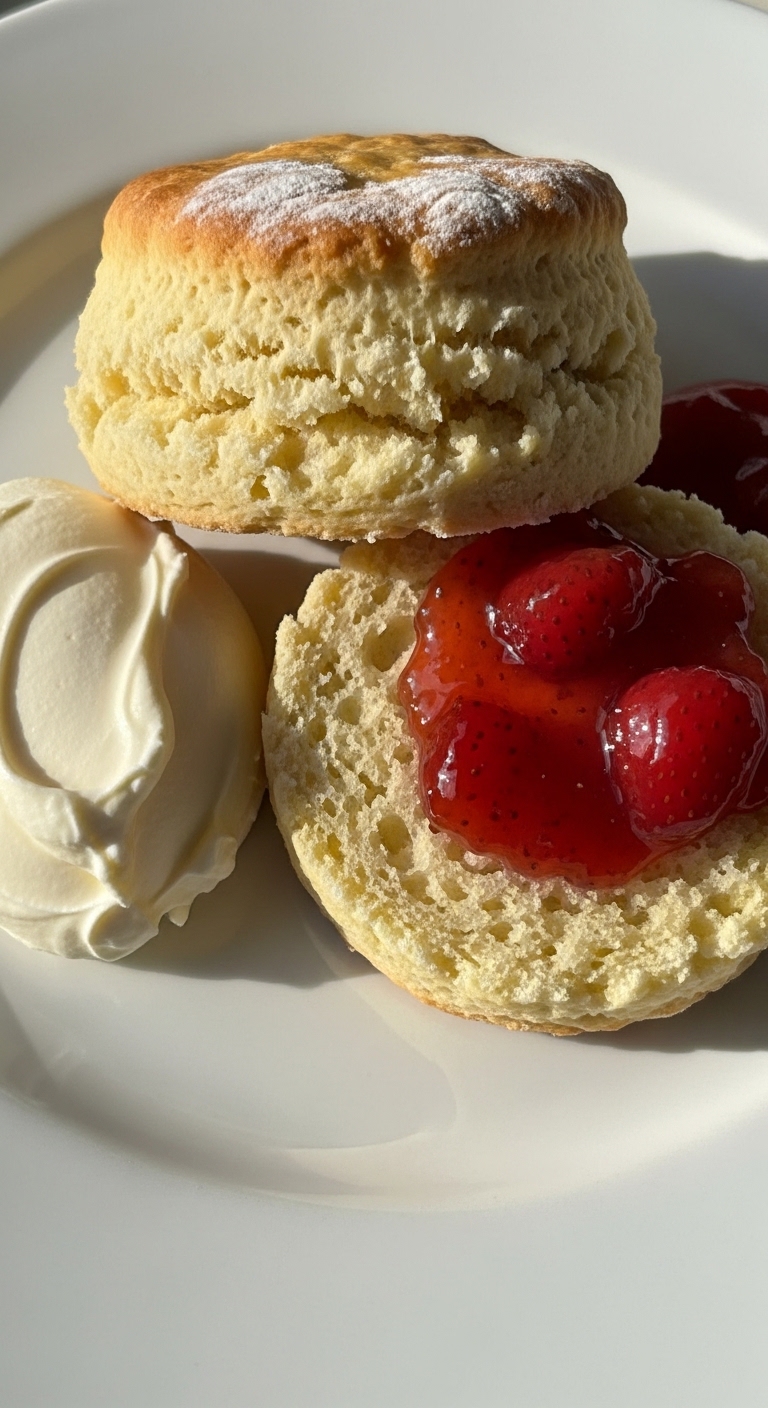
Step 2: Make the Classic Scones
Keep the oven at 180 degrees Celsius. Sift the self-raising flour, baking powder, and salt together into a large bowl. Add the cold cubed butter and rub it into the flour using your fingertips in quick, light movements until the mixture resembles coarse breadcrumbs with some small butter pieces remaining. Work quickly — warm hands melt the butter and produce flat, dense scones rather than the tall, flaky result you want.
Add the caster sugar and stir through. Make a well in the center and pour in the slightly warm milk gradually, mixing with a dinner knife until the dough just comes together — it should be slightly sticky but manageable. Do not over-mix or knead the scone dough. Over-worked dough develops gluten and produces tough, chewy scones rather than the soft, tender, slightly crumbly texture that defines a great traditional English afternoon tea recipes scone.
Turn the dough onto a lightly floured surface and pat gently to a thickness of approximately 2.5cm — do not roll it. Use a sharp, straight-sided 6cm round cutter to cut scones cleanly by pressing straight down without twisting. Twisting the cutter seals the edges and prevents the scones from rising evenly. Place on a baking tray lined with parchment, brush with beaten egg, and bake for 12 to 14 minutes until golden-brown on top. Cool on a wire rack for at least ten minutes before serving.
Step 3: Make the Three Finger Sandwich Fillings
Cucumber and cream cheese: Beat the room-temperature cream cheese until smooth. Add dried dill and a pinch of white pepper. Spread generously on one side of six bread slices. Lay very thin cucumber slices over the cream cheese layer in a single, slightly overlapping layer. Press a second bread slice on top, then cut into three neat rectangles. Arrange on a plate and refrigerate covered until needed.
Smoked salmon: Spread a thin, even layer of room-temperature butter on six bread slices. Lay smoked salmon pieces over four of the slices, slightly overlapping to cover the entire surface. Squeeze fresh lemon juice over the salmon and add a small piece of fresh dill on each piece. Top with the buttered bread slices, press gently, and cut into three neat rectangles per sandwich. These are IMO the most elegant of the classic afternoon tea sandwiches recipes — simple, beautiful, and deeply satisfying.
Egg mayonnaise: Combine the finely chopped hard-boiled eggs with mayonnaise and Dijon mustard. Season with salt and white pepper to taste. The filling should taste well-seasoned and slightly tangy from the mustard. Spread generously on bread, top with a second slice, press gently, and cut into three neat rectangles. Refrigerate all sandwiches covered with a slightly damp paper towel and plastic wrap until serving — this prevents the bread edges from drying out.
Step 4: Set Up the Three-Tier Stand and Presentation
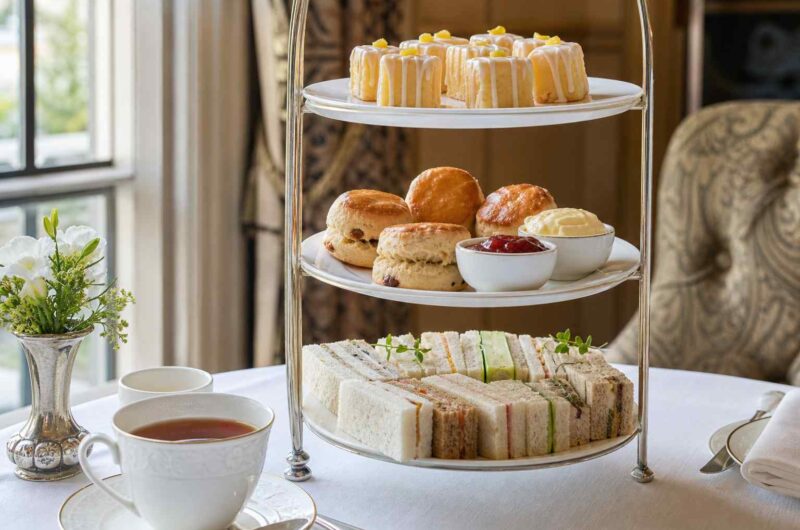
The traditional elegant afternoon tea party food presentation uses a three-tier cake stand — finger sandwiches on the bottom tier, scones in the middle, and sweet items on the top. If you do not own a three-tier stand, any combination of cake plates and stands at different heights creates a similar visual effect. The layered presentation is genuinely part of the experience — it makes the same food feel significantly more special than flat plating.
Arrange the finger sandwiches on the bottom tier with alternating varieties placed at slight angles for visual interest. Place three to four whole scones on the middle tier alongside small dishes of clotted cream and strawberry jam. Arrange the lemon drizzle petit fours and any additional sweet items on the top tier, dusting lightly with icing sugar just before presenting. The contrast between savory, plain, and sweet across the three tiers creates the visual drama that makes afternoon tea recipes at home look genuinely professional.
Step 5: Brew the Tea Properly
Boil fresh cold water — never re-boil water, which produces flat-tasting tea. Warm the teapot by swirling a small amount of hot water inside it and discarding before adding the tea leaves. Add one teaspoon of loose-leaf tea per person plus one for the pot. Pour the just-boiled water over the leaves — 95 degrees Celsius is ideal — and steep for three to four minutes depending on the tea variety and your strength preference.
Strain the tea into cups through a small strainer and serve with full-fat milk on the side. The debate over whether milk goes in first or last has continued for centuries and will continue for centuries more — add it whichever way you prefer and refuse to feel guilty about it 🙂 Serve with sugar cubes, sliced lemon, and a small pot of honey for variety. The tea is not a garnish — it is the anchor of the entire experience.
The Easy Afternoon Tea Shortcuts Worth Knowing
Not everyone has 2.5 hours. These easy afternoon tea ideas menu shortcuts save time without sacrificing the essential experience:
- Purchase scones: A good bakery scone served with good quality clotted cream and jam is always better than a rushed homemade one
- Use store-bought petit fours: Good patisserie petit fours from a supermarket bakery section look beautiful and taste excellent on the top tier
- Prepare sandwiches ahead: Make them up to two hours in advance covered with damp paper towels in the refrigerator
- Use a plate tower instead of a stand: Three different-sized plates stacked at varying heights with small ramekins as spacers creates a beautiful improvised tier display
Host a Beautiful Afternoon Tea Party at Home Today
4
servings1
hour30
minutes25
minutesThis Afternoon Tea recipe produces a complete three-tier spread — classic finger sandwiches in three varieties, freshly baked scones with clotted cream and jam, and lemon drizzle petit fours. Serving four to six people and ready in 2.5 hours, it delivers an elegant, traditional British afternoon tea experience at home.
Ingredients
Finger Sandwiches:
12 slices thin sandwich bread, crusts removed
100g cream cheese, 1/2 cucumber, dried dill
150g smoked salmon, butter, lemon, dill
4 hard-boiled eggs, mayonnaise, Dijon mustard, salt, white pepper
Scones:
350g self-raising flour, 1 teaspoon baking powder, 1/4 teaspoon salt
85g cold unsalted butter, cubed
4 tablespoons caster sugar
175ml full-fat milk, slightly warm
1 large egg for egg wash
Clotted cream and strawberry jam for serving
Lemon Drizzle Petit Fours:
175g unsalted butter, room temperature
175g caster sugar
3 large eggs
175g self-raising flour, sifted
Zest and juice of 2 lemons
3 tablespoons icing sugar plus 1 tablespoon lemon juice for drizzle
Tea:
Loose-leaf English Breakfast or Earl Grey
Full-fat milk, sugar cubes, honey
- Preheat oven to 180 degrees Celsius and prepare a 20x20cm baking tin with butter and parchment paper
- Beat butter and sugar for the lemon sponge for three to four minutes until pale and fluffy, add eggs one at a time, fold in flour and lemon, bake for 22 to 25 minutes, then cool completely before drizzling with lemon icing and cutting into 16 squares
- Make scone dough by rubbing cold butter into flour until breadcrumb-like, adding sugar and warm milk and mixing gently just until dough comes together without over-working
- Pat scone dough to 2.5cm thickness, cut with a straight-sided cutter without twisting, brush with egg wash, and bake at 180 degrees Celsius for 12 to 14 minutes until golden
- Make cucumber cream cheese filling by mixing cream cheese with dill, spread on bread, top with thin cucumber slices, press, and cut into three fingers per sandwich
- Make smoked salmon filling by buttering bread, topping with salmon and lemon juice, pressing, and cutting into three fingers
- Make egg mayonnaise filling by combining chopped hard-boiled eggs with mayonnaise and mustard, spread on bread, and cut into three fingers
- Cover all sandwiches with a slightly damp paper towel and plastic wrap and refrigerate until serving
- Arrange sandwiches on the bottom tier, scones on the middle tier with separate dishes of clotted cream and jam, and sweet items on the top tier
- Brew loose-leaf tea in a warmed teapot for three to four minutes, strain into cups, and serve with milk, sugar, and lemon on the side
The Simple Afternoon Tea Menu — What to Include
A complete simple afternoon tea menu ideas for four to six people includes:
- Bottom tier (savory): Three varieties of finger sandwiches — approximately 3 to 4 fingers per person per variety
- Middle tier (plain): Freshly baked scones, 1 to 2 per person, served with clotted cream and jam
- Top tier (sweet): Petit fours, miniature cakes, or small pastries — 2 to 3 pieces per person
Frequently Asked Questions
Q1: What is the correct order to eat afternoon tea? Traditional British etiquette suggests starting with the finger sandwiches on the bottom tier, moving to scones on the middle tier, and finishing with sweet items on the top tier. This progression from savory through plain to sweet mirrors how a meal naturally flows and prevents the sweetness of the pastries from overwhelming the more delicate flavors of the sandwiches. That said, eat in whatever order you and your guests prefer — the point is enjoyment, not performance.
Q2: What is clotted cream and where do I find it? Clotted cream is a thick, rich cream made by heating full-fat cream slowly until a crust of thickened cream forms on the surface. It has a fat content of approximately 55 to 65 percent — significantly richer than whipped cream. Most major supermarkets stock it in small jars in the dairy or specialty foods section. If unavailable, very thick double cream or mascarpone makes a reasonable substitute, though neither replicates the specific dense richness of genuine clotted cream.
Q3: Cream first or jam first on scones? This debate divides the British population broadly along regional lines. The Cornish method spreads jam first and cream on top. The Devon method spreads cream first and jam on top. Both are correct within their respective traditions. The practical consideration is that spreading cream first creates a more stable base for the jam. IMO both taste identical in the end — just choose a side and commit to it with enthusiasm.
Host This and Make Someone Feel Genuinely Valued
A properly presented afternoon tea recipes at home spread is one of the most thoughtful things you can do for someone. It takes planning, it shows care, and it creates two hours of unhurried, genuinely pleasant conversation over excellent food and good tea.
Make the scones, arrange the stand, brew a proper pot, and watch everyone slow down for two hours. In a world where every meal is rushed, afternoon tea is a genuinely radical act of hospitality 🙂