The first time I ate a properly made Kabsa, I sat there for a full thirty seconds trying to understand how rice could taste that complex and that deeply satisfying all at once. Kabsa is the national dish of Saudi Arabia — fragrant basmati rice cooked in spiced chicken broth with whole spices, topped with tender slow-cooked chicken, toasted nuts, and raisins. It is genuinely one of the greatest Arabic chicken and rice recipe traditions in the world.
This authentic Arabic food recipes homemade guide focuses on Kabsa because it represents the heart of Arabic rice and meat dishes — rich, warmly spiced, deeply aromatic, and completely achievable in a home kitchen. Once you make this once, you will understand exactly why this dish anchors every celebration table across the Arabian Peninsula.
Servings: 4 to 6 Prep Time: 20 minutes Cook Time: 1 hour 15 minutes Total Time: 1 hour 35 minutes
What You Need — The Complete Ingredients List
This simple Arabic dinner recipes centerpiece uses focused, aromatic ingredients. Here is everything for four to six generous servings:
For chicken:
- 1 whole chicken (approximately 1.5kg), cut into 6 to 8 pieces, or equivalent bone-in thighs and drumsticks
- 2 tablespoons vegetable oil
- 1 teaspoon salt
- 1/2 teaspoon black pepper
- 1 teaspoon ground cinnamon
- 1/2 teaspoon ground cumin
- 1/2 teaspoon ground coriander
- 1/2 teaspoon turmeric
Rice and broth base:
- 2 cups basmati rice, rinsed and soaked for 30 minutes
- 1 large white onion, finely diced
- 4 cloves garlic, minced
- 1 can (400g) crushed tomatoes
- 3.5 cups chicken broth (from cooking the chicken plus additional as needed)
- 2 tablespoons vegetable oil or ghee
- 2 bay leaves
- 4 whole cardamom pods, lightly cracked
- 1 cinnamon stick
- 4 whole cloves
- 1/2 teaspoon black pepper
- 1 teaspoon salt
- 1 teaspoon ground coriander
- 1/2 teaspoon ground cumin
- 1/4 teaspoon ground nutmeg
- 1/4 teaspoon ground black lime powder (loomi — available at Middle Eastern stores, optional but traditional)
For the garnish:
- 3 tablespoons ghee or butter
- 1/4 cup raw cashews or blanched almonds
- 3 tablespoons golden raisins or sultanas
- 2 tablespoons fresh parsley, roughly chopped
- Sliced red onion (optional — caramelized slowly in butter)
FYI, black lime powder — called loomi or dried lime — is one of those ingredients that sounds unusual but adds a distinctive tart, slightly smoky citrus note that genuinely cannot be replicated by fresh lime or lemon. It is available at any Middle Eastern grocery store and costs almost nothing. If you cannot source it, a tablespoon of fresh lemon juice added to the broth at the end works as a reasonable substitute.
The Making Process — Every Step in Full Detail
Step 1: Season and Brown the Chicken
Combine the salt, black pepper, ground cinnamon, cumin, coriander, and turmeric in a small bowl and mix together. Pat each piece of chicken completely dry with paper towels — dry skin browns significantly better than wet skin and produces a deeper, more flavorful crust. Rub the spice mixture generously over every surface of each chicken piece including underneath the skin where possible.
Heat two tablespoons of vegetable oil in a large, wide heavy-bottomed pot or Dutch oven over medium-high heat. Add the chicken pieces skin-side down and sear without moving for four to five minutes until deeply golden-brown on the skin side. Flip and sear the second side for three minutes. This browning step creates flavor through the Maillard reaction — those browned surfaces dissolve into the broth during the subsequent cooking and give the whole dish its characteristic depth.
Remove the browned chicken from the pot and set aside on a plate. Do not discard the oil and browned bits remaining in the pot — these are flavor foundations for the next step. The combination of spiced chicken fat and caramelized protein bits left in the pot after browning forms the base of the broth that will eventually cook the rice and carry all the warming spice flavors through every grain.
Step 2: Cook the Aromatic Base
Add two more tablespoons of vegetable oil or ghee to the pot over medium heat. Add the finely diced white onion and cook for seven to eight minutes, stirring occasionally, until soft, translucent, and developing golden edges. Properly caramelized onion contributes a sweet depth to the Kabsa that raw or under-cooked onion simply cannot provide — this step is genuinely worth the extra few minutes of patience.
Add the minced garlic and stir constantly for 60 to 90 seconds until fragrant. Add the cardamom pods, cinnamon stick, cloves, and bay leaves directly to the pot and stir them through the onion and garlic for 30 seconds — toasting whole spices briefly in the hot oil activates their essential oils and intensifies their aroma dramatically. This is the moment the kitchen starts smelling extraordinary. Have you ever stood in a kitchen and felt genuinely excited by just the aroma building in the pot? This step produces exactly that feeling.
Add the crushed tomatoes to the pot and stir everything together. Cook the tomato mixture over medium heat for four to five minutes, stirring regularly, until the tomatoes darken slightly in color and the raw tomato smell transforms into something richer and more caramelized. Add the ground coriander, ground cumin, ground nutmeg, black lime powder if using, salt, and black pepper. Stir the spices through the tomato base and cook for another minute.
Step 3: Simmer the Chicken in the Broth
Return the browned chicken pieces to the pot, nestling them into the spiced tomato base. Pour enough chicken broth over the chicken to just cover — approximately 3.5 cups. If you have homemade chicken broth from an earlier step, use it here. Stir gently to incorporate the tomato base into the broth. Bring the whole pot to a gentle boil over medium-high heat.
Once boiling, reduce the heat to medium-low, cover the pot with a tight-fitting lid, and simmer for 35 to 40 minutes until the chicken is completely cooked through and very tender. The chicken should feel very soft when pressed with a spoon and begin to pull slightly away from the bone. This slow simmering process serves two purposes — it finishes cooking the chicken gently while simultaneously building an extraordinarily flavorful broth that will cook the rice in the next step.
Remove the chicken pieces from the broth and set them aside on a plate. Now measure the remaining broth in the pot — you need exactly 3.5 cups of liquid to cook 2 cups of basmati rice. Add additional chicken broth or water to reach 3.5 cups if needed. Strain any whole spices from the broth if you prefer — or leave them in for additional flavor during the rice cooking stage as is traditional in traditional Arabic cuisine dishes.
Step 4: Cook the Kabsa Rice
Drain the soaked basmati rice and add it directly to the spiced broth remaining in the pot. Stir once to distribute the rice evenly through the liquid. Bring the pot to a full boil over medium-high heat — the broth should bubble actively across the entire surface of the pot rather than just at the edges. This initial boil distributes the heat evenly through the rice before the covered slow cooking begins.
Once boiling, reduce the heat to the absolute lowest setting, cover with a tight-fitting lid, and cook for 18 minutes completely undisturbed. Do not lift the lid during this time — the steam trapped inside is what cooks the upper layers of rice evenly and keeps every grain separate rather than clumping. After 18 minutes, remove the pot from the heat entirely and let the rice rest covered for another five minutes.
When you finally lift the lid, the rice should look perfectly fluffy with individual grains visible and no excess moisture sitting on the surface. Fluff the rice gently with a fork using long sweeping motions from the edges toward the center — this separates the grains without crushing them and distributes the spices that settled at the bottom of the pot evenly throughout. The aroma that rises from the pot at this moment genuinely stops people in their tracks 🙂
Step 5: Grill or Broil the Chicken
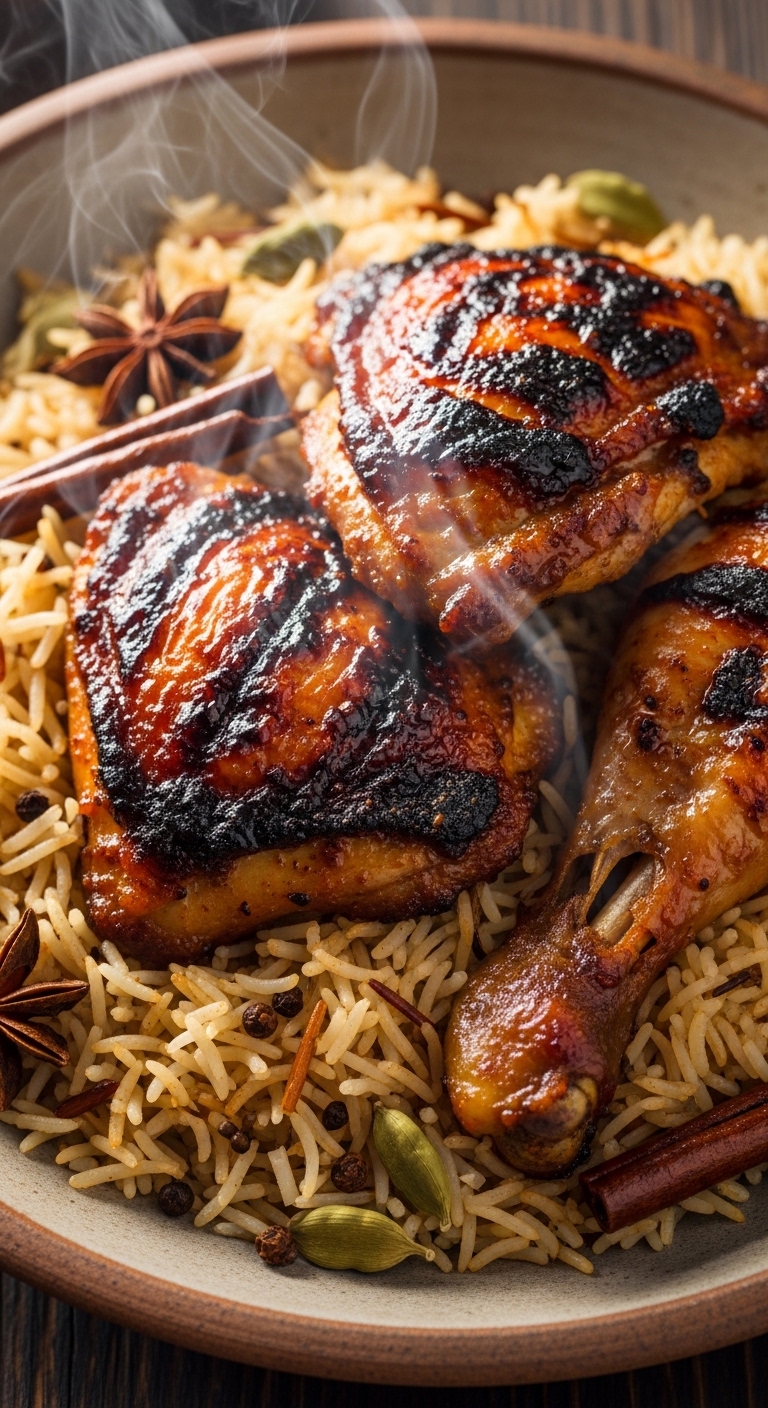
While the rice rests, place the cooked chicken pieces on a baking tray lined with foil. Slide the tray under your oven broiler on the highest setting for five to seven minutes until the skin crisps and turns deeply golden-brown with slightly charred edges. This broiling step is essential to the best Arabic food dishes to try presentation — the contrast between the crispy, caramelized chicken exterior and the fragrant, moist interior is what makes Kabsa genuinely extraordinary.
Watch the chicken carefully under the broiler — the sugars in the spice rub caramelize quickly at high heat and can burn within thirty seconds of reaching the perfect golden-brown color. The ideal result is skin that looks deeply colored, slightly caramelized, and smells of toasted spices rather than burnt sugar. This five-minute broiling step transforms well-cooked but pale poached chicken into something that looks genuinely dramatic and appetizing on the platter.
Step 6: Prepare the Garnish and Assemble
Heat three tablespoons of ghee or butter in a small frying pan over medium heat until it melts and begins to foam. Add the cashews or almonds and cook, stirring constantly, for two to three minutes until golden-brown and fragrant. Add the golden raisins to the pan and cook for another 30 seconds until they puff slightly in the hot butter. Remove from heat immediately — the nuts and raisins continue to cook from the residual heat of the ghee even after the pan leaves the burner.
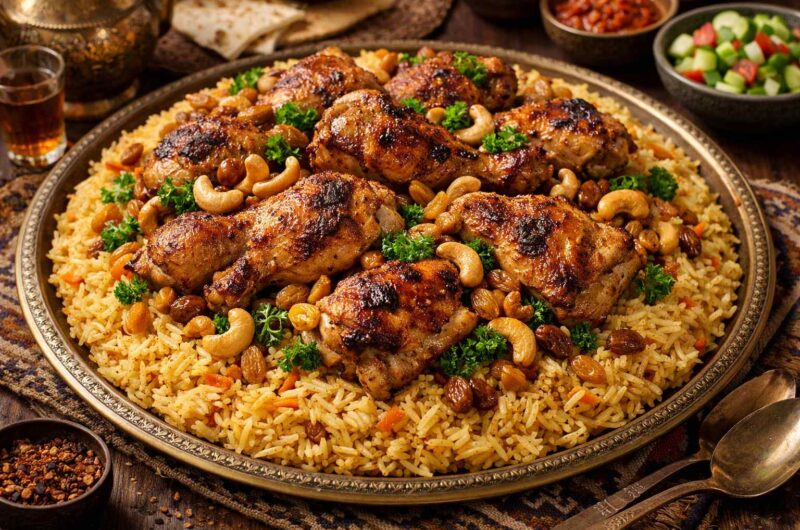
Mound the fluffed rice onto a large, wide serving platter — the traditional Arabic presentation uses a single large platter rather than individual plates, which creates a beautiful, generous, communal aesthetic that defines Middle Eastern Arabic food ideas hospitality. Arrange the broiled chicken pieces on top of the rice — overlapping slightly and positioned attractively across the surface. Spoon the buttered nuts and raisins generously over the chicken and rice, letting them cascade naturally across the presentation.
Scatter roughly chopped fresh parsley over everything and add the caramelized red onions alongside if prepared. Serve the Kabsa immediately while the chicken is hot and the rice is at its most fragrant — this healthy Arabic food meal ideas centerpiece is best experienced as soon as it comes to the table, with a simple tomato and cucumber salad and warm Arabic bread alongside for the most complete and authentic experience.
Other Must-Try Arabic Food Recipes
Beyond Kabsa, Arabic food recipes easy tradition includes several other iconic dishes worth exploring:
- Mansaf: Jordan’s national dish — lamb slow-cooked in fermented dried yogurt sauce served over rice with flatbread
- Mujaddara: A simple, extraordinary combination of lentils, rice, and caramelized onions — one of the finest healthy Arabic food meal ideas in the entire tradition
- Shawarma: The original Arabic street food recipes classic — spiced meat slow-roasted and wrapped in flatbread with garlic sauce and pickles
- Hummus from scratch: Chickpeas, tahini, lemon, and garlic blended until silky — the most fundamental Arabic food and genuinely different when made fresh rather than purchased
- Fattoush: A vibrant bread salad with crispy fried pita, fresh vegetables, and sumac dressing — the best salad in the Middle Eastern culinary tradition IMO
Traditional Arabic Kabsa With Fragrant Spiced Rice
6
servings20
minutes1
hour15
minutesThis Chicken Kabsa recipe slow-cooks spice-rubbed chicken in an aromatic tomato and whole-spice broth, cooks basmati rice in that flavorful broth, broils the chicken for crispy skin, and garnishes with buttered cashews and golden raisins. Serving four to six people, it delivers an authentic Arabic dining experience at home.
Ingredients
Chicken:
1 whole chicken (1.5kg), cut into pieces
2 tablespoons vegetable oil
1 teaspoon salt, 1/2 teaspoon black pepper
1 teaspoon cinnamon, 1/2 teaspoon each cumin and coriander
1/2 teaspoon turmeric
Rice and Broth Base:
2 cups basmati rice, soaked 30 minutes
1 large white onion, finely diced
4 cloves garlic, minced
1 can (400g) crushed tomatoes
3.5 cups chicken broth
2 tablespoons vegetable oil or ghee
2 bay leaves, 4 cardamom pods, 1 cinnamon stick, 4 cloves
1/2 teaspoon black pepper, 1 teaspoon salt
1 teaspoon ground coriander, 1/2 teaspoon ground cumin
1/4 teaspoon each ground nutmeg and black lime powder (loomi)
Garnish:
3 tablespoons ghee or butter
1/4 cup raw cashews or blanched almonds
3 tablespoons golden raisins
2 tablespoons fresh parsley
- Pat chicken pieces completely dry, rub with the combined spice mixture on all surfaces, and sear in hot oil in a large pot for four to five minutes per side until deeply golden-brown, then remove to a plate
- In the same pot, cook finely diced onion in oil or ghee for seven to eight minutes until soft and golden, add minced garlic and stir 60 to 90 seconds, then add whole spices and toast briefly for 30 seconds
- Add crushed tomatoes and ground spices, cook stirring for four to five minutes until darkened and caramelized, then return the browned chicken to the pot
- Pour chicken broth over the chicken to just cover, bring to a gentle boil, then reduce heat, cover, and simmer for 35 to 40 minutes until chicken is very tender
- Remove chicken from the broth, measure and adjust the broth to exactly 3.5 cups, add the drained soaked basmati rice directly to the spiced broth in the pot
- Bring to a full boil, then reduce to the lowest heat, cover tightly, and cook undisturbed for 18 minutes, then remove from heat and rest covered for five more minutes
- Place cooked chicken on a foil-lined baking tray and broil on the highest oven setting for five to seven minutes until the skin crisps and caramelizes deeply
- Heat ghee in a small pan, cook cashews stirring constantly for two to three minutes until golden, add raisins for 30 seconds until puffed, then remove from heat
- Fluff the rice with a fork and mound onto a large serving platter, arrange broiled chicken on top, spoon buttered nuts and raisins over everything, scatter parsley, and serve immediately
Common Mistakes to Avoid
For a perfect authentic Arabic food recipes homemade Kabsa result:
- Skipping the browning step: Under-browned chicken produces a flat, pale broth — always sear deeply before simmering
- Lifting the lid during rice cooking: Releases the steam that cooks the top layer of rice — cover and leave completely alone for 18 minutes
- Using pre-ground spices that are old: Old ground spices have almost no volatile aromatics — use fresh spices for genuinely aromatic results
- Not soaking the basmati rice: Unsoaked basmati cooks unevenly and can become gluey — always soak for 30 minutes minimum before cooking
- Skipping the broiling step: Pale, soft-skinned chicken lacks the caramelized texture and visual drama that defines proper Kabsa presentation
Frequently Asked Questions
Q1: What is the difference between Kabsa and Biryani? Both are spiced rice dishes cooked with meat, but they come from distinct culinary traditions and use different spice profiles. Kabsa originates from Saudi Arabia and uses a blend of warming spices including black lime, cinnamon, cardamom, and cloves with a tomato-based broth. Biryani comes from South Asian culinary traditions and typically uses more intensely aromatic spices including saffron, star anise, and a wider variety of ground spices with yogurt-marinated meat. Both are extraordinary — just distinct expressions of spiced rice cooking.
Q2: Can I make Kabsa with lamb instead of chicken? Lamb Kabsa — Kabsa Laham — is actually the most traditional version in many parts of Saudi Arabia and the Gulf region. Use bone-in lamb shoulder or shank cut into large pieces. Increase the simmering time to one hour and thirty minutes to two hours until the lamb is genuinely fall-off-the-bone tender. The lamb produces a richer, more deeply flavored broth than chicken, which makes the rice even more extraordinary. Reduce the water slightly since lamb releases more fat during cooking.
Q3: Where do I find black lime powder (loomi)? Any Middle Eastern or Arabic grocery store stocks dried black limes and loomi powder — it is one of the most fundamental spices in Gulf Arab cooking. Large supermarkets with international food sections sometimes stock it. Online retailers carry it reliably. If genuinely unavailable, substitute with a tablespoon of fresh lemon juice added to the broth after removing the chicken, combined with half a teaspoon of ground sumac — this approximates the tart, citrusy quality of loomi without the smoky depth.
Make This and Experience Arabic Hospitality at Your Own Table
This Arabic food recipes easy guide to Kabsa gives you everything you need to recreate one of the most beloved and iconic dishes from the Arab culinary tradition. Fragrant spiced broth, perfectly cooked basmati rice, tender chicken, and a buttered nut garnish — it is both deeply satisfying and genuinely elegant in presentation.
Make it for a weekend dinner when you have time to do it properly. Serve it on a large platter. Invite people who deserve something this good. Arabic food is about generosity as much as flavor — and this dish delivers both 🙂